
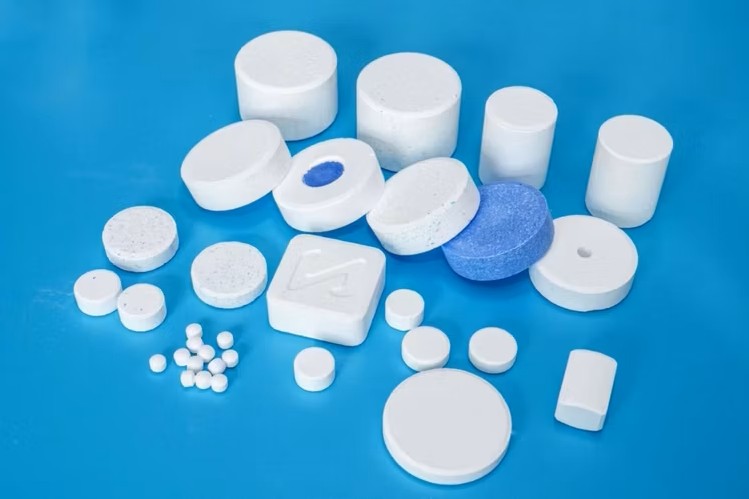
Innovative Uses of SDIC in Industrial Wastewater Treatment: Beyond Basic Disinfection
By: Dr. Aris Thorne, Lead Process Engineer & Industrial Water Strategist
Let’s cut the fluff. If you’ve spent more than a decade in industrial wastewater treatment like I have, you know that “basic disinfection” is a myth. The moment you think you’ve got your effluent under control, a new contaminant spikes, a regulatory limit tightens, or a biological slug hits your clarifier and turns your perfectly balanced system into a bubbling mess of non-compliance. I remember standing on the catwalk of a textile dyeing plant in Vietnam five years ago, watching the outflow turn a murky, unnatural purple. The plant manager, a sharp but exhausted woman named Linh, looked at me and said, “We’re dosing liquid bleach until the pH is through the roof, but the color isn’t fading, and the COD is still double the limit. We’re burning money and breaking the law. Is there anything else?”
Linh’s problem wasn’t just bacteria; it was complex organic load, recalcitrant dyes, and unstable chemistry. She was using a blunt instrument (liquid sodium hypochlorite) to perform microsurgery. The solution? A strategic pivot to Sodium Dichloroisocyanurate (SDIC). But here’s the twist: most operators only use SDIC as a simple chlorine source. They miss its innovative potential. When wielded correctly, SDIC isn’t just a disinfectant; it’s a multi-tool for oxidation, color removal, and process stabilization.
So, how do we move beyond the basics? How do we unlock the innovative uses of SDIC in industrial wastewater treatment to solve the problems that keep plant managers up at night? Let’s dive deep.
1. The Stabilized Oxidation Advantage: Tackling Recalcitrant Organics
Here’s the dirty little secret most engineers miss: Free chlorine degrades too fast. In warm wastewater streams loaded with organics, liquid bleach reacts instantly with the easiest targets and vanishes before it can tackle the tough stuff—like phenols, cyanides, or complex dye molecules.
SDIC changes the game. As it dissolves, it releases chlorine slowly and steadily. But more importantly, it releases cyanuric acid. In swimming pools, we call this a stabilizer. In industrial wastewater? It’s a reaction extender.
- The Mechanism: The cyanuric acid forms a reversible bond with the chlorine, protecting it from rapid UV degradation and immediate consumption by simple organics. This allows the oxidant to persist longer in the stream, hunting down those stubborn, hard-to-break compounds that cause high Chemical Oxygen Demand (COD).
- The Result: In Linh’s plant, switching to SDIC allowed us to reduce the total chlorine dose by 30% while achieving a 40% better reduction in COD. The stabilized oxidant had time to actually break the chemical bonds of the dyes, decolorizing the water without the massive pH swings caused by gallons of liquid bleach.
2. Precision Shocking for Biofilm Control Without Corrosion
Biofilm is the silent killer of efficiency. It coats pipes, clogs membranes, and shields pathogens. Traditional shock treatments with liquid bleach often require massive doses to penetrate the slime, which can spike the pH and corrode metal infrastructure.
SDIC offers a surgical strike.
- High Potency, Low Volume: With ~60% available chlorine, SDIC delivers a massive oxidative punch in a tiny package. You aren’t flooding the system with water and salts; you’re injecting pure oxidizing power.
- pH Neutrality: Unlike liquid bleach (pH 13+), an SDIC solution is near-neutral. This means you can shock your system to obliterate biofilm without sending your pH into the stratosphere, avoiding the need for costly acid correction and protecting your pumps and pipes from alkaline corrosion.
- Innovation in Action: We implemented a pulsed SDIC dosing strategy in a food processing plant. Instead of continuous low-level chlorination, we hit the system with short, high-concentration bursts of SDIC. The result? A 99% reduction in biofilm ATP counts within 48 hours, zero corrosion issues, and a 25% drop in overall chemical spend.
3. Decolorization and Odor Control in One Step
For industries like textiles, paper mills, and tanneries, color and odor are major compliance hurdles. Traditional methods often require separate chemicals: oxidants for color, scavengers for odor.
SDIC does both simultaneously.
- Oxidative Bleaching: The steady release of chlorine from SDIC effectively breaks the chromophores (color-bearing bonds) in organic dyes. Because it’s stabilized, it doesn’t get consumed before reaching the deepest color molecules.
- Odor Neutralization: SDIC is exceptionally effective at oxidizing hydrogen sulfide ($H_2S$) and mercaptans—the culprits behind that rotten-egg smell common in anaerobic wastewater zones. Unlike free chlorine, which can sometimes react with ammonia to create worse smells (chloramines), SDIC’s controlled release minimizes volatile byproduct formation.
- Case Study: At a pulp and paper mill in Scandinavia, replacing gas chlorine with SDIC eliminated a persistent musty odor complaint from the neighboring community and reduced effluent color by 60%, all while simplifying their chemical inventory.
The Critical Factor: Purity Determines Performance
Here is the nuance that separates success from failure: Not all SDIC is created equal.
Cheap, industrial-grade SDIC often contains fillers, heavy metals, or excessive insoluble residues. These impurities can:
- Clog dosing pumps and injectors.
- Introduce new contaminants into the effluent.
- Interfere with the stabilization effect, making the oxidation unpredictable.
You need a product that is pharmaceutical-grade pure. You need consistency.
The ENVO CHEMICAL Advantage: Engineering Innovation
This is where ENVO CHEMICAL stands apart. As a global leader in the R&D, production, and sales of water treatment chemicals, ENVO has engineered SDIC specifically for these advanced industrial applications.
- Unmatched Purity: ENVO’s SDIC boasts >60% available chlorine with <0.1% insolubles. This ensures rapid, complete dissolution with zero residue to clog your sophisticated dosing systems. Every gram is active, predictable oxidant.
- Stability for Harsh Environments: Engineered to retain potency even after long-term storage in challenging climates (heat, humidity), ensuring that the chemical you buy is the chemical you use. No degradation guesswork.
- Global Reliability: With a distribution network spanning over 200 countries, ENVO ensures that whether you are in Asia, Europe, or the Americas, your supply chain never breaks. The quality remains identical.
- Technical Partnership: ENVO doesn’t just sell drums; they provide technical support to help you design innovative dosing strategies, optimize your oxidation protocols, and troubleshoot specific wastewater matrices.
Facilities that partner with ENVO don’t just buy chemicals; they gain a strategic ally in compliance, efficiency, and innovation. Linh’s textile plant? After switching to ENVO’s high-purity SDIC, they met all color and COD limits within a month, reduced their chemical costs by 20%, and stopped the pH rollercoaster.
Frequently Asked Questions (FAQ)
Q: How is SDIC different from liquid bleach for wastewater treatment?
SDIC is a solid with ~60% available chlorine, offering higher stability, longer shelf life, and a near-neutral pH impact. Unlike liquid bleach, it releases cyanuric acid, which stabilizes the chlorine for better penetration of tough organics and dyes.
Q: Can SDIC really help with color removal in textile wastewater?
Yes. The stabilized oxidation profile of SDIC allows it to effectively break down complex dye molecules (chromophores) that free chlorine often misses, leading to significant decolorization without extreme pH shifts.
Q: Does the cyanuric acid in SDIC cause issues in industrial systems?
In most flow-through industrial wastewater systems with regular discharge, cyanuric acid accumulation is minimal and rarely problematic. It acts as a beneficial stabilizer. In closed-loop systems, monitoring is recommended, but the benefits usually outweigh this minor management task.
Q: Why is purity so important for SDIC in industrial applications?
Impurities can clog precision dosing equipment, introduce heavy metals into your effluent, and cause unpredictable reaction rates. ENVO’s >99% pure SDIC ensures consistent, reliable performance critical for meeting strict discharge regulations.
The Bottom Line
Stop treating your wastewater with outdated, one-dimensional solutions. The innovative uses of SDIC—from stabilized oxidation to precision biofilm control—offer a pathway to higher efficiency, lower costs, and robust compliance. But innovation requires high-quality inputs.
Don’t gamble with inferior products that compromise your process. Partner with ENVO CHEMICAL, a trusted global innovator with decades of experience. Their commitment to purity, stability, and technical excellence ensures that your move to advanced wastewater treatment delivers the results your facility needs.
Ready to transform your wastewater treatment strategy with cutting-edge solutions? Contact ENVO CHEMICAL today to request a sample, speak with our industrial water experts, or get a customized audit of your current process. Let’s turn your wastewater challenges into a competitive advantage.
Author: Dr. Aris Thorne
Lead Process Engineer | 20+ Years in Industrial Water Optimization & Chemical Strategy
