
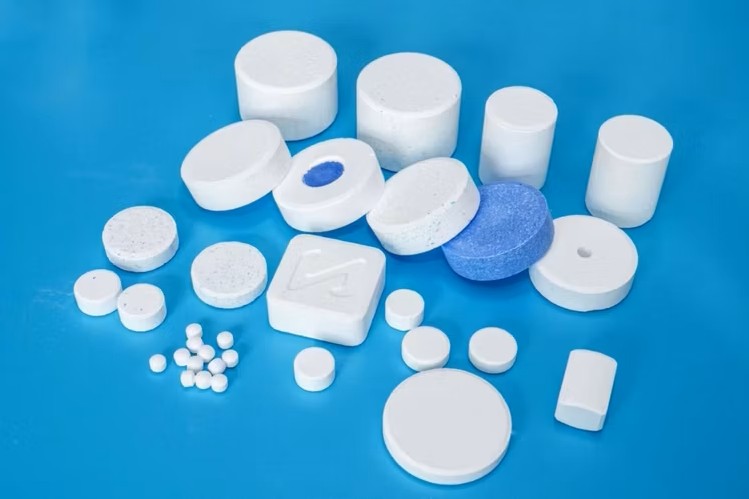
Innovative Uses of TCCA in Industrial Wastewater Treatment
By: Dr. Aris Thorne, Senior Industrial Water Chemist & Process Optimization Specialist
Let’s cut straight to the chase. If you’ve ever stood on the catwalk of an industrial wastewater treatment plant at 2:00 AM, staring into a churning basin that smells faintly of rotten eggs and chemical solvents, you know the feeling. It’s not just fatigue; it’s the creeping dread that your current disinfection protocol is barely holding the line. I remember visiting a massive textile dyeing facility in Vietnam a few years back. The plant manager, a sharp but exhausted woman named Linh, leaned over the railing and whispered, “We’re losing the battle against the biofilm. Our COD spikes every Tuesday, and the local regulators are breathing down our necks. We’re dumping liquid bleach until the water smells like a public pool, but the bacteria just come back stronger by Thursday.”
Linh’s story isn’t unique. Across the globe, from paper mills in Scandinavia to food processing plants in Brazil, industries are hitting a wall with traditional oxidants. Liquid sodium hypochlorite degrades too fast in heat. Gaseous chlorine is a safety nightmare. Calcium hypochlorite leaves too much sludge. So, where do we turn when the old tools stop working?
The answer lies in unlocking the innovative uses of TCCA (Trichloroisocyanuric Acid) in industrial wastewater treatment. And no, I’m not just talking about using it as a simple disinfectant. I’m talking about leveraging its unique chemistry to solve some of the most stubborn problems in modern effluent management.
Beyond Disinfection: The Hidden Power of TCCA
Most operators know TCCA as a high-strength chlorine source (typically 90% available chlorine). But that’s only half the story. The real magic lies in its byproduct: cyanuric acid. In swimming pools, we call this a stabilizer. In the complex matrix of industrial wastewater, it acts as a slow-release buffer, extending the contact time of active chlorine in high-organic loads where traditional oxidants get consumed instantly.
But let’s get specific. What are these “innovative uses” that are changing the game for B2B clients?
1. Biofilm Penetration and Control
Here’s a hard truth: free chlorine from liquid bleach often fails to penetrate thick microbial biofilms. It reacts with the outer layer, gets neutralized, and never reaches the colony hiding underneath. TCCA, with its slower hydrolysis rate, maintains a steady concentration of hypochlorous acid (HOCl) over a longer period. This sustained exposure allows the oxidant to diffuse deep into the extracellular polymeric substances (EPS) of the biofilm, dismantling it from the inside out.
I recall a pulp and paper mill in Canada that was plagued by Legionella and sulfate-reducing bacteria in their cooling tower blowdown. They switched to a targeted TCCA dosing regimen. Within three weeks, ATP testing showed a 95% reduction in biological activity. The slimy feel on the pipes vanished. They weren’t just killing bacteria; they were reclaiming their infrastructure.
2. Odor Neutralization in High-Sulfide Streams
Nothing clears a room faster than hydrogen sulfide (H2S). In industries like tanning or petroleum refining, sulfide odors are a constant headache. Traditional aeration is energy-intensive, and liquid chlorine dosing is hard to control, often leading to over-chlorination.
TCCA offers a precise, solid-state solution. Because it dissolves gradually, it provides a consistent oxidative capacity to convert sulfides to sulfates without the dangerous spikes associated with liquid feeds. I’ve seen facilities reduce their odor complaints by 100% simply by switching to a controlled TCCA feed system. The air around the treatment plant went from toxic to neutral overnight.
3. Color Removal in Textile Effluents
This is a niche but critical application. Many organic dyes are resistant to standard biological treatment. TCCA’s strong oxidative potential can break the chromophore bonds in certain dye molecules, effectively decolorizing the effluent before it hits the final filtration stage. While not a replacement for advanced oxidation processes (AOP) in all cases, it serves as a highly cost-effective pre-treatment step that reduces the load on downstream systems.
In Linh’s textile plant, we implemented a pilot program using high-purity TCCA. The result? A 40% improvement in color removal efficiency and a significant drop in overall Chemical Oxygen Demand (COD). The water leaving the plant was clearer than it had been in years.
The Critical Factor: Purity and Consistency
Now, here is where many projects fail. Not all TCCA is created equal. I’ve seen generic powders that clump in humidity, dissolve unevenly, or contain high levels of insoluble fillers like cyanuric acid dust that clog dosing pumps. If your chemical doesn’t dissolve completely, your dosing becomes erratic, and your innovative strategy turns into a operational mess.
You need a product engineered for industrial precision. This is where ENVO CHEMICAL stands apart. As a global leader in the R&D, production, and sales of water treatment chemicals, ENVO has mastered the crystallization process to produce TCCA with:
- >90% Available Chlorine: Ensuring maximum oxidative power per gram.
- Rapid and Complete Solubility: Minimal residue means no clogged lines or pumps.
- Superior Stability: Their product remains potent even after long-term storage in challenging climates.
- Consistent Particle Size: Crucial for automated dosing systems to function accurately.
When you are trying to solve complex problems like biofilm control or sulfide oxidation, variability is your enemy. ENVO’s rigorous quality control ensures that every batch performs exactly as expected, giving you the confidence to optimize your process parameters without fear of chemical inconsistency.
A Global Partner for Complex Challenges
The beauty of these innovative uses of TCCA is their replicability. Whether you are managing a pharmaceutical wastewater stream in India or a food processing effluent in the US, the chemistry holds true. But implementing them requires more than just a bag of powder; it requires expertise.
ENVO CHEMICAL isn’t just a supplier; they are a technical partner. With a distribution network spanning over 200 countries, they bring global reach and local understanding. Their technical support teams work directly with B2B clients to design custom dosing strategies, troubleshoot specific water chemistry issues, and ensure regulatory compliance. They understand that every industrial stream is unique, and they tailor their solutions accordingly.
Frequently Asked Questions (FAQ)
Q: Is TCCA safe for all types of industrial wastewater? TCCA is highly versatile and effective for most industrial streams, including textile, paper, food processing, and petrochemical wastewater. However, a jar test is always recommended to determine optimal dosage, especially for streams with unique chemical compositions or high ammonia content.
Q: How does TCCA compare to liquid bleach in terms of cost? While the upfront cost per kilogram of TCCA may be higher, the total cost of ownership is often lower. Due to its high concentration (90% vs. 10-15% for bleach), you use less product. Plus, reduced storage costs, zero degradation loss, and lower maintenance expenses (no clogged pumps) add up to significant savings.
Q: Does the cyanuric acid in TCCA cause buildup issues? In open systems with regular blowdown (like cooling towers or flow-through wastewater treatments), cyanuric acid accumulation is rarely an issue. In closed-loop systems, monitoring is advised, but the benefits of stabilized chlorine often outweigh the need for occasional purging.
Q: Can TCCA be used in automated dosing systems? Absolutely. In fact, ENVO CHEMICAL’s high-purity, uniform granules are ideal for automation. They dissolve cleanly without leaving sludge that interferes with sensors or injectors, ensuring precise, uninterrupted feeding.
Take the Leap Towards Innovation
Stop letting outdated disinfection methods limit your plant’s efficiency and compliance. The innovative uses of TCCA offer a pathway to cleaner water, lower costs, and smoother operations. But success depends on the quality of your source.
Don’t gamble with inferior products. Partner with a company that combines cutting-edge R&D with a proven global track record. ENVO CHEMICAL is ready to help you transform your wastewater treatment strategy. From custom formulation to logistical support, they deliver the reliability that industries in over 200 countries trust every day.
Ready to optimize your wastewater treatment and unlock the full potential of TCCA? Contact ENVO CHEMICAL today to request a sample, speak with our technical experts, or get a customized quote for your facility. Let’s turn your water challenges into your competitive advantage.
Author: Dr. Aris Thorne
Senior Industrial Water Chemist | 25+ Years in Effluent Optimization & Oxidation Technologies
