
Why NaDCC and Rubber Gaskets Require a Deliberate Compatibility Evaluation
Sodium dichloroisocyanurate (NaDCC) solutions are oxidizing and mildly acidic, and prolonged or repeated contact can degrade certain elastomers used in rubber gaskets. Planning a material compatibility evaluation means defining the exact NaDCC concentration, temperature, contact duration, and gasket rubber compound you will test before drawing any conclusion about suitability. Without these defined parameters, a compatibility result is meaningless because the same gasket material may pass at low concentration and fail at a higher one.
Defining the Scope Before You Begin
What Form of NaDCC Will Contact the Gasket?
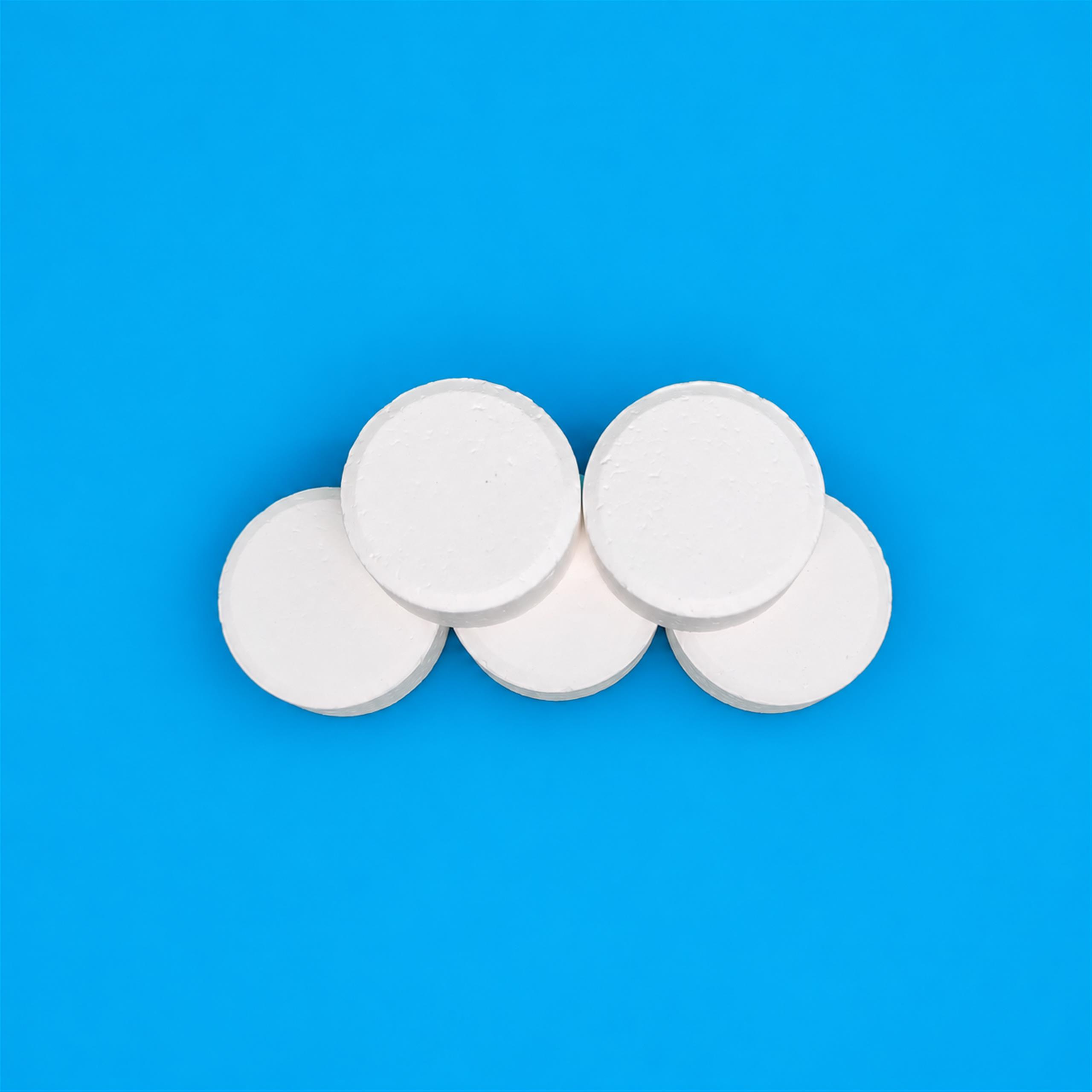
NaDCC is supplied as tablets, granules, or pre-dissolved solutions. The evaluation must mirror the actual form in service. A dry tablet resting on a gasket presents a very different exposure profile than a circulating 2,000 ppm NaDCC solution. Confirm whether the gasket sees dry chemical, a prepared solution, or both, and document the target available chlorine concentration at the point of contact.
Which Rubber Compound Is the Gasket Made From?
Not all rubber gaskets are the same. Common elastomers include EPDM (ethylene propylene diene monomer), nitrile (NBR), silicone, fluorocarbon (FKM/Viton), and neoprene. Each reacts differently to oxidizing agents and to the mildly acidic pH that NaDCC solutions produce (typically pH 5.5–6.5 for typical use concentrations). You must know the gasket specification or obtain a sample with a material data sheet before testing. If the gasket is a custom compound, request the formulation details or at least the base polymer type and any known fillers or plasticizers.
Key Variables to Lock Down in the Test Plan
A useful compatibility evaluation controls four variables. Leaving any of them undefined risks a result that does not represent your real operating conditions.
- NaDCC concentration. Express this as available chlorine (ppm or mg/L) rather than as tablet weight. Different applications use different doses; a general-purpose disinfectant might use 200–500 ppm, while a higher-demand scenario may require 1,000 ppm or more. The concentration directly drives the oxidative stress on the elastomer.
- Temperature. Elevated temperature accelerates both chemical attack and physical changes such as swelling. Define the maximum service temperature and include it in the test. Room-temperature testing alone may miss failures that occur at 40 °C or higher.
- Exposure duration and cycling. Will the gasket see continuous immersion, intermittent splash, or brief contact during dosing? Define a single-exposure period (e.g., 24 h, 7 days, 30 days) and, if relevant, a number of wet-dry cycles to simulate repeated dosing and drying.
- Physical load. A gasket under compression behaves differently than a free-standing sample. If the gasket is compressed in a flange or housing, replicate that in the test fixture so that stress-cracking or creep under load is captured.
What to Measure After Exposure
Visual and Dimensional Checks
Start with the simplest observations. Look for discoloration, surface cracking, tackiness, or obvious swelling. Measure the gasket thickness and diameter before and after exposure. A change greater than 5–10 % in any dimension is typically a red flag, although the acceptable limit depends on the seal design.
Mechanical Property Changes
If the application is critical, measure hardness (Shore A durometer), tensile strength, and elongation at break on exposed samples compared to unexposed controls. Oxidative degradation usually reduces elongation and may either increase or decrease hardness depending on the elastomer. These numbers tell you whether the gasket will still maintain a seal after the planned service life.
Chemical Analysis of the Solution
Measuring residual available chlorine before and after exposure confirms whether the NaDCC is being consumed by the rubber. Unexpected chlorine loss may indicate that the gasket material is reacting and could release compounds into the solution, which matters in applications where water or product purity is a requirement.
Practical Steps to Organize the Evaluation
- Gather the gasket material specification or request a sample with a known polymer type.
- Determine the in-service NaDCC concentration, pH range, and temperature from your process documentation.
- Prepare NaDCC solutions at the target concentration using verified water quality; document the measured available chlorine.
- Cut gasket samples to uniform size, record baseline mass and dimensions, and condition them at the test temperature for at least 24 h before immersion.
- Immerse samples in sealed containers to prevent evaporation, and include unexposed controls stored under the same conditions.
- At each defined interval, remove samples, blot dry, measure, photograph, and return them to fresh solution if cycling is part of the plan.
- Compile results against a predefined pass/fail criterion (e.g., no more than 10 % dimensional change, no visible cracking, hardness change within ±5 Shore A).
Common Pitfalls That Skew Results
Testing at a concentration that is too low will give a false pass. Testing without controlling temperature may under-predict degradation. Using a gasket sample that has already been in service introduces unknown aging effects. And drawing a conclusion from a single sample without replicates leaves you without statistical confidence. Each of these shortcuts is common, and each can lead to selecting a gasket material that fails prematurely.
Another point to watch: NaDCC tablets contain stabilizers and binders that may leach differently than pure NaDCC powder. If your system uses tablets that dissolve directly in contact with the gasket, include that formulation in the test rather than substituting a laboratory-grade NaDCC solution, because the tablet matrix can alter local pH and exposure.
When to Seek Supplier Input
If you do not have in-house capability for mechanical testing or for preparing and verifying NaDCC solutions, the evaluation still needs to happen, but you will rely on either an external laboratory or direct support from the NaDCC supplier. ENVO CHEMICAL can provide product-specific dissolution behavior and typical solution pH data that help you set realistic test concentrations. However, the gasket compatibility decision ultimately rests on testing the actual gasket material against your specific conditions; no supplier can substitute for that.
Next Step
If you are planning a NaDCC and rubber gasket compatibility evaluation and need to confirm the relevant concentration ranges, solution pH expectations, or product form details for your specific ENVO CHEMICAL NaDCC grade, share your gasket elastomer type and target use conditions and we can help you define the test parameters.
