
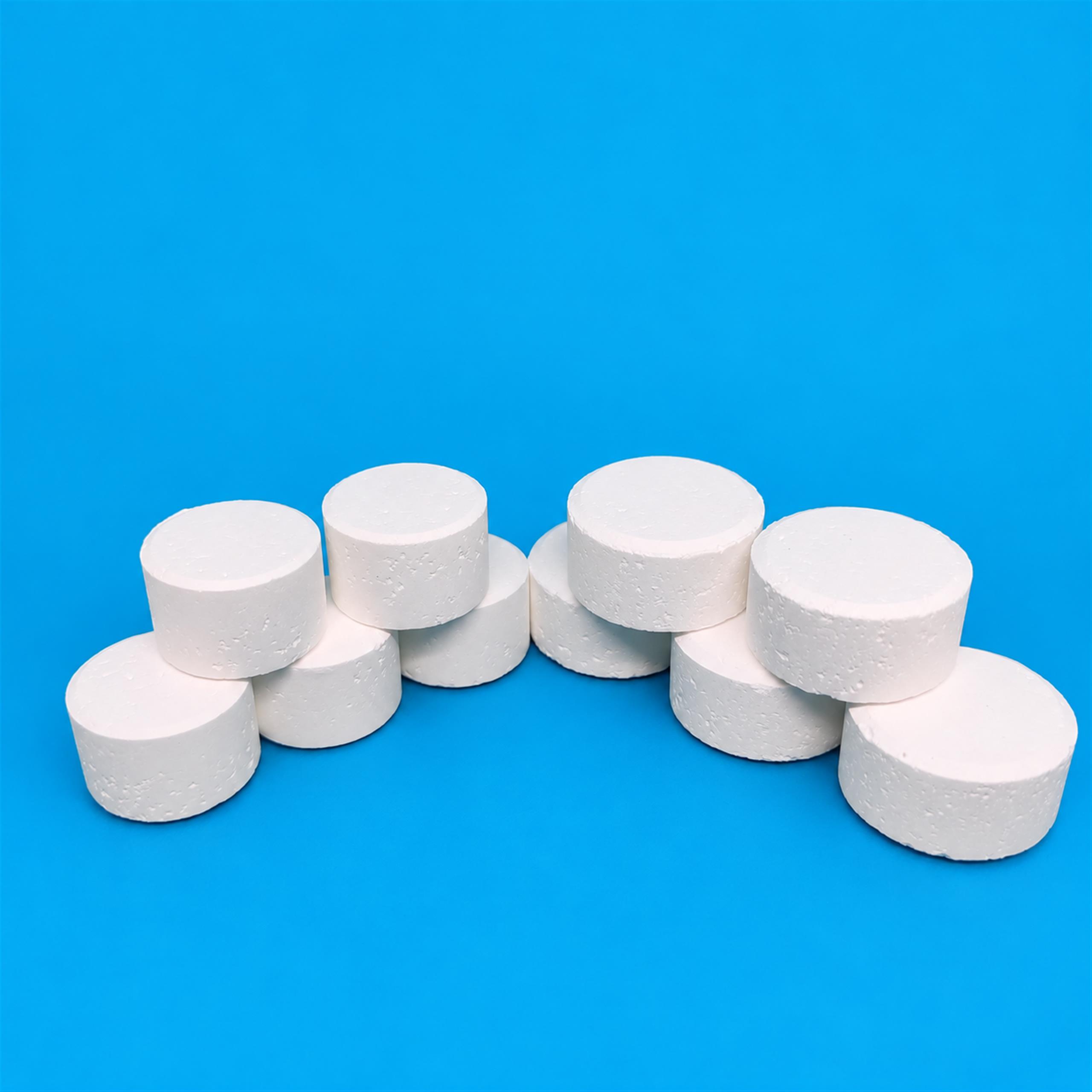
What Product Claims Must a NaDCC Disinfectant Carry for Office Cleaning Contracts?
A NaDCC-based disinfectant used in office cleaning contracts must carry clearly defined claims covering efficacy against relevant office pathogens, available chlorine content, safe-use concentration ranges, material compatibility, and compliance with the regulatory framework governing biocidal products in the jurisdiction where the contract operates. Without these claims documented and verifiable, a cleaning contractor cannot demonstrate that the product meets the performance and legal obligations typically written into service-level agreements.
The condition that materially changes this answer is jurisdiction. A contract governed by EU Biocidal Products Regulation (BPR) demands different claim documentation than one under U.S. EPA or UK HSE rules. The required claims are therefore not universal—they must align with the regulatory regime named in the contract itself.
Efficacy Claims Relevant to Office Environments
Office cleaning contracts normally require disinfectants to reduce microbial load on high-touch surfaces such as desktops, door handles, shared equipment, and restroom fixtures. The product claims must specify which test organisms the NaDCC formulation has been evaluated against under conditions that reflect office use.
Typical organisms cited in office-disinfection claims
- Bacteria: Staphylococcus aureus, Escherichia coli, Pseudomonas aeruginosa, Enterococcus hirae—commonly used as surrogates for pathogenic office flora.
- Viruses: Norovirus surrogates (e.g., murine norovirus) or other enveloped and non-enveloped virus claims relevant to respiratory and contact transmission in shared workspaces.
- Fungi: Aspergillus brasiliensis or Candida albicans when mould or yeast control is part of the scope.
The claim must state the log reduction achieved, the applied concentration of available chlorine, the contact time, the temperature range, and the surface type tested. A claim that reads simply “kills 99.9% of germs” without these parameters does not satisfy most professional cleaning contracts.
Available Chlorine and Purity Claims
NaDCC is a chlorine-releasing compound that delivers hypochlorous acid in solution. The product label and technical data sheet must distinguish between:
- Purity of the raw NaDCC material—typically expressed as a percentage of the active dichloroisocyanurate anion.
- Available chlorine—the theoretical oxidising equivalent released when NaDCC dissolves, usually around 55–60% of the NaDCC mass for anhydrous material, lower for the dihydrate form.
- Formulated product concentration—the strength of the ready-to-use or dilute-to-use solution the contractor actually applies.
Cleaning contracts often specify a target chlorine residual on the surface after the stated contact time (for example, 200–500 ppm free chlorine for general disinfection). The product claims must support that a defined dilution of the NaDCC product can reliably achieve and maintain that residual under typical office conditions, including organic load from dust, skin oils, or light soiling.
Safety and Material-Compatibility Claims
Office environments contain electronics, painted walls, upholstered furniture, and floor finishes. Required product claims must address:
- Surface compatibility: Confirmation that the specified dilution does not corrode metals, discolor fabrics, or degrade common office materials when used as directed.
- User safety: Hazard statements and precautionary wording required by the applicable classification (e.g., GHS, CLP). For NaDCC this typically includes skin and eye irritation warnings, inhalation risk from dust or mist, and incompatibility with acids or ammonia-based cleaners.
- No prohibited mixing: A clear claim or instruction that the product must not be combined with acidic cleaners, ammonia, or other chlorine sources, since this can release chlorine gas.
Contracts increasingly require the supplier to provide a Safety Data Sheet that matches the jurisdiction’s format and a risk assessment that links the product’s hazard profile to the specific tasks in the cleaning schedule.
Regulatory and Certification Claims
The most critical claims for any office cleaning contract are those that prove the product is legally authorised for the intended use.
What must be documented
| Claim Element | Why It Matters in a Contract |
|---|---|
| Biocidal product authorisation number or notification | Proves the product is registered for disinfectant use in the governing jurisdiction (e.g., BPR Article 95 authorisation, EPA registration, UK HSE approval). |
| Scope of authorised product type | Confirms the product is approved for the specific product type claimed (PT 2 for surface disinfection, PT 3 for veterinary hygiene, etc.). |
| Efficacy test standard referenced | Shows which European Norm (e.g., EN 13697, EN 14476) or equivalent method underpins the claim, allowing the contract holder to verify the data. |
| Shelf life and storage condition claim | Ensures the product remains within specification for the duration of the contract and under the storage conditions available at the cleaning depot. |
| Manufacturing batch traceability | Allows the contract manager to link a specific performance complaint or audit finding to a defined batch. |
If a contract references a specific NaDCC product, the supplier must be able to confirm that the exact grade, concentration, and packaging described in the tender documentation carry all of the above claims. A generic reference to “NaDCC disinfectant” without tying it to an authorised product identity is usually insufficient for formal procurement.
How to Match Product Claims to Contract Language
Most office cleaning contracts contain a section on disinfectant requirements. To define the required claims effectively, the procurement or facilities team should:
- Identify the jurisdiction and regulatory framework named in the contract.
- List the surfaces, organisms, and log-reduction targets the contract specifies.
- Require the supplier to quote the product’s authorisation or registration number and the product type it covers.
- Ask for the test report or summary that supports the efficacy claim at the concentration and contact time the contract demands.
- Confirm that the Safety Data Sheet and label carry hazard statements consistent with the risk assessment the contractor must file.
Any gap between what the contract demands and what the product claims cover becomes a compliance risk for the cleaning provider and a potential liability for the facilities manager.
Why NaDCC Specifically Needs Careful Claim Definition
NaDCC is a solid, chlorine-releasing compound that is stable in dry form but generates hypochlorous acid on dissolution. Unlike liquid sodium hypochlorite, it is not a ready-made solution, so claims must cover both the raw material characteristics and the performance of the prepared use-solution. This dual nature means that an office cleaning contract cannot rely on a single generic claim; it must specify the dilution protocol, the resulting available chlorine concentration, and the contact time as part of the product’s defined use parameters.
Furthermore, NaDCC releases cyanuric acid as a stabiliser by-product. While this is not typically a hazard at office-disinfection concentrations, some contracts include restrictions on residual cyanuric acid or require disclosure of its presence. The product claims must address this if the contract scope includes such requirements.
Next Step
If you are drafting or reviewing an office cleaning contract that specifies NaDCC disinfection and need to confirm which product claims must appear in the tender documents, contact ENVO CHEMICAL with the jurisdiction, the target surface types, and the required log-reduction level so we can outline the specific claim set your specification should demand.
