
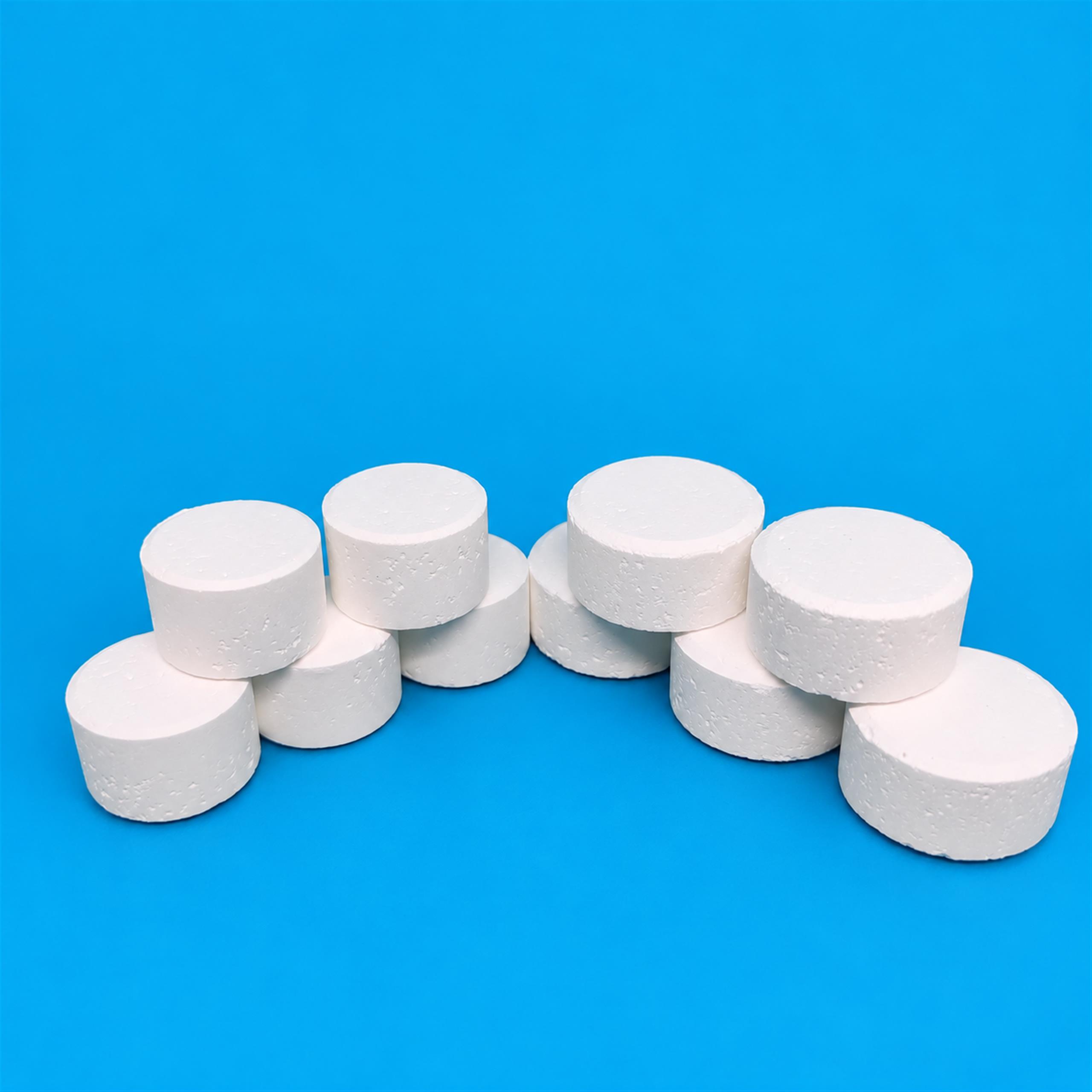
What to Assess When NaDCC Is Unavailable During Supply Disruptions
When sodium dichloroisocyanurate (NaDCC) supply is disrupted, the most direct substitute products to evaluate are trichloroisocyanuric acid (TCCA), calcium hypochlorite, and liquid sodium hypochlorite. However, none of these deliver identical performance, and each introduces distinct handling, dosing, and compatibility changes that must be verified against your specific application before any purchase is made.
The essential decision is not simply “which product can replace NaDCC” but “which product can deliver the required available chlorine dose, at the correct concentration and contact time, within the constraints of your existing equipment and regulatory framework.” Procurement during a disruption should begin with a gap analysis of these parameters rather than a price-only comparison.
Why NaDCC Supply Disruptions Create a Procurement Challenge
NaDCC is valued for its high available chlorine content (typically 55–60% on an anhydrous basis for the dihydrate form), good stability in dry storage, and relatively neutral dissolution pH compared with some alternatives. Supply disruptions can arise from raw-material shortages, manufacturing bottlenecks, or logistics constraints. When standard NaDCC orders cannot be fulfilled on schedule, procurement teams face pressure to source quickly—but speed without technical assessment risks operational failure or non-compliance.
The critical point: switching products is not a like-for-like transaction. A substitute must be evaluated for its own specifications, not assumed to behave identically to NaDCC. This includes checking whether the alternative is supplied as anhydrous or hydrated material, what form of available chlorine it releases, and whether the pH shift it creates is acceptable for your system.
Primary Substitute Products to Evaluate
Trichloroisocyanuric Acid (TCCA)
TCCA is the most chemically similar dry chlorine donor to NaDCC. It typically provides 85–90% available chlorine and is available in tablet, granular, and powdered forms. Because it is a tri-chlorinated isocyanurate, it tends to lower solution pH more than NaDCC, which can affect corrosion rates in metal distribution systems and the efficacy of certain disinfection processes that require a specific pH window.
Before procuring TCCA as a NaDCC substitute, confirm the following:
- Your dosing equipment can handle the different dissolution rate and potential for slower or faster chlorine release.
- The resulting solution pH remains within your operational limits.
- Your application does not prohibit isocyanurate-stabilized chlorine (some regulatory frameworks differentiate between free available chlorine and combined chlorine residuals, and high isocyanurate levels can interfere with certain test methods).
Calcium Hypochlorite
Calcium hypochlorite (typically 65–70% available chlorine) is a widely stocked alternative but differs fundamentally from NaDCC. It is not an isocyanurate; it is a hypochlorite salt that raises solution pH and introduces calcium ions. In hard-water systems, this can accelerate scale formation. It is also more reactive and less stable in storage than NaDCC, requiring cooler, drier conditions and shorter shelf-life management.
Procurement checks for calcium hypochlorite should include:
- Compatibility with existing storage infrastructure (it is more corrosive and moisture-sensitive than NaDCC).
- Whether your application tolerates the alkaline pH shift.
- Calcium scaling risk in your dosing and distribution equipment.
- Available form (granular versus tablet) and whether your feed system can accommodate it.
Liquid Sodium Hypochlorite
Sodium hypochlorite solution (typically 10–15% available chlorine for commercial grades) eliminates the dissolution step entirely but introduces completely different logistics. It degrades over time, requires specific storage materials (HDPE or compatible linings), and has a much lower chlorine density per unit volume, meaning larger storage and transport requirements.
Assessment points include:
- Transport and storage capacity at your site.
- Shelf-life expectations versus your consumption rate.
- Whether your dosing pumps and injection points are rated for liquid hypochlorite.
- Safety handling requirements, as liquid sodium hypochlorite poses different splash and vapor risks compared with dry NaDCC.
How to Compare Substitutes Against Your NaDCC Requirements
Effective procurement during a disruption requires a structured comparison, not a casual substitution. Use the parameters below to score each candidate product against your current NaDCC specification.
| Parameter | Why It Matters for Substitution |
|---|---|
| Available chlorine content (% by weight) | Determines how much product you must dose to achieve the same disinfecting residual. A lower percentage means higher mass or volume per treatment cycle. |
| Physical form (granular, tablet, liquid) | Affects dissolution equipment, feed mechanism compatibility, and handling safety. |
| Solution pH impact | A substitute that shifts pH outside your target range can affect disinfection efficacy, corrosion, or downstream process compatibility. |
| Stability and shelf life under your storage conditions | Some substitutes degrade faster, meaning you may need smaller, more frequent orders—a significant logistics change during disruption. |
| By-products and isocyanurate load | TCCA and NaDCC both release isocyanuric acid. If your application has limits on combined chlorine or isocyanurate, assess cumulative loading. |
| Regulatory acceptance in your specific use case | A product approved for one application (e.g., swimming pool sanitation) may not be authorized for another (e.g., potable water treatment). Verify local and application-specific requirements independently. |
What Not to Overlook During Emergency Procurement
Supply pressure can lead to shortcuts. Avoid these common errors when assessing NaDCC substitutes:
- Ignoring concentration differences. Switching from 60% available chlorine NaDCC to 10% liquid sodium hypochlorite without recalculating dosing rates will under-treat your system.
- Assuming “chlorine product” means interchangeable. Different chlorine donors have different oxidation potentials, reaction kinetics, and pH behaviors. Do not substitute based on brand familiarity alone.
- Mixing incompatible products. Never blend dry chlorine donors with acids, organic materials, or other incompatible chemicals. This applies equally to substitutes as to NaDCC itself.
- Skipping a small-scale trial. If possible, run a controlled test with the substitute at your target dose before committing to a full procurement order. This reveals dissolution behavior, pH shift, and residual performance that datasheet values may not fully predict.
Managing Ongoing Supply Risk Beyond the Immediate Substitute
Once a substitute is sourced and validated for the disruption period, document what worked and what required adjustment. This information shortens your response time if NaDCC supply falters again. Maintain a shortlist of pre-qualified alternatives with known dosing adjustments, storage notes, and regulatory status for your specific application—so the next disruption triggers assessment rather than panic procurement.
If your operation relies on NaDCC dihydrate specifically, note that anhydrous forms of other isocyanurates may behave differently in terms of dissolution speed and solution concentration. Always verify the exact product form on the supplier’s certificate of analysis before accepting a substitute shipment.
Next Step: Discuss Your Specific Substitution Scenario
If you are currently facing a NaDCC supply gap and need to evaluate which substitute product aligns with your application’s chlorine dose, pH tolerance, and regulatory requirements, share your current NaDCC specification and the end-use context—we can help you narrow the assessment to the most viable options.
