
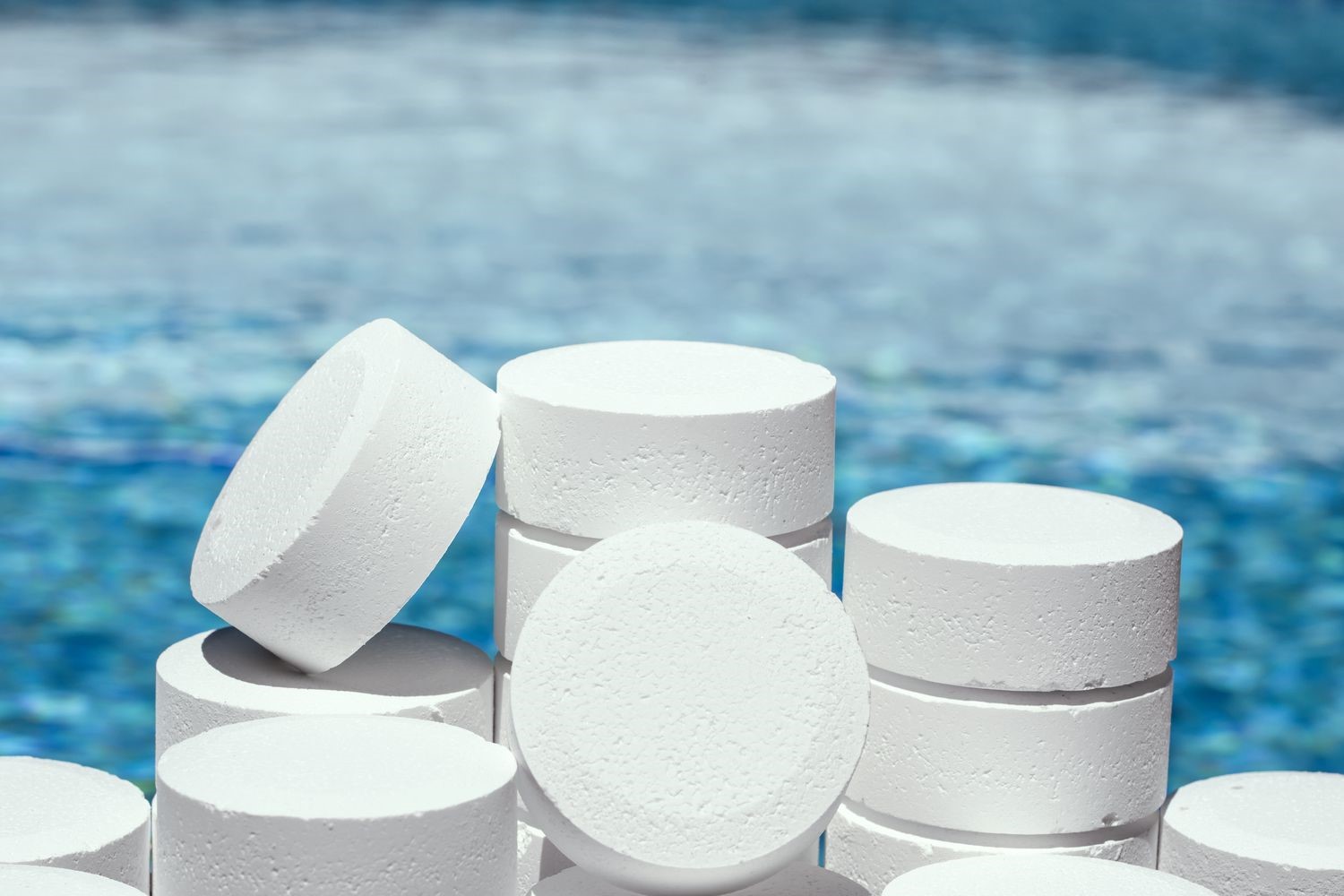
NaDCC and SDIC Are the Same Chemical Compound
NaDCC and SDIC refer to the same active substance: sodium dichloroisocyanurate. Both abbreviations describe the sodium salt of dichloroisocyanuric acid, a chlorinated isocyanurate widely used as a disinfectant and oxidising agent. When a supplier labels a product as either NaDCC or SDIC, the core chemical is identical. However, the answer changes in practice if the supplier is using the abbreviation loosely, selling a different hydrate form, or marketing a formulated product under one of these labels.
Buyers who assume every package marked “NaDCC” or “SDIC” delivers the same material should verify three things before purchasing: the stated chemical identity, the physical form (anhydrous versus dihydrate), and whether the product is raw material or a finished formulation. These differences, not the abbreviation itself, are what determine whether you are actually receiving the same chemical.
What NaDCC and SDIC Actually Stand For
Both abbreviations point to sodium dichloroisocyanurate (chemical formula C₃Cl₂N₃NaO₃ for the anhydrous form). “NaDCC” expands directly from the chemical name: Na (sodium) + DCC (dichloroisocyanurate). “SDIC” uses S for sodium, D for di, I for iso, and C for cyanurate — an older shorthand that has persisted in trade, especially in Asian markets.
Because both terms describe the same molecule, a certificate of analysis showing available chlorine in the expected range (typically 55–62 % for anhydrous material) confirms that the substance matches either label. The confusion rarely lies in the chemistry itself but in how suppliers present what they are selling.
Where the “Same Chemical” Claim Breaks Down
Even though the active ingredient is identical, three practical differences can mean that two products labelled NaDCC and SDIC are not interchangeable in use.
Anhydrous versus Dihydrate
Sodium dichloroisocyanurate is most commonly supplied as the dihydrate (C₃Cl₂N₃NaO₃·2H₂O), which contains roughly 55–56 % available chlorine. The anhydrous form contains approximately 60–62 % available chlorine. A supplier offering “SDIC” may be quoting the anhydrous grade, while one offering “NaDCC” may ship the dihydrate — or vice versa. The label alone does not confirm which hydrate you are receiving.
If your process depends on a specific available-chlorine percentage or on the weight-based dosing calculation, you must check the technical data sheet rather than relying on the abbreviation on the bag.
Raw Material versus Formulated Product
Some suppliers use “NaDCC” or “SDIC” as a shorthand for a blend that includes sodium dichloroisocyanurate alongside buffers, stabilisers, surfactants, or other active ingredients. A “NaDCC tablet” may contain only 85–90 % sodium dichloroisocyanurate by weight, with the remainder being excipients that control dissolution rate or pH. In that case, the label is technically accurate but the product is not pure sodium dichloroisocyanurate.
Ask for the declared active-ingredient content and any formulation additives before comparing products from different sources.
Purity and Available Chlorine
Available chlorine is a performance metric, not a direct measure of purity. Two samples both described as “SDIC” can differ in available chlorine if one contains higher levels of inactive filler or moisture. Always confirm both the available-chlorine value and the stated purity or assay on the certificate of analysis.
How to Confirm You Are Comparing Apples with Apples
When evaluating quotations or samples from different suppliers, use the following checklist to determine whether you are truly comparing the same chemical:
- Verify the full chemical name on the label and the certificate of analysis — it should read sodium dichloroisocyanurate (or sodium dichloro-s-triazinetrione).
- Confirm the physical form: granular, powder, tablet, or briquette, and whether the material is anhydrous or dihydrate.
- Check the available-chlorine specification: a range of 55–62 % is typical, but lower values suggest dilution or a different hydrate.
- Read the composition declaration to see whether the product is 100 % active ingredient or a formulated blend.
- Compare the CAS number — sodium dichloroisocyanurate dihydrate is CAS 51580-86-0; the anhydrous form is CAS 2893-78-9. Matching CAS numbers confirm the same substance.
Why the Mislabeling Happens
The interchangeable use of NaDCC and SDIC stems from historical trade conventions. In some regions, “SDIC” became the dominant trade term for decades, while “NaDCC” gained traction in European and pharmaceutical-grade supply chains. Neither abbreviation is regulated as a product standard, so suppliers are free to use either — or to use one term while actually shipping something only loosely related, such as trichloroisocyanuric acid (TCCA) or a mixed-chlorine tablet.
This is why the title’s question matters: when you see “NaDCC vs. SDIC” in a supplier’s catalogue, you are not automatically looking at two different chemicals, but you are also not guaranteed two identical products. The abbreviation tells you the intended active ingredient; the technical documentation tells you what you are actually getting.
Safety Note When Handling Either Form
Sodium dichloroisocyanurate in any form is a strong oxidiser. It must be stored away from combustible materials, acids, and organic substances that could react violently. Do not mix it with hydrochloric acid or other chlorine-releasing products in concentrated form. Use appropriate personal protective equipment and follow the safety data sheet provided with the specific product you receive, as formulation differences can affect handling guidance.
Bottom Line
NaDCC and SDIC are two abbreviations for the same compound — sodium dichloroisocyanurate. If two suppliers both sell genuine sodium dichloroisocyanurate under those labels, the chemistry is the same. In practice, however, differences in hydrate form, purity, available chlorine, and whether the product is raw material or a blend can make the materials behave differently in your application. Always verify the full specification rather than accepting the abbreviation as proof of equivalence.
If you are comparing supplier offers labelled NaDCC or SDIC and need help interpreting the technical data sheets side by side, send us the certificates of analysis and your target available-chlorine requirement — we will confirm whether the products are truly equivalent for your use.
