
Why Clear Water Can Still Form Scale — And What Polyphosphate Does About It
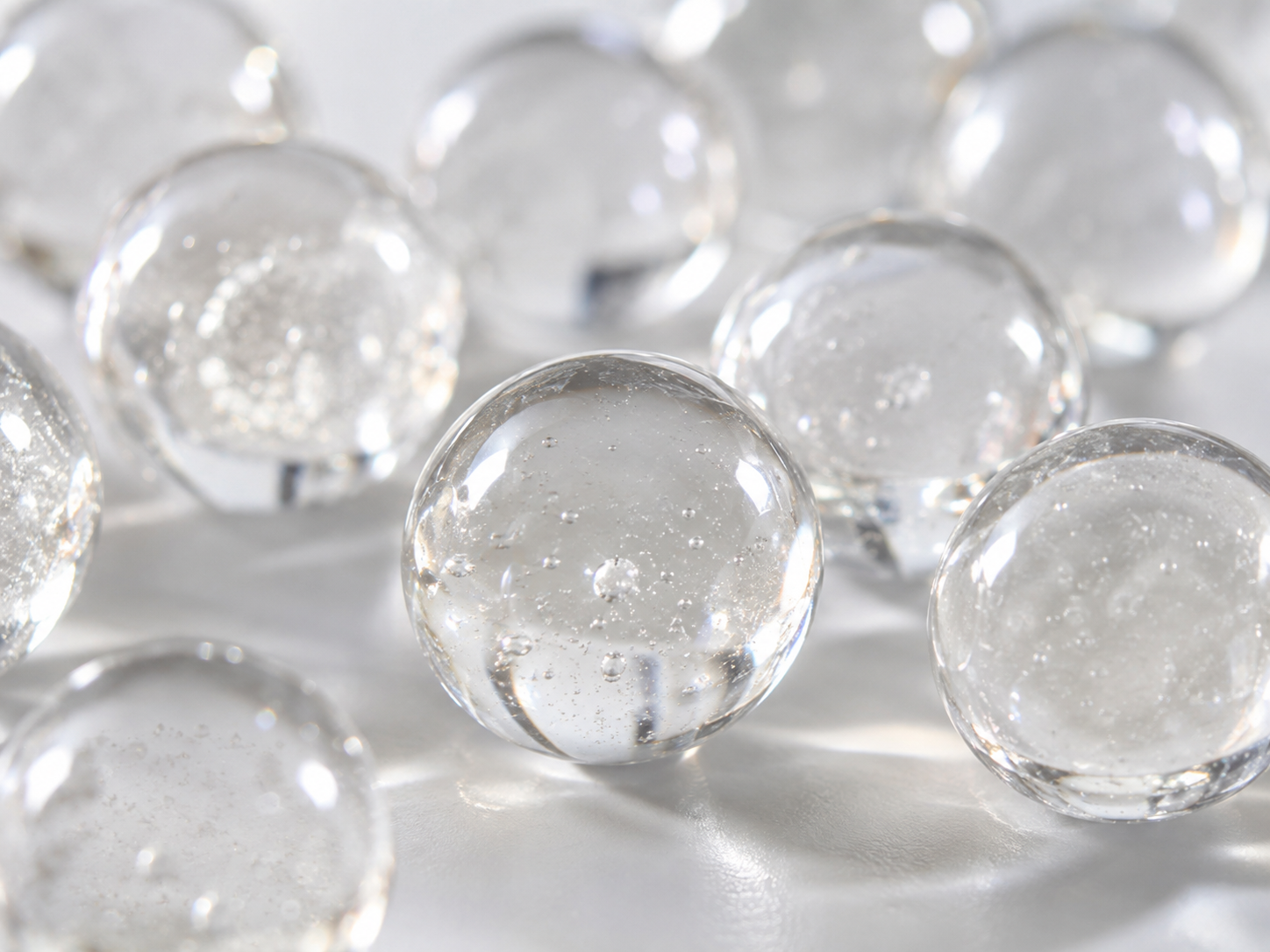
Clear water is not the same as scale-free water. Visibility only tells you that particles large enough to scatter light have been removed; it says nothing about dissolved calcium, magnesium, or other hardness ions still present in solution. Those invisible ions can precipitate onto pipes, heating elements, and appliance surfaces the moment conditions shift — a change in temperature, pressure, pH, or even evaporation. Polyphosphate-based products such as siliphos crystals address this by interfering with crystal nucleation and growth, keeping hardness minerals in a dispersed, non-adhering state even though they remain dissolved.
If you manufacture filters, specify water-treatment media, or service residential and commercial systems, understanding this distinction prevents costly misdiagnoses. Customers often assume that a clear-water reading means their scale problem is solved, only to find white deposits forming weeks later. The root cause is usually a misunderstanding of what “treatment” actually means.
What “Clear Water” Actually Measures
When a water sample looks transparent, two things have typically happened:
- Suspended solids have been filtered or settled out. Sand, rust, sediment, and organic debris are physically removed or allowed to drop to the bottom.
- Dissolved minerals have not been addressed — unless a specific softening or sequestration step was taken. Calcium carbonate, calcium sulfate, and magnesium salts dissolve completely at typical concentrations. They produce no turbidity.
Turbidity tests and visual inspection cannot detect dissolved hardness. A water sample with 300 mg/L calcium carbonate equivalent can be perfectly clear and still deposit a thick scale layer inside a boiler or on a showerhead. The confusion arises because most people equate “clean-looking” with “problem-free,” but scale formation is a separate chemical process that depends on supersaturation, surface energy, and nucleation sites — none of which are revealed by a glass of water held up to the light.
How Scale Forms in Apparently Clean Water
What triggers precipitation when water looks fine?
Scale forms when dissolved hardness ions exceed their solubility limit under new conditions. Three common triggers are:
- Temperature rise. Calcium carbonate becomes less soluble as water heats. A water heater set to 60 °C or higher can push well-clear water into supersaturation almost immediately.
- Pressure drop or CO₂ loss. In pressurized systems, carbon dioxide stays dissolved and keeps pH lower. When pressure falls — at a faucet, for instance — CO₂ escapes, pH climbs, and carbonate ions combine with calcium to form scale.
- Evaporation or concentration. Cooling towers, humidifiers, and even slow drips on fixtures concentrate dissolved minerals over time until they crystallize.
None of these events changes how the water looks beforehand. The scale appears only after the chemical environment shifts. This is why a point-of-use system that merely filters sediment offers no protection against scale, even if its output is sparkling.
What Polyphosphate Actually Does — And What It Does Not Do
Polyphosphate products, including siliphos-type crystalline media, operate on a principle called threshold treatment or crystal modification. They do not remove calcium or magnesium from the water. They do not soften it in the way an ion-exchange resin does. Instead, they keep hardness minerals dissolved and prevent them from bonding to surfaces as hard, adherent scale.
The mechanism works like this: polyphosphate molecules adsorb onto microscopic nucleation sites — the tiny surfaces where scale crystals would normally begin to grow. By coating those sites, they raise the energy barrier for crystal formation. The result is that calcium carbonate and related salts stay in a colloidal or amorphous suspended state rather than forming the dense, rock-like deposits we call scale. The water remains clear, and the minerals remain in solution, but they no longer plate out on equipment.
Key distinctions to communicate to end users
| Function | What happens to hardness ions | Typical technology |
|---|---|---|
| Scale inhibition (sequestration) | Remain dissolved; crystal growth is disrupted | Polyphosphate / siliphos crystal media |
| Water softening | Calcium and magnesium are exchanged for sodium or removed | Ion-exchange resin |
| Scale removal | Existing deposits are dissolved or mechanically stripped | Acid cleaning, descaling agents |
| Particle filtration | Removes suspended solids only; dissolved ions untouched | Sediment filters, cartridge filters |
| Corrosion inhibition | Forms a protective film on metal surfaces | Orthophosphate, silicate blends |
A common mistake is to install a polyphosphate cartridge and then test for hardness at the outlet, expecting a lower number. The hardness will be essentially unchanged — and that is correct. The product was never designed to lower it. Its job is to prevent that hardness from becoming a problem downstream.
When Polyphosphate Treatment Is Appropriate
Polyphosphate media works best in systems where:
- Water hardness is moderate to high but full softening is impractical or undesired (e.g., because sodium addition from ion exchange is a concern).
- The primary goal is protecting appliances, pipes, and heating elements rather than producing “soft” water for all uses.
- Flow rates and contact times allow the polyphosphate to dissolve and interact with hardness ions before the water reaches the point of use.
- The system is closed or semi-closed, such as in a boiler feed, ice machine, coffee equipment, or residential point-of-entry setup.
It is less suitable where water must meet a strict residual hardness specification for industrial process chemistry, or where discharge regulations limit phosphate content. In those cases, the application must be evaluated against local standards and the specific product’s compliance documentation — details that should be confirmed for the exact material before specification.
Factors That Affect Performance
Even when the product is correctly matched to the application, several variables determine whether scale inhibition holds up over time:
- Dosage relative to water hardness and flow. Under-dosing means not enough polyphosphate molecules are available to coat nucleation sites. Over time, the media depletes and must be replaced.
- Water temperature. Higher temperatures accelerate both scale-forming reactions and the dissolution rate of polyphosphate crystals. The balance between these two rates dictates service life.
- pH range. Very low or very high pH can shift the equilibrium of phosphate species, changing how effectively they interact with calcium and magnesium.
- Presence of other ions. Iron, manganese, and heavy metals can compete for binding sites or alter the behavior of the polyphosphate. Pre-treatment for those contaminants may be necessary.
None of these factors can be answered with a single universal number. Each installation requires a look at the source-water analysis and the operating conditions. A product datasheet will state the intended application range and any tested parameters, but the actual replacement interval and dose must be determined for the specific system.
Communicating This to Customers Who See Clear Water and Think They Are Done
If you sell or specify water-treatment equipment, you will encounter this scenario regularly: a customer installs a sediment filter, sees clear output, and believes the scale issue is resolved. Within months, white crust builds on faucets and heating elements. The explanation they need is straightforward:
Your filter removed what you could see. It did not address what you could not see. Dissolved minerals are still there, and they only become a problem when conditions change — heat, pressure loss, or time. A polyphosphate-based treatment step keeps those minerals from crystallizing onto your equipment, even though the water stays clear.
This framing avoids technical overload while giving the customer a reason to consider a second-stage treatment. It also sets the right expectation: the water will look the same, but the outcome — less scale, longer equipment life — will be different.
Frequently Asked Questions About Scale in Clear Water
Can I test for scale potential without seeing deposits?
Yes. A water analysis that reports calcium, magnesium, alkalinity, pH, and temperature can be used to calculate a Langelier Saturation Index or similar scaling tendency. A positive index means scale is likely, regardless of clarity.
Does polyphosphate work on all types of scale?
It is most effective against calcium carbonate scale. Calcium sulfate and silica scales are more resistant. Mixed-mineral deposits may require a combined approach or a different technology entirely.
Will polyphosphate make my water “soft”?
No. Hardness readings before and after treatment will be nearly identical. The difference is that the hardness no longer plates out as scale. If genuinely soft water is needed, ion exchange or reverse osmosis is required.
Is polyphosphate safe for drinking water?
That depends on the specific product formulation, the applicable standards in the destination market, and the concentration at the point of use. “Food grade” or similar descriptions do not automatically confirm drinking-water compliance. Verification must be done for the exact product and jurisdiction.
How often does siliphos crystal media need replacing?
Replacement frequency depends on hardness level, flow volume, temperature, and the specific media format. There is no single interval that fits every system. Monitor performance and replace when scale returns or when the media is visibly depleted, as guided by the product specifications.
Getting the Right Polyphosphate Media for Your Application
Choosing between polyphosphate formats — granular, crystal, block, or blended — depends on your equipment design, flow characteristics, and maintenance preferences. What matters most is matching the media’s dissolution behavior to your contact time and hardness load, not simply picking the product with the most aggressive marketing claims.
At ENVO CHEMICAL, we supply polyphosphate-based water-treatment media formulated for scale inhibition in a range of residential, commercial, and light-industrial settings. If you are evaluating whether a siliphos-type crystal or a comparable polyphosphate product fits your system, share your source-water hardness and alkalinity, the equipment type, the desired flow rate, and the destination market — and we can help you narrow the specification.
