
What a Clear-Housing Demo Actually Shows — And What It Misses
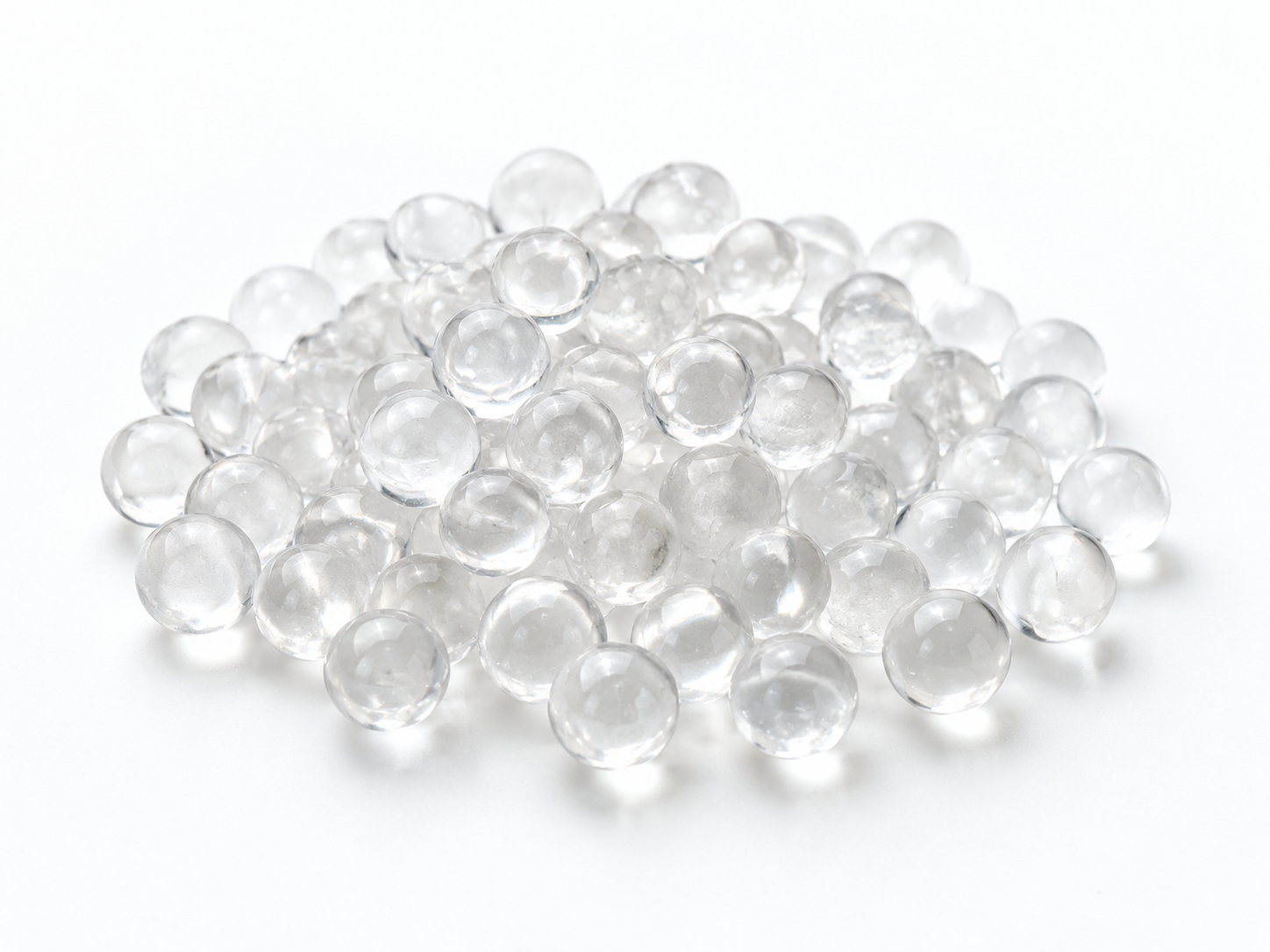
A polyphosphate dealer fills a transparent cartridge housing with siliphos-type crystals, runs water through it, and points to the clear effluent as proof of performance. That demonstration tells you almost nothing about whether the material will protect your customers’ pipes, appliances, or industrial equipment from scale. Visual clarity is a dissolution observation, not a performance test. Relying on it can lead to under-dosed systems, premature replacement, and liability claims that cost far more than the media itself.
If you specify, sell, or install polyphosphate dosing systems, you need evaluation criteria that go beyond what you can see through plastic. This article explains the gap between a showroom trick and a genuine qualification, then gives you a practical checklist you can use before committing to any supplier or product grade.
Why Dealers Reach for the Clear Housing
Polyphosphate products — including siliphos crystals and similar orthophosphate-based media — dissolve slowly in water. The dissolution process releases long-chain phosphate molecules that sequester calcium, magnesium, and other hardness ions, keeping them in solution rather than allowing them to precipitate as scale. Because the raw material starts as a solid crystal or bead, it is tempting to prove “it works” by showing it disappear in a clear tube.
The demo is easy to set up, requires no lab equipment, and produces an immediately satisfying visual: cloudy influent, clear effluent, shrinking crystals. For a trade-show booth or a distributor meeting room, it feels like proof. For an engineering specification, it is closer to an anecdote.
What a Clear-Housing Observation Does Not Measure
Dose accuracy under real flow conditions
A stationary cartridge in a demo rig may see a flow rate of a few liters per minute. Field installations operate at pressures and velocities that change contact time, channeling behavior, and dissolution rate. A media that dissolves completely in a demo unit at low flow may under-dose — or over-dose — at the flow rate your system actually requires. Over-dosing wastes material and can raise orthophosphate levels unnecessarily; under-dosing leaves scale protection incomplete.
Longevity and service life
Watching crystals shrink tells you they dissolve. It does not tell you how many liters of treated water one kilogram of media will handle before the phosphate reserve is exhausted. Service life depends on raw-water hardness, temperature, pH, flow rate, and the specific polyphosphate formulation. Two products that look identical in a demo can differ by a factor of two or more in actual run-length under the same conditions.
Scale-inhibition effectiveness, not just dissolution
This is the most critical distinction. Polyphosphate does not remove scale; it inhibits new scale formation by keeping hardness minerals in a soluble, non-adherent state. A clear effluent in a demo rig says the media dissolved — it says nothing about whether the resulting phosphate concentration is sufficient to inhibit scale at your target water chemistry. Confirming inhibition requires exposure testing under controlled hardness and temperature, typically measured against a recognized standard such as a static or dynamic scale-formation test.
Corrosion interaction and material compatibility
Polyphosphate can also form a thin protective film on metal surfaces, offering mild corrosion inhibition for copper, brass, and iron. This is a separate function from scale control and depends on concentration, pH, and exposure time. A visual demo does not address corrosion behavior at all. If your application involves sensitive plumbing materials, you need data specific to those conditions — not a clear tube.
What a Proper Evaluation Looks Like
A responsible qualification program for polyphosphate media combines at least three elements:
- Water-chemistry matching. Test the product with water that resembles your actual source — same hardness range, pH, temperature, and alkalinity. Demo-grade tap water rarely represents field conditions.
- Dose-response data. Determine the minimum orthophosphate residual needed to achieve scale inhibition at your water chemistry, then verify that the media delivers that residual at the intended flow rate and contact time.
- Longevity testing or published capacity data. Ask the supplier for capacity figures (for example, liters treated per kilogram of media at a defined hardness and dose) derived from testing, not from theoretical calculations alone.
If a supplier cannot or will not provide data beyond the visual demo, treat that as a qualification gap rather than a finished evaluation.
Common Mistakes Buyers Make When Evaluating Polyphosphate Media
| Mistake | Why It Is Risky | What to Do Instead |
|---|---|---|
| Accepting a clear-housing demo as a performance test | Confuses dissolution with inhibition; ignores dose, flow, and water chemistry | Request dose-response and capacity data matched to your water |
| Assuming all siliphos-type products are equivalent | Composition, chain length, and purity vary between manufacturers and grades | Compare technical data sheets and ask for third-party or in-house test results |
| Selecting media based on lowest unit price | Cheaper media may dissolve faster (shorter life) or slower (under-dosing), increasing total cost | Calculate cost per liter of treated water, not cost per kilogram of media |
| Treating polyphosphate as a water softener | Polyphosphate does not exchange ions or reduce total dissolved solids; it sequesters hardness in place | Confirm whether your application needs true softening (ion exchange) or scale inhibition (sequestration) |
| Ignoring drinking-water regulations for the destination market | Food-grade labeling does not automatically mean compliance with every national drinking-water standard | Verify that the specific product, at the intended dose, meets the regulatory limits of the destination country |
How to Use This When Comparing Suppliers
When you sit down with a polyphosphate supplier — whether at a trade show or during a procurement review — ask a short set of questions that move the conversation past the demo:
- What is the orthophosphate release rate at a flow of X L/min and a water temperature of Y °C?
- What is the documented treatment capacity (liters per kilogram) at a hardness of Z mg/L as CaCO₃?
- Can you provide or reference a scale-inhibition test under conditions similar to my application?
- What is the polyphosphate chain-length distribution, and how does it affect performance at low temperature?
- Does this product carry any third-party certification or testing relevant to my market’s drinking-water regulations?
Suppliers who answer these questions with specific, verifiable data are giving you something you can use. Suppliers who redirect you to a clear-housing video are not.
Where ENVO CHEMICAL Fits Into the Picture
ENVO CHEMICAL supplies polyphosphate-based water-treatment materials, including siliphos crystal products, to manufacturers, distributors, and project specifiers. The company provides technical documentation that covers composition, recommended application ranges, and handling guidelines. For buyers who need to match a specific grade to a defined water chemistry and flow condition, ENVO CHEMICAL can supply the data required to move from a demo to a real specification.
What you should confirm before placing an order: the exact grade you need, the water conditions it will face, the equipment type it will feed, the required delivery destination, and any regulatory framework that applies to the end use. Having those details ready shortens the technical review and gets you to a quote faster.
Short Answers to Frequently Raised Questions
Does a clear effluent mean the polyphosphate is working?
It means the media dissolved. It does not confirm that enough phosphate was released to inhibit scale at your water’s hardness and temperature. Always verify dose and inhibition separately.
Can I use a clear housing to size a system?
No. Sizing requires knowing the media’s capacity at your specific flow rate and water chemistry. A visual demo cannot provide that calculation.
Is polyphosphate the same as a water softener?
No. Polyphosphate sequesters hardness minerals so they stay in solution; it does not remove them. A water softener exchanges calcium and magnesium for sodium or potassium and actually reduces hardness. Choose based on whether you need scale inhibition or true softening.
Do all siliphos-type crystals perform the same?
No. Purity, chain length, crystal size, and manufacturing process affect dissolution rate, phosphate availability, and service life. Treat each product grade as distinct until data proves otherwise.
Is food-grade polyphosphate automatically safe for drinking water everywhere?
Not automatically. Food-grade status refers to material purity, not to compliance with every national drinking-water standard at a specific dose. Always confirm regulatory suitability for your target market.
Get the Right Data Before You Specify
If you are evaluating polyphosphate media for a filter system, a dosing unit, or a commercial installation, start by defining your water chemistry, flow rate, and performance target — then ask every supplier for data that matches those parameters, not a showroom demonstration. ENVO CHEMICAL welcomes technical inquiries that include application details, source-water conditions, equipment type, and quantity requirements so we can point you to the grade and documentation that actually support your decision.
