
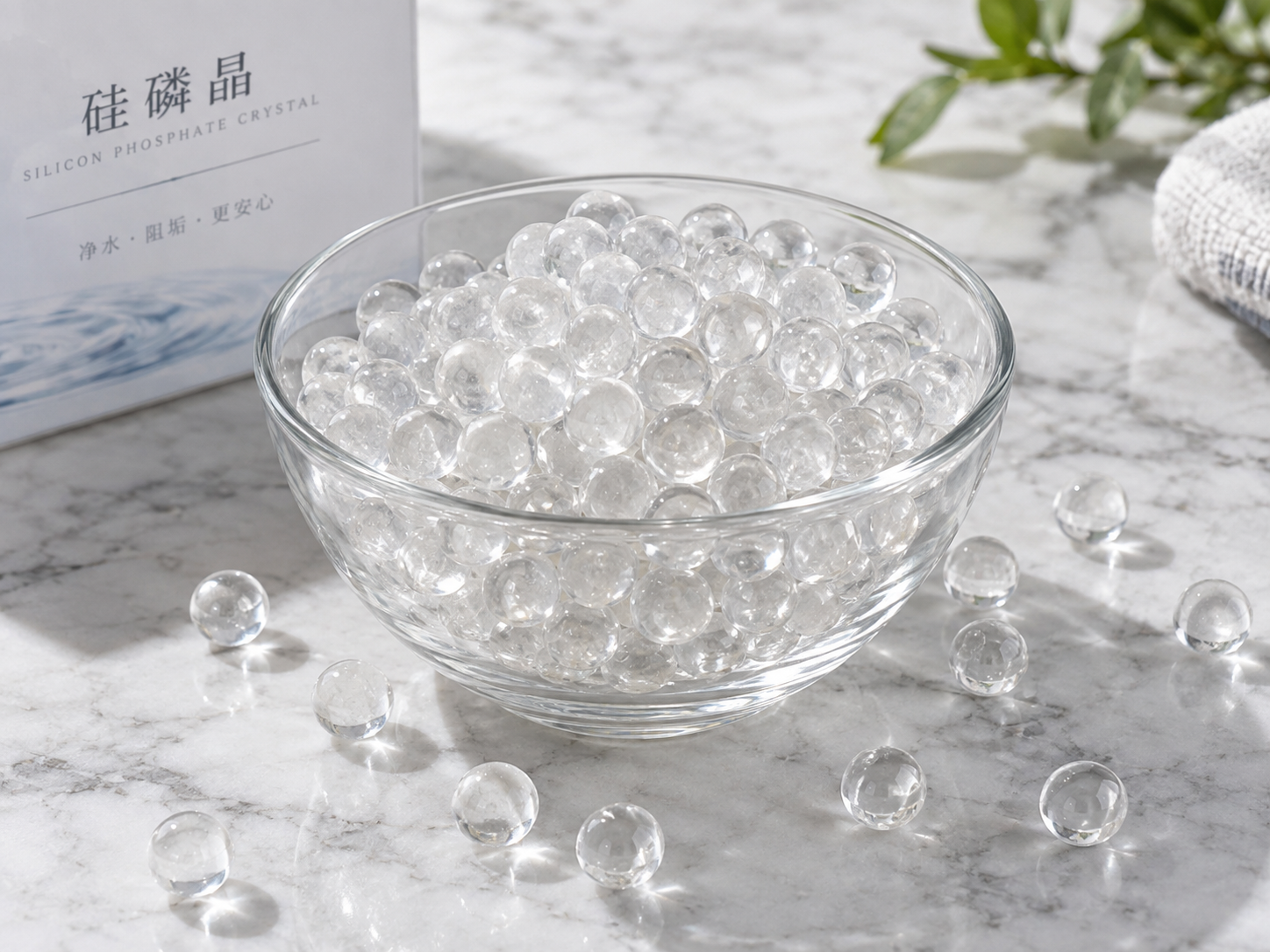
Why Sample Costs and Sales Commissions Must Be Handled as Separate Line Items
When you source polyphosphate products such as siliphos crystals through a sales agent, the cost of evaluation samples and the agent’s sales commission are two fundamentally different financial transactions. Sample expenses cover the material, packaging, and shipping needed for you to test performance against your water conditions. Sales commissions compensate the agent for brokering the deal. Combining them into a single invoice or treating samples as a “discount” obscures your true landed cost and creates accounting complications, especially if your organization tracks procurement spend by category.
The cleanest approach is to request that your agent or supplier issue separate documentation: one line for the sample shipment (treated as a test purchase or a reimbursable evaluation cost) and another for the commission or brokerage fee attached to the confirmed production order. If you are the buyer, insist on this split before you place any volume order. If you are the agent, propose it upfront—transparent accounting builds longer-term trust with industrial and municipal buyers who need to justify every cost centre.
What Polyphosphate Actually Does in Water Treatment
Before diving deeper into the financial mechanics, it helps to be precise about the product category. Polyphosphate-based materials, including siliphos-type crystals, are scale inhibition media. They work by sequestering hardness ions—primarily calcium and magnesium—so that these ions remain in solution rather than precipitating as scale on pipe walls, heating elements, or membrane surfaces.
This is distinct from several other water-treatment functions:
- Water softening physically removes hardness ions through ion exchange, typically using sodium-based resins. Polyphosphate does not remove ions; it holds them in a soluble complex.
- Scale removal describes a cleaning action on existing deposits, often using acids or chelating agents. Polyphosphate prevents new scale rather than dissolving old scale.
- Corrosion inhibition may be a secondary benefit of some polyphosphate formulations, but it is not the primary mechanism. A dedicated corrosion inhibitor serves a different purpose.
- Disinfection kills microorganisms and is entirely unrelated to polyphosphate chemistry.
Understanding this distinction matters because the sample you request should be evaluated specifically for scale-inhibition performance under your operating conditions—temperature, pH, flow rate, and raw-water hardness. A sample that passes one test may be irrelevant if your system also requires corrosion control or microbial management.
How Sample Evaluation Works with Polyphosphate Crystals
A typical evaluation cycle for polyphosphate media begins with a bench-scale or pilot test. You provide the agent or supplier with key water parameters: total hardness, alkalinity, pH, temperature range, and the type of equipment (e.g., reverse-osmosis pretreatment, commercial boiler feed, cooling tower makeup). The supplier ships a defined quantity of siliphos crystal or comparable polyphosphate product for you to run side-by-side with your current treatment or with an untreated control.
The cost of this sample shipment—product, container, freight—is what you need to classify separately. In many B2B transactions, the supplier absorbs this cost as a marketing expense, but when a third-party sales agent is involved, the agent may pass the sample cost through to you or bundle it into their commission calculation. Either way, you need a clear paper trail.
Questions to Ask Before You Accept Any Sample Invoice
- Is the sample charge itemised as a product cost or as a brokerage fee?
- Will the sample cost be credited against the first production order, or is it non-refundable?
- Does the agent’s commission apply only to confirmed volume orders, or is it also embedded in the sample price?
- What is the minimum order quantity that triggers a commission, and is that threshold disclosed in writing?
If the agent cannot answer these cleanly, treat it as a red flag. Ambiguous fee structures often lead to disputes once the first container shipment arrives.
Practical Steps to Separate the Two Costs in Your Procurement Process
Whether you are a water-treatment contractor, an equipment manufacturer specifying polyphosphate media, or an importer evaluating a new source, the following steps keep sample spend and commission spend in separate buckets.
- Define the evaluation protocol first. Agree on the sample quantity, the test duration, and the pass/fail criteria before any money changes hands. Put this in an email or a simple purchase order marked “Evaluation Sample—Non-Production.”
- Request a pro-forma invoice that splits the line items. One line should read something like “Siliphos crystal sample, 25 kg, for performance evaluation” with a unit price and freight. A second line, if applicable, should read “Sales agency commission, X% of confirmed order value, payable on production PO.”
- Verify who actually ships the sample. In some arrangements the supplier ships directly; in others the agent consolidates samples from multiple sources and forwards them. Know who holds inventory risk during the evaluation phase.
- Track the sample as a test expense, not as inventory. Unless you intend to use the sample material in a real system, it should not enter your stock ledger. This avoids distorting your cost-per-unit calculations for production purchases.
- Negotiate commission terms against volume, not against sample cost. A common mistake is allowing the agent to inflate the sample price to cover part of their commission. Keep the two figures independent so you can benchmark sample pricing across different suppliers.
Where Confusion Usually Arises
The most frequent source of confusion is when an agent presents a single “all-in” price for a trial shipment and then says the commission is “already included.” That statement tells you nothing about how much you are actually paying for the polyphosphate material versus how much you are paying for the agent’s service. Without a split, you cannot compare offers from different agents or different suppliers on an apples-to-apples basis.
Another pitfall occurs when a buyer assumes that because a sample was free, the agent’s commission must be higher later. In reality, many suppliers fund samples from their own marketing budget and pay the agent a separate commission on production orders. The two should never be offset against each other in your internal accounting.
What to Confirm About the Polyphosphate Product Itself
Separating fees is only half the job. You also need to verify that the polyphosphate material you are sampling is appropriate for your application. The term “siliphos crystal” is sometimes used generically for sodium hexametaphosphate-based products, but formulations vary in concentration, dissolution rate, and certified suitability. Before you commit to a volume order, confirm the following with the supplier—not just the agent:
- The exact chemical composition and polyphosphate chain length (e.g., glass-form versus crystalline form).
- Whether the product carries any food-grade or drinking-water certification, and whether that certification covers your specific end use and destination market.
- The recommended dosage range for your water hardness and flow conditions.
- The expected service life or replacement interval under continuous-use conditions.
- Any compatibility restrictions with your existing treatment train (e.g., certain antiscalants, biocides, or membrane types).
If any of these details are not documented in the product data sheet, ask for them in writing before you scale up. ENVO CHEMICAL supplies polyphosphate-based water-treatment media and can provide specification sheets on request to help you make that comparison.
A Quick-Reference Comparison: Sample Costs vs. Commission Costs
| Aspect | Sample Expense | Sales Commission |
|---|---|---|
| Purpose | Allow buyer to test polyphosphate performance | Compensate agent for brokering the production deal |
| When it occurs | Before any volume commitment | After a confirmed purchase order is issued |
| Typical accounting treatment | Test expense or reimbursable evaluation cost | Procurement service fee or brokerage expense |
| Should it be bundled? | No—keeps material cost transparent | No—keeps agent compensation transparent |
| Risk if combined | Cannot benchmark sample pricing | Cannot verify agent markup independently |
Frequently Asked Questions
Can I deduct sample costs from my first production order?
Sometimes, if the supplier or agent agrees in advance. Treat it as a negotiated credit, not an automatic offset. Get the credit terms in writing before you place the production order.
Do all polyphosphate sales agents charge a commission?
No. Some agents work on a retainer, some earn a margin on the product price, and some are paid directly by the manufacturer. Always ask how the agent is compensated so you can separate it from the material cost.
Is free sampling always a sign of a good product?
Not necessarily. Free samples may indicate strong supplier confidence, or they may simply reflect a marketing budget. The quality of the polyphosphate crystal must still be verified through testing under your actual water conditions.
What if my agent refuses to split the invoice?
Consider whether the lack of transparency is a deal-breaker. For B2B procurement, clear cost separation is a standard expectation. If the agent cannot accommodate it, you may need to source directly or find a different representative.
Next Step: Share Your Requirements
If you are evaluating polyphosphate media for a specific water-treatment application and want to clarify sample logistics, commission structures, or product specifications, tell us what you need. Provide your source-water hardness, target equipment type, required dosage range, approximate volume, and destination market—and we will help you move from evaluation to a clear, itemised quotation.
