
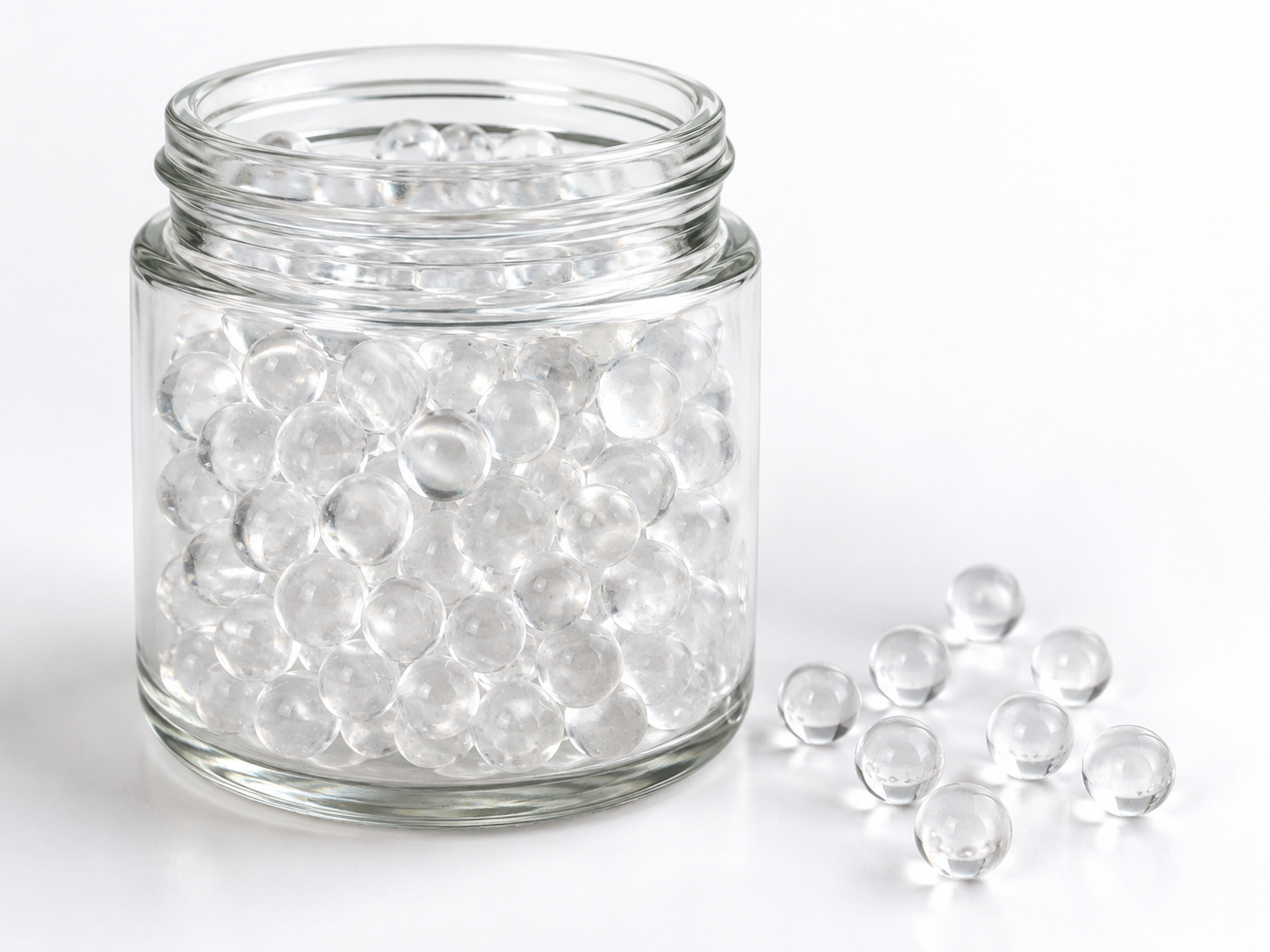
A refill programme turns polyphosphate media from a hidden component inside a sealed cartridge into a repeat-purchase consumable that a consumer or service technician handles directly. That single change reshapes what a sales proposal has to prove. The strongest proposal is rarely the one with the lowest price per kilogram; it is the one that answers four practical questions: what the media does and does not claim to do, how much goes into each refill, how the user knows when to replace it, and what documentation supports the claim in the destination market.
This article is written for two readers who meet across the same table: appliance brand teams planning a refillable or semi-refillable product line, and the sourcing and technical staff who have to evaluate polyphosphate media offers. It focuses on how to build and how to judge a proposal — not on generic product description.
What “entering the refill market” actually changes
A refill market exists when the customer buys the media again rather than replacing a sealed assembly. Typical examples include refillable filter cartridges for kettles and coffee machines, replaceable scale-control media for steam appliances, bulk media packs sold to service companies, and reusable housings in which the user pours in granular or crystalline media.
In a sealed-cartridge business, the appliance brand controls the media, the dose, and the replacement interval. In a refill business, part of that control moves to the user, the retailer, or the service partner. The proposal therefore becomes a specification document covering product behaviour, user instructions, and repeat supply, not only a quotation.
The five questions every proposal must answer
- Function and claim language. Is the media presented as a scale inhibitor, a corrosion-control agent, a softener, or a filter? These are different functions and must not be merged into one marketing sentence.
- Media form and hardware fit. Granular, crystalline, mesh-packed, or tableted forms behave differently in a refill chamber. The proposal should state the form, the particle size range, and how the media behaves when wetted, compacted, or partially dissolved.
- Dose and refill quantity. How much media goes into one refill, what that quantity is based on, and which water conditions were assumed. A dose figure without the assumptions behind it is not usable for engineering.
- Replacement logic. How does the user know the media is exhausted — throughput volume, elapsed time, a visual cue, a measurement, or an app counter? The proposal should explain how the interval is determined, not just state one number.
- Documentation and continuity. Which test reports, safety data, migration or contact-material information, and regulatory positions apply, and how the supplier manages formulation or source changes over the life of the refill programme.
What polyphosphate media do — and what they do not do
Confusion in this category usually comes from mixing four separate water-treatment functions. The table below separates them.
| Function | What it means in practice | What must be verified for the specific product |
|---|---|---|
| Scale inhibition | Polyphosphates interfere with the growth of hardness crystals at low concentrations, so deposits form more slowly or in a less adherent form. This is threshold treatment, not removal. | Dose basis, contact time, temperature range, and the hardness and alkalinity conditions the claim assumes. |
| Water softening | Removal of calcium and magnesium by ion exchange. Polyphosphate media do not do this and do not lower hardness readings in the way a softener does. | Whether the appliance claim needs actual softening; if so, polyphosphate media alone will not meet it. |
| Scale removal | Dissolving or breaking down existing deposits. This is a cleaning function, usually acid-based, and is separate from prevention. | Whether the deposit is already present; inhibitors are preventive, not remedial. |
| Filtration and disinfection | Physical removal of particles, or inactivation of microorganisms. Polyphosphate media perform neither function. | Whether the product line also needs a filtration stage or a microbiological control step. |
| Corrosion inhibition | Some polyphosphate products are positioned to form a thin protective film on metal surfaces, reducing corrosion in certain water conditions. | Whether the effect applies to your specific metals, water chemistry, and stagnation pattern — this is application-specific. |
Two consequences follow. First, a refill product must not be marketed as a softener if it only inhibits scale. Second, dose and replacement intervals are meaningful only inside a defined water envelope; hardness, pH, temperature, and flow all influence how quickly media is consumed.
Terminology: siliphos crystal, glassy phosphate, and related names
Buyers frequently treat “siliphos,” “siliphos crystal,” “phosphate crystal,” and “polyphosphate media” as synonyms. They are not. Siliphos is a trademarked name associated with a specific glassy polyphosphate product used for scale and corrosion control in water lines. Sodium hexametaphosphate, sodium tripolyphosphate, and other glassy or crystalline phosphates belong to the same broad chemical family but differ in chain length, dissolution behaviour, and intended application.
This matters commercially: a specification written for one product form cannot be transferred to another simply because both are called polyphosphate. When a proposal uses a trade name, ask for the underlying technical description — chemical form, particle size, solubility behaviour, and recommended contact conditions. That description is what your engineering team needs, and it is also what a retailer or regulator will ask about later.
How the refill model changes each part of the proposal
| Proposal element | Sealed OEM cartridge | Retail or service refill | What the proposal should include |
|---|---|---|---|
| Media specification | Fixed internally, rarely published | Often printed on pack or listing | A clear, publishable description of form and function |
| Dose | Set by the cartridge design | Scoop, sachet, or pre-measured pack | The basis for the refill quantity and its water assumptions |
| Packaging | Bulk or component-level | Consumer handling, moisture protection, dosing clarity | Pack formats, shelf-life considerations, and instructions the user can follow |
| Replacement cue | Service schedule or built-in indicator | User judgement or app prompt | A method the user can actually apply without lab equipment |
| Documentation | Internal file | Subject to buyer and market scrutiny | Test reports, safety information, and contact-material statements |
| Continuity | Low visibility | High visibility — a formulation change is a consumer event | Change-notification practice and specification lock-in |
Specifying the media without copying an existing datasheet
Most refill programmes start from an existing sealed cartridge. That datasheet is a useful reference, not a specification. Before approving a refill proposal, confirm the following points in writing:
- Intended function — prevention of scale, corrosion mitigation, or both, stated plainly.
- Media form and particle size range, plus any handling precautions such as dust control during refilling.
- Dose rationale — the quantity per refill together with the water conditions it was based on.
- Operating envelope — the temperature, pH, and flow conditions the supplier considers acceptable; if these are not stated, they must be requested rather than assumed.
- Replacement method — how the interval is defined and what data supports it.
- Contact materials — compatibility with the housing, seals, and any elastomers in the refill path.
- Regulatory status for the exact destination market, since approvals are market-specific and product-specific.
Common mistakes in polyphosphate proposals
- Overclaiming softening. A refill pack labelled as a softener creates returns and regulatory exposure when hardness is unchanged.
- Quoting a dose without water data. Dose figures derived from one water source rarely transfer to another market without review.
- Treating food grade as drinking-water approval. Food-grade status describes handling and purity for a material category. Suitability for drinking water depends on the exact product, the application conditions, the contact time, and the rules of the destination country. It must be verified separately, not inferred from the words “food grade.”
- Assuming trade names are interchangeable. Substituting one polyphosphate product for another without re-validating dose and behaviour changes the product the consumer receives.
- Leaving the replacement decision to guesswork. If the user cannot tell when media is spent, the programme loses credibility regardless of media quality.
Frequently asked questions
Is siliphos crystal the same as sodium hexametaphosphate?
No. Siliphos is a trademarked product name for a specific glassy polyphosphate material, while sodium hexametaphosphate is a distinct chemical specification. Their dissolution behaviour and recommended applications are not identical, so a proposal should always identify the actual product rather than relying on a category name.
Can polyphosphate media replace a water softener in an appliance?
No. Polyphosphate media inhibit scale formation; they do not remove calcium and magnesium from the water. If a product claim depends on reduced hardness, ion exchange or another softening method is required.
Does the refill quantity depend on local water hardness?
Usually the appropriate quantity and replacement interval are set against a defined water condition. Because hardness, temperature, and consumption volume vary by household and region, the proposal should state the assumptions behind the recommended refill quantity, and the brand should decide whether one dose fits all markets or whether regional variants are needed.
What documentation should an appliance brand request?
At minimum: a technical description of the product form, safety data, contact-material or migration information relevant to the application, and a clear statement of which regulatory positions have and have not been obtained for the destination market. Where a document does not exist for a specific market, that gap should be recorded rather than filled with an assumption.
How should a supplier handle a formulation change during an active refill programme?
The proposal should describe a change-notification process. In a refill business, consumers notice differences in appearance, dissolution, or performance, so formulation or source changes need to be communicated and, where necessary, re-validated before shipment.
Preparing a useful inquiry
Whether you are drafting a proposal or evaluating one, the exercise is the same: match the media to a defined function, a defined appliance, and a defined market. Generic offers create rework; specific ones move to sampling and validation quickly.
If you are developing a refill programme and want to compare polyphosphate media options, contact ENVO CHEMICAL with the details that determine the specification: the appliance category and refill format, the target function (scale inhibition, corrosion mitigation, or another objective), available source-water data for your main markets, expected annual media volume, the refill pack format you intend to sell, and the destination countries whose requirements must be met. That information is what allows a technical response rather than a generic quotation.
