
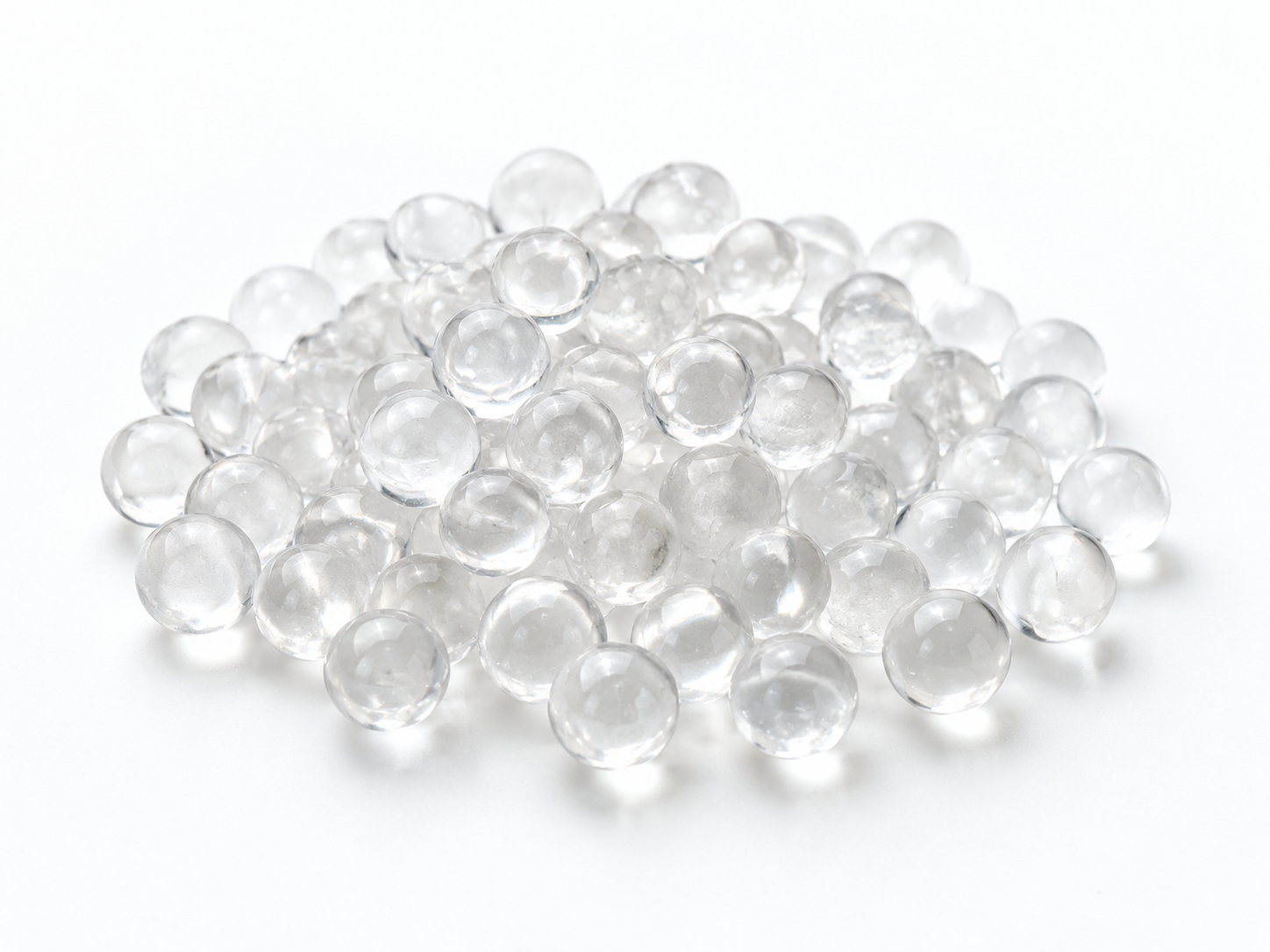
Why Adding More Polyphosphate Media Often Misses the Real Problem
When polyphosphate crystal performance drops in a treatment system, the instinct is frequently to load more media into the vessel. In many cases, that step does not fix the issue because the root cause is a change in flow rate, not a shortage of active material. Before recommending additional polyphosphate media, confirm the actual water flow passing through the unit and compare it against the conditions under which the system was originally designed.
Polyphosphate-based products such as siliphos crystals function as scale inhibitors through a sequestration mechanism. They bind with dissolved calcium, magnesium, and other metal ions to keep those minerals in solution rather than allowing them to precipitate as scale. This process is concentration-dependent: the polyphosphate must be present at a sufficient dose relative to the volume of water being treated. If the flow increases without a corresponding adjustment, the dose per unit of water falls below the effective threshold, and scale returns regardless of how much media sits in the vessel.
What Actually Happens When Flow Changes
Does a higher flow rate always require more media?
Not necessarily. A higher flow rate may require a higher dosing rate, a larger contact vessel, a different media grade, or simply a recalibration of the injection system. Simply packing more crystals into an existing vessel does not increase the dissolution rate proportionally and can create channeling, where water bypasses portions of the media bed entirely.
Polyphosphate crystals dissolve gradually as water passes over them. The dissolution rate is influenced by temperature, pH, water chemistry, and contact time. If flow doubles but contact time is halved because the vessel size stays the same, each liter of water receives less polyphosphate even though the total media mass has not changed. The result is under-dosing, not media exhaustion.
What about low flow or stagnant conditions?
The opposite scenario is equally problematic. Reduced flow means water sits in contact with the media for longer periods, which can lead to over-dissolution, higher residual polyphosphate in the output, and in some cases accelerated depletion of the media. This is not a situation that calls for adding more crystals either—it calls for evaluating whether the system is oversized for the current demand or whether a bypass or recirculation loop is needed.
A Practical Diagnostic Sequence Before Adjusting Media Volume
When a customer or site operator reports that scale is reappearing or that polyphosphate residuals have dropped, follow a structured check rather than jumping to a media top-up.
- Measure the current flow rate. Use a calibrated flow meter or verify against pump curves and pressure differentials. Compare against the design flow documented when the system was commissioned.
- Check the water chemistry at the inlet. Hardness, pH, temperature, and alkalinity all affect how much polyphosphate is needed per unit of flow. A harder source water requires a higher dose even at the same flow.
- Verify the media condition. Are the crystals visibly shrinking or dissolving unevenly? Has the bed compacted or developed channels? Physical inspection matters before assuming the problem is purely hydraulic.
- Confirm the dosing or dissolution setup. Is the media in a dedicated dissolution tank, a cartridge, or a gravity-fed vessel? Each configuration responds differently to flow changes.
- Review any recent system modifications. New fixtures, additional equipment, or changes in water demand can shift flow without anyone updating the treatment design.
Only after these steps should you consider whether the media volume itself needs to change. Even then, the change should be calculated against the verified flow and water chemistry, not guessed.
Polyphosphate Media versus Other Treatment Approaches
It helps to clarify what polyphosphate media does and does not do, because confusion with other treatment functions often leads to wrong conclusions about why a system is underperforming.
| Function | What It Does | What Polyphosphate Media Handles |
|---|---|---|
| Scale inhibition | Prevents mineral precipitation by sequestering ions in solution | Yes — primary function of siliphos and similar crystal products |
| Water softening | Removes hardness ions through ion exchange, typically replacing calcium and magnesium with sodium | No — polyphosphate does not remove ions; it keeps them dissolved |
| Scale removal | Dissolves or breaks down existing scale deposits | No — polyphosphate prevents new scale but does not clean existing buildup |
| Filtration | Physically traps suspended particles | No — media dissolution is a chemical process, not mechanical filtration |
| Corrosion inhibition | Forms a protective film on metal surfaces to reduce oxidation | Partially — some polyphosphate formulations offer mild corrosion control, but this is not their main purpose |
| Disinfection | Kills or inactivates microorganisms | No — polyphosphate has no biocidal function |
Understanding these distinctions prevents a common mistake: treating a flow-related under-dose problem as if it were a media quality problem, or expecting polyphosphate to do work that belongs to a different technology entirely.
When More Media Actually Is the Right Answer
There are legitimate situations where increasing the polyphosphate media volume makes sense. These include:
- The verified flow rate has permanently increased and the existing vessel cannot accommodate the required contact time or dissolution capacity.
- The source water hardness has measurably risen, requiring a higher total polyphosphate output that the current mass cannot sustain over its service life.
- The media has reached the end of its functional lifespan, confirmed by physical inspection and residual testing, and flow conditions have not changed.
In each of these cases, the decision to add media follows from documented data, not from symptoms alone. This is why the question about flow comes first.
Choosing the Right Polyphosphate Product for a Given Flow Profile
Not all siliphos-type or polyphosphate crystal products carry the same composition, dissolution behavior, or recommended application range. Some are formulated for residential point-of-entry units with modest flow. Others target commercial or light-industrial systems with higher throughput. The selection should match the verified flow rate, the water chemistry profile, and the specific treatment objective—whether that is protecting pipes, appliances, heat exchangers, or a combination.
Before specifying a grade or quantity, confirm with the supplier what test data or performance guidance exists for the intended flow range and water conditions. Ask whether the product has been evaluated for the temperature and pH range present at the installation site. General statements about effectiveness are not the same as application-specific validation.
Common Questions About Flow and Polyphosphate Media
Can I use the same media volume if I split the flow across two parallel units?
Splitting flow generally reduces the per-unit flow rate, which may actually allow the same media volume to perform adequately—or even exceed requirements. However, each unit still needs to be sized for its individual flow, and the total media across both units should reflect the combined demand. Do not assume that halving the flow to one vessel means you can ignore the other vessel’s dosing needs.
What if the flow meter is unavailable or unreliable?
Estimate flow from pump specifications, pipe diameter and velocity, or timed fill tests on a known volume. These are less precise than direct measurement but give enough information to determine whether a flow change is likely. If the estimate shows a significant shift from the original design, treat that as a strong signal before touching the media.
Is there a simple rule of thumb for media volume per flow rate?
No universal rule applies across all polyphosphate products and water chemistries. Manufacturers may provide guidance based on their specific formulation and testing conditions. Rely on product-specific documentation rather than a generic ratio, and always adjust for your actual inlet water hardness and temperature.
What ENVO CHEMICAL Can Help Clarify
ENVO CHEMICAL supplies polyphosphate crystal products for scale inhibition in water treatment applications. If you are evaluating whether a flow change is affecting your current setup, or if you need to confirm the right media specification for a verified flow and water chemistry profile, the right starting point is sharing those details rather than requesting a blanket media recommendation.
To move forward efficiently, please provide the following: your application type (residential, commercial, industrial), the measured or estimated flow rate, source water hardness and pH, the equipment configuration (cartridge, vessel, dissolution tank), and the treatment objective. With that information, a specific and accurate guidance on media selection and quantity becomes possible—without unnecessary guesswork.
