
Plan the sampling before the pallets are wrapped, not after the bags are racked four high. For a tonnage polyphosphate delivery, clean sampling means deciding in advance where the increments come from, what tool touches the material, what container receives it, and who signs for it — and then doing that work at the receiving dock or in a designated clean area while lots are still accessible and identification is still obvious.
That single decision solves most of the problems buyers run into later: samples that cannot be traced to a batch, samples drawn from only the top of a big bag, containers that sat open overnight, and results that nobody can act on because the shipment was already mixed into general stock.
Why the pre-putaway window is the only good one
Putaway is not just movement. It is stacking, stretch-wrapping, relocating, and often splitting a lot across locations. Once that happens:
- Access is gone. A jumbo bag in the middle of a three-high rack cannot be sampled the way it could at the dock.
- Batch identity blurs. Labels get covered, pallet tags get removed, and partial bags get combined.
- Contamination becomes untraceable. If a caked or discolored portion is found later, you cannot say whether it arrived that way.
- The claim window closes. Most suppliers expect discrepancies to be raised within a defined period after delivery, which usually starts at receipt, not at first use.
Sampling before putaway is therefore not a quality-control luxury. It is the cheapest point in the whole chain to protect both the material and your position in a possible claim.
Decide what the sample is for before you choose how to take it
Different objectives produce different sampling plans, and mixing them up is a common source of wasted effort.
| Objective | What the sample needs to represent | Practical implication |
|---|---|---|
| Identity confirmation | The lot as a whole | Composite increments from several packages, not one scoop |
| Specification verification | The lot as a whole, using the test method agreed in the purchase order | Agree the method and the sample size with the supplier and lab first |
| Retain / dispute evidence | An untouched, sealed portion | Split the sample; store one part unopened |
| Process trial | Material as it will actually be fed | Confirm whether the trial needs a composite or a single-package sample |
The number of increments should come from your quality agreement, purchase order, or internal QMS. If none exists, adopt one written rule and apply it consistently — a plan you repeat is more useful than a perfect plan you improvise.
What “clean sampling” actually means for polyphosphate crystal
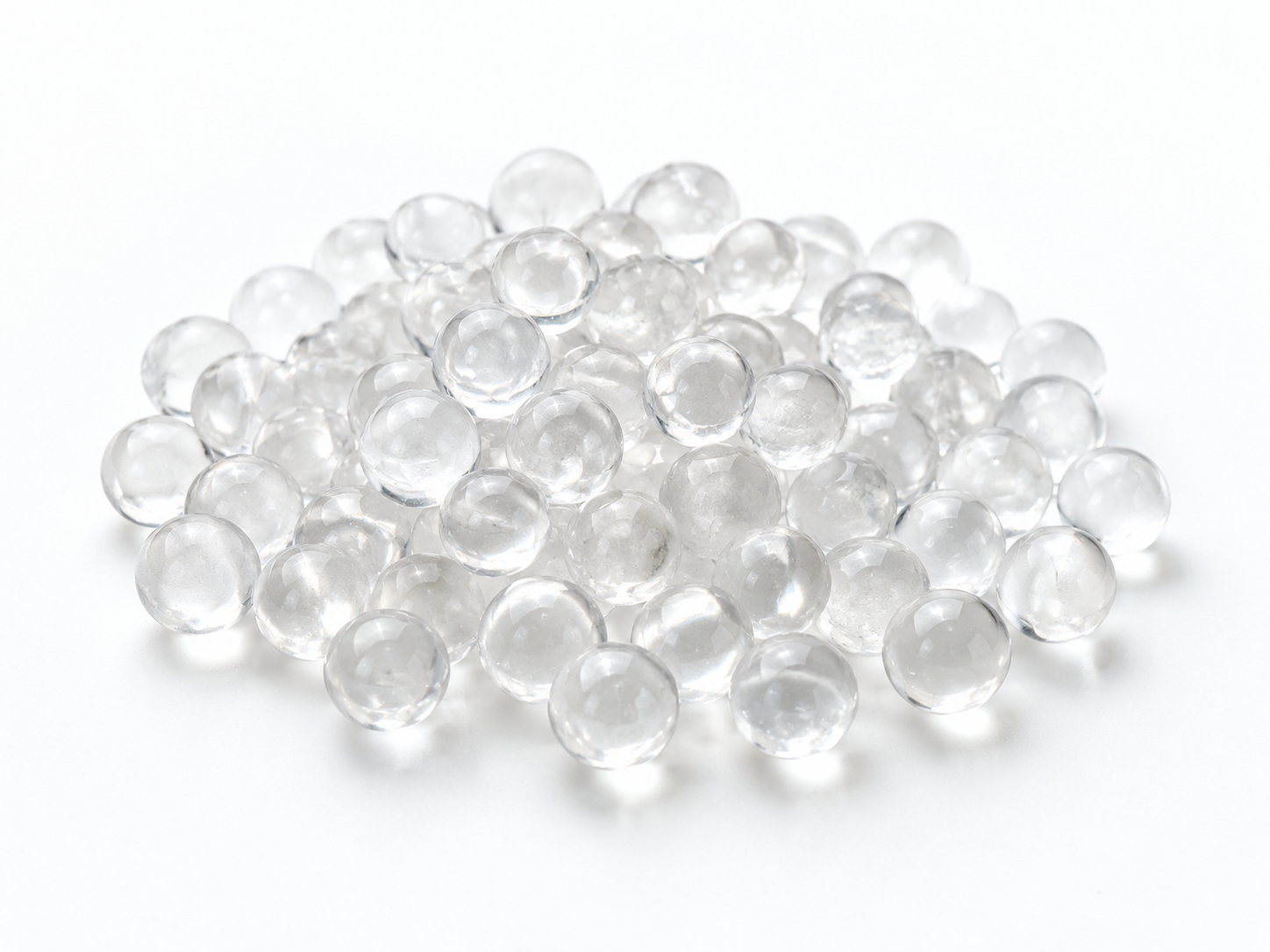
Phosphate-based water-treatment media are not all the same material, and sampling practice should follow the exact grade on the paperwork. Products sold under names such as siliphos are typically slow-dissolving glassy phosphates used to inhibit scale and support corrosion control by forming a thin film on wetted metal surfaces. That is a different job from ion-exchange softening, from filtration, from scale removal, and from disinfection. A polyphosphate media does not remove hardness ions the way a softener resin does, and it is not a disinfectant.
Three material characteristics shape how you sample:
- Moisture sensitivity. Glassy phosphates can absorb moisture and cake. A sample left in an open container on a humid dock, or an increment taken from a bag whose liner was torn and left exposed, may not represent the lot.
- Dust and carryover. Fine phosphate dust migrates easily. Tools, scoops, trays, and gloves used for other materials can contaminate your sample, and your sample can contaminate the next one.
- Segregation on settling. Fines and coarse fractions can separate during transport, so material at the very top of a package is not automatically representative of the whole package.
Also check the technical data sheet and safety data sheet for the exact grade received. Do not assume a product described as food grade is automatically suitable for drinking-water contact; potable-water suitability depends on the specific product, the application conditions, and the destination market’s rules, and it must be verified for that product rather than inferred from a general description.
Where to take increments, by package type
| Package | Practical sampling approach | Points to watch |
|---|---|---|
| Jumbo bag (FIBC) with top fill | Take increments from several bags in the lot; if the bag is opened, use a clean probe at more than one depth and close it again properly | Top-only sampling over-represents fines or coarse material; reseal to protect against humidity |
| Jumbo bag with discharge spout | If the bag will be emptied for use, a stream sample during discharge can be the most representative | Requires the receiving area to be set up for controlled discharge; not practical for every bag |
| Drums, pails, small sacks | Sample a defined number of containers across the lot; take from the full depth, not the surface | Confirm whether the lot is one homogeneous batch or several |
| Bulk liner / silo discharge | Agree a sampling port or a defined point in the discharge sequence with the carrier | First material out of a liner is rarely representative; discuss the plan before unloading |
A pre-putaway sampling workflow
- Set up the zone first. A dry, covered, swept area away from open drums, oils, and other powders. Sampling in rain, near a dock door with wind-driven dust, or beside a forklift traffic lane is a self-inflicted problem.
- Verify count and identification. Count packages against the delivery note, record batch or lot codes exactly as printed, and photograph damaged or stained packaging before opening anything.
- Check the outside of the packaging. Torn liners, wet patches, staining, or insect activity should be recorded. If a bag is compromised, treat it as a separate, non-representative unit rather than blending it into the composite.
- Draw increments from the agreed packages. Use a clean, dedicated tool. Take from more than one depth and, for bags that will be discharged, note whether the increment came from a stream or from a probe.
- Composite, then split. Combine increments in a clean, dry container, mix gently and briefly, then divide into the testing portion and the sealed retain portion.
- Fill containers properly. Leave minimal headspace, close immediately, and seal the retain with a tamper-evident label.
- Label at the point of sampling. Product name, grade, supplier, delivery note number, batch code, date, time, sampler’s name, package numbers, and sampling method. Write it on the container, not on a note that travels separately.
- Record environmental conditions. Weather, ambient conditions, and whether sampling was indoor or outdoor. This matters if moisture-related results are questioned later.
- Close and return packaging. Reseal bags and liners before putaway so the bulk material is not exposed after sampling.
- Release the lot conditionally. Move it to putaway under a hold status until results are reviewed — that way the physical location is decided, but the material is not yet released into production or resale.
Tools and containers: use and avoid
| Item | Prefer | Avoid |
|---|---|---|
| Probe or thief | Stainless steel or clean rigid plastic, dedicated to phosphate media | Carbon steel tools that can rust and leave iron contamination; tools shared with other powders |
| Scoop | Clean plastic or stainless, stored covered between uses | Galvanized or painted scoops; scoops stored loose in a dusty warehouse |
| Primary container | Clean, dry, airtight plastic bottle or heavy-duty bag, sealed | Cardboard boxes, paper bags, reused chemical containers |
| Mixing surface | Clean plastic sheet, replaced between lots | Bare warehouse floor, wood pallets, shared workbenches |
| Personal protection | Gloves, eye protection, and dust protection as specified in the product’s SDS | Working without the SDS on hand |
Moisture, dust, and cross-contamination control
- Sample on a dry day or indoors; never during rain or immediately after a wet unloading.
- Work upwind of your own dust and keep containers closed between increments.
- Use one set of tools per product family, and clean tools between different materials — phosphate residue is difficult to see but easy to detect in a lab result.
- Do not sample from an open, partially used bag that has been stored uncovered; it is no longer representative.
- Keep the sampling area free of oils, lubricants, and other powders, because fine phosphate dust binds easily to greasy surfaces.
Documentation and retain samples
The sample is only as useful as its paperwork. A practical record includes the delivery note number, supplier, batch codes, number of packages received, number sampled, tool and method used, container type, date and time, sampler, any observed damage, and the storage location assigned after putaway. Keep the sealed retain for the period your quality system requires, stored dry and away from light and heat.
If the load is short-weight or the packaging does not match the delivery note, document that at the same time as the sampling, with photographs, before the pallets are wrapped and moved.
What to test, and what to confirm first
Testing scope should be agreed in writing before the shipment arrives, because the sample volume and container type depend on it. Typical checks discussed between buyers, suppliers, and laboratories for phosphate-based water-treatment media include appearance, moisture content, particle size distribution, bulk density, pH of a prepared solution, and the phosphate content relevant to the agreed specification. The specific methods and limits must come from the supplier’s technical data sheet and your purchase specification — not from a generic list, and not from another product’s published values.
Ask the receiving laboratory two questions before sampling: how much material does each test need, and how must the sample be stored before analysis. Both answers affect how you split the sample at the dock.
Common mistakes at receiving
- Sampling only the top layer of the first bag that is easy to reach.
- Using one scoop for several different products in the same delivery.
- Leaving the sample container open while completing paperwork.
- Storing the retain sample in a hot warehouse office or in direct sun.
- Recording the batch code from memory or from the invoice rather than from the package.
- Putting the material away first and “sampling later” — which usually means never.
FAQ
Can we sample after putaway if we keep one bag aside?
Partly. A bag set aside before putaway can serve as a retained unit, but it still needs documented batch identification and protection from moisture, and it does not replace increments drawn across the lot at receipt. If the lot has already been split across locations, the sample can no longer represent the whole delivery.
How many bags should we sample?
There is no universal number. Use the figure stated in your purchase order, quality agreement, or sampling procedure. If you do not have one, write a simple rule, record it, and apply it to every delivery so results stay comparable over time.
Does a clean sampling plan replace a certificate of analysis?
No. A supplier’s certificate and your own sampling answer different questions. Your sample tells you what is in your warehouse; the certificate tells you what the supplier tested. Both are worth filing with the batch record.
Is polyphosphate media the same as a water softener?
No. Softening normally means removing hardness ions, typically by ion exchange. Phosphate-based media work mainly on scale inhibition and corrosion film formation at low treatment levels. They are not disinfectants, and they are not a substitute for filtration where filtration is required.
Do we need separate tools for each phosphate grade?
If you handle more than one grade or more than one type of treatment media, dedicated or thoroughly cleaned tools are the safer approach. Residue carried between samples is a frequent and avoidable cause of confusing analytical results.
Planning a bulk polyphosphate order?
If you are arranging tonnage deliveries of siliphos-type crystal or another phosphate-based treatment medium and want to align packaging, batch coding, and documentation with your receiving and sampling procedure, contact ENVO CHEMICAL with the details that affect the answer: your application and treatment objective, the source-water conditions, the equipment or cartridge type the material will be used in, the specification and test methods you require, the quantity and packaging format, and the destination market. That information is enough to confirm what can be supplied and what still needs to be verified for your specific case.
