
Safety Tips for SDIC in Swimming Pool Maintenance
Introduction
Sodium Dichloroisocyanurate (SDIC) has emerged as one of the most reliable and efficient disinfectants for commercial swimming pool maintenance worldwide. With its superior stability, broad-spectrum antimicrobial properties, and cost-effectiveness, SDIC has become the preferred choice for facility managers, pool operators, and water treatment professionals. However, proper handling, storage, and application of this powerful oxidizing agent requires comprehensive understanding of safety protocols and technical specifications.
This technical guide provides in-depth safety recommendations, performance data, and industry compliance standards for B2B clients engaged in large-scale swimming pool maintenance operations. Our objective is to ensure optimal water quality while maintaining the highest safety standards for personnel and end-users.
1. Understanding SDIC: Chemical Properties and Technical Specifications
1.1 Chemical Composition
Sodium Dichloroisocyanurate is an organic chlorine compound with the following fundamental characteristics:
| Parameter | Specification |
|---|---|
| Chemical Name | Sodium Dichloroisocyanurate |
| CAS Number | 2893-78-9 |
| Molecular Formula | C₃Cl₂N₃NaO₃ |
| Molecular Weight | 219.95 g/mol |
| EINECS Number | 220-767-7 |
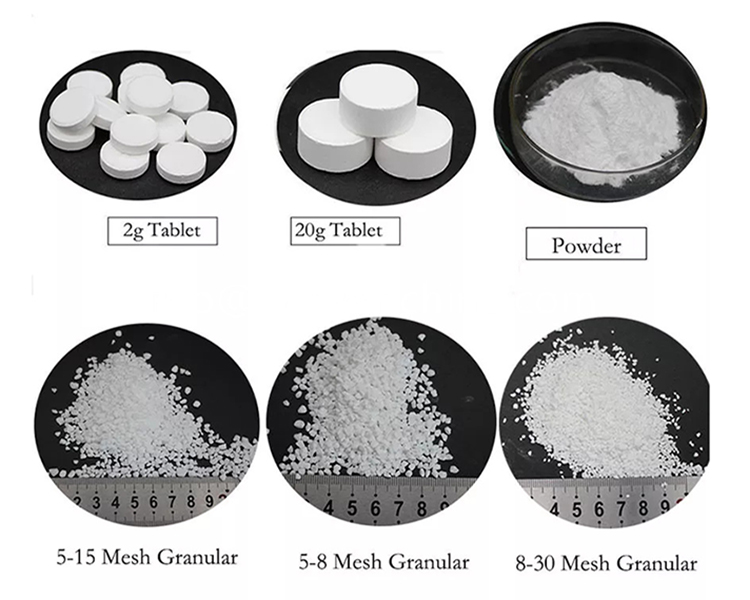
| Appearance | White crystalline powder or granules |
| Odor | Characteristic chlorine-like odor |
| Melting Point | 240-250°C (with decomposition) |
| Solubility | Highly soluble in water (25g/100ml at 25°C) |
| pH (1% solution) | 5.5-7.0 |
| Active Chlorine Content | 56%-60% (minimum) |
| Moisture Content | ≤5% |
| Bulk Density | 0.65-0.75 g/cm³ |
1.2 Disinfection Mechanism
SDIC functions as a slow-release chlorine disinfectant. Upon dissolution in water, it hydrolyzes to form hypochlorous acid (HOCl), the primary active sanitizing agent:
C₃Cl₂N₃NaO₃ + H₂O → C₃H₂N₃NaO₃ + 2HOCl
The hypochlorous acid penetrates microbial cell walls, oxidizes essential enzymes, and disrupts cellular metabolism, resulting in effective elimination of:
- Bacteria (E. coli, Pseudomonas aeruginosa, Legionella)
- Viruses (Adenovirus, Enterovirus)
- Fungi and algae
- Protozoan cysts
1.3 Stability Advantages
Unlike liquid chlorine solutions, SDIC offers exceptional stability due to the presence of cyanuric acid as a built-in stabilizer. This protects free chlorine from UV degradation, extending disinfection efficacy by 3-5 times compared to unstabilized chlorine sources.
2. Safety Handling Procedures for Commercial Operations
2.1 Personal Protective Equipment (PPE) Requirements
All personnel handling SDIC must wear appropriate protective gear in accordance with OSHA 29 CFR 1910.1200 and GHS classification standards:
| PPE Component | Minimum Specification |
|---|---|
| Eye Protection | Chemical splash goggles (ANSI Z87.1) |
| Respiratory Protection | N95 mask or half-face respirator with P100 filters for dust exposure |
| Hand Protection | Nitrile or neoprene gloves (≥0.4mm thickness) |
| Body Protection | Long-sleeve chemical-resistant apron or coveralls |
| Foot Protection | Closed-toe chemical-resistant boots |
2.2 Safe Handling Protocols
DO:
- Handle in well-ventilated areas with adequate air exchange (minimum 6 air changes per hour)
- Use dedicated, clean, dry scoops and measuring equipment
- Add SDIC to water slowly while stirring (NEVER add water to SDIC)
- Store in original sealed containers until ready for use
- Wash hands thoroughly after handling, even when gloves are worn
- Implement buddy system for large-scale dosing operations
DO NOT:
- Mix SDIC with other pool chemicals (especially acids, ammonia, or other chlorine products)
- Handle with bare hands or allow skin contact
- Inhale dust or vapors
- Store near combustible materials, organic compounds, or reducing agents
- Use metal containers for storage or mixing (corrosion risk)
- Expose to direct sunlight or heat sources above 40°C
2.3 Dust Control Measures
SDIC dust can cause moderate irritation to eyes and upper respiratory tract. Implement the following engineering controls:
- Install local exhaust ventilation at dispensing stations
- Use dust collection systems for bulk transfer operations
- Maintain relative humidity between 40-60% to minimize dust generation
- Provide emergency eyewash stations within 10 seconds of handling areas
- Conduct regular air quality monitoring (target: <5 mg/m³ time-weighted average)
3. Storage Requirements and Warehouse Management
3.1 Environmental Conditions
Proper storage is critical for maintaining SDIC efficacy and preventing hazardous decomposition:
| Storage Parameter | Required Range |
|---|---|
| Temperature | 15-30°C (optimal: 20-25°C) |
| Relative Humidity | <60% (critical threshold) |
| Light Exposure | Protected from direct sunlight |
| Ventilation | Continuous mechanical ventilation |
| Floor Loading | ≤1000 kg/m² for bulk storage |
3.2 Warehouse Segregation
SDIC must be stored separately from incompatible materials according to NFPA 400 and UN Model Regulations:
Minimum Separation Distances:
| Incompatible Material | Minimum Distance |
|---|---|
| Acids and acid-forming compounds | 5 meters |
| Ammonia and ammonium compounds | 10 meters |
| Combustible materials (wood, paper, textiles) | 5 meters |
| Reducing agents and organic materials | 5 meters |
| Metals (powdered) | 3 meters |
3.3 Container Specifications
- Use only original HDPE or polypropylene containers with tight-sealing lids
- Ensure containers are clearly labeled with GHS pictograms and hazard statements
- Implement first-in-first-out (FIFO) inventory rotation
- Maximum shelf life: 24 months from manufacture date when stored properly
- Inspect containers monthly for signs of moisture ingress or degradation
3.4 Fire Safety Considerations
Although SDIC is not classified as combustible, it is a strong oxidizer (UN Class 5.1) that can intensify fires:
- Install Class D fire extinguishers in storage areas
- Prohibit hot work within 15 meters of storage zones
- Maintain clear access routes for emergency response (minimum 1.2 meters width)
- Develop and practice emergency evacuation procedures quarterly
4. Dosage Guidelines and Water Quality Parameters
4.1 Recommended Concentration Levels
For commercial swimming pools, maintain the following water quality parameters in accordance with WHO Guidelines for Safe Recreational Water Environments and CDC Model Aquatic Health Code:
| Parameter | Target Range | Maximum Limit | Testing Frequency |
|---|---|---|---|
| Free Chlorine Residual | 1.0-3.0 ppm | 5.0 ppm | Every 4 hours (minimum twice daily) |
| Combined Chlorine | <0.4 ppm | 0.5 ppm | Daily |
| pH | 7.2-7.6 | 7.8 | Every 4 hours |
| Total Alkalinity | 80-120 ppm | 150 ppm | Weekly |
| Cyanuric Acid (Stabilizer) | 30-50 ppm | 90 ppm | Weekly |
| Calcium Hardness | 200-400 ppm | 500 ppm | Monthly |
| Total Dissolved Solids | <1500 ppm | 2000 ppm | Monthly |
| Water Temperature | 26-29°C (recreational) | 32°C | Continuous monitoring |
4.2 SDIC Dosage Calculation
Standard Shock Treatment:
- Initial dose: 2-3 ppm free chlorine equivalent
- For 100,000 liters pool volume: approximately 330-500 grams of 60% SDIC
Maintenance Dosing:
- Daily dose: 0.5-1.0 ppm free chlorine equivalent
- Adjust based on bather load, temperature, and sunlight exposure
Formula:
SDIC Required (grams) = Pool Volume (L) × Target ppm × 1.67 / Active Chlorine %
Where 1.67 is the conversion factor for SDIC to available chlorine
4.3 Application Methods
| Method | Application Rate | Contact Time | Best Use Case |
|---|---|---|---|
| Pre-dissolved Broadcast | 10L water per kg SDIC | 30 minutes | Routine maintenance |
| Skimmer Feeding | Slow dissolution tablets | Continuous | Small to medium pools |
| Automatic Chlorinator | Controlled release | Continuous | Large commercial facilities |
| Shock Treatment | Direct broadcast (evening) | 8-12 hours | Algae prevention, high bather load |
5. Emergency Response and Spill Management
5.1 Spill Response Procedures
Small Spills (<10 kg):
- Evacuate non-essential personnel from immediate area
- Don appropriate PPE including respiratory protection
- Contain spill with inert absorbent material (vermiculite, dry sand)
- Collect contaminated material in compatible containers
- Rinse area with copious amounts of water (minimum 10:1 water-to-spill ratio)
- Dispose as hazardous waste according to local regulations
Large Spills (>10 kg):
- Activate emergency response plan and alert facility management
- Establish exclusion zone (minimum 25 meters radius)
- Contact local emergency services and provide SDS documentation
- Do not attempt cleanup without trained hazmat team
- Monitor air quality for chlorine gas (action level: 0.5 ppm)
5.2 First Aid Measures
| Exposure Route | Immediate Action | Medical Attention Required |
|---|---|---|
| Eye Contact | Flush with water for minimum 15 minutes, hold eyelids open | Yes – immediate |
| Skin Contact | Remove contaminated clothing, wash with soap and water for 15 minutes | If irritation persists |
| Inhalation | Move to fresh air, administer oxygen if breathing is difficult | Yes – if symptoms develop |
| Ingestion | Do NOT induce vomiting, rinse mouth, drink 200-300ml water | Yes – immediate |
5.3 Emergency Contact Information
Maintain readily accessible documentation including:
- Safety Data Sheet (SDS) for all SDIC products
- Local poison control center number
- Emergency services contact
- Facility emergency response team contacts
- Nearest hospital with burn/emergency treatment capabilities
6. Regulatory Compliance and Industry Standards
6.1 International Standards
SDIC handling and pool maintenance must comply with the following regulatory frameworks:
| Standard | Organization | Scope |
|---|---|---|
| ISO 17728 | International Organization for Standardization | Swimming pool water quality |
| WHO Guidelines | World Health Organization | Safe recreational water environments |
| MAHC | CDC Model Aquatic Health Code | US pool operation standards |
| EN 15037 | European Committee for Standardization | Pool equipment and chemicals |
| NSF/ANSI 50 | NSF International | Equipment and chemicals for pools |
| OSHA 29 CFR 1910.1200 | US Occupational Safety | Hazard communication |
| GHS | United Nations | Chemical classification and labeling |
| UN Model Regulations | United Nations | Transport of dangerous goods |
6.2 Documentation Requirements
Commercial pool operators must maintain:
- Chemical inventory logs (updated daily)
- Water quality test records (retained for minimum 3 years)
- Staff training certifications (renewed annually)
- SDS documentation (current version for all products)
- Emergency response drill records (quarterly)
- Equipment maintenance logs (monthly inspections)
- Incident reports (within 24 hours of occurrence)
6.3 Audit and Inspection Readiness
Prepare for regulatory inspections by ensuring:
- All chemical storage areas are clearly marked and accessible
- PPE is available, properly sized, and in good condition
- Emergency equipment (eyewash, showers, spill kits) is functional and inspected monthly
- Staff can demonstrate proper handling procedures upon request
- Water testing equipment is calibrated according to manufacturer specifications
7. Quality Assurance and Product Selection Criteria
7.1 SDIC Grade Specifications
For commercial swimming pool applications, select SDIC meeting the following quality parameters:
| Quality Parameter | Premium Grade | Standard Grade |
|---|---|---|
| Active Chlorine | ≥60% | ≥56% |
| Moisture Content | ≤3% | ≤5% |
| pH (1% solution) | 5.8-6.5 | 5.5-7.0 |
| Water Insolubles | ≤0.1% | ≤0.5% |
| Particle Size | 8-30 mesh | 16-36 mesh |
| Heavy Metals | ≤10 ppm | ≤20 ppm |
| Stability (6 months @ 40°C) | ≥95% retention | ≥90% retention |
7.2 Supplier Qualification
When selecting SDIC suppliers for B2B procurement, verify:
- ISO 9001:2015 quality management certification
- REACH compliance (for European markets)
- Valid manufacturing licenses and permits
- Third-party laboratory testing reports (SGS, Intertek, or equivalent)
- Consistent supply capacity and lead time commitments
- Technical support and training availability
- Emergency response capabilities
7.3 Batch Testing Protocol
Implement incoming quality control procedures:
- Visual inspection of packaging integrity
- Verification of batch number and manufacture date
- Random sampling for laboratory analysis (minimum 1 batch per 10 received)
- Active chlorine content verification (titration method)
- Moisture content analysis (Karl Fischer or loss-on-drying)
- Documentation of all test results in quality management system
8. Environmental Considerations and Sustainable Practices
8.1 Wastewater Management
Pool backwash water containing SDIC residuals must be managed responsibly:
- Dechlorinate before discharge (target: <0.1 ppm residual chlorine)
- Use sodium thiosulfate for neutralization (1.5:1 ratio to chlorine)
- Comply with local wastewater discharge permits
- Monitor pH of discharged water (target: 6.5-8.5)
- Maintain discharge logs for regulatory compliance
8.2 Packaging Disposal
- Rinse empty containers thoroughly before disposal
- Recycle HDPE containers where facilities exist
- Dispose of contaminated packaging as chemical waste
- Never burn SDIC containers (toxic fume generation)
8.3 Carbon Footprint Reduction
- Optimize dosing to minimize chemical consumption
- Implement automated monitoring systems to reduce waste
- Source SDIC from manufacturers with environmental certifications
- Consolidate shipments to reduce transportation emissions
- Train staff on efficient handling to minimize product loss
9. Training and Competency Development
9.1 Mandatory Training Topics
All personnel handling SDIC must complete comprehensive training covering:
- Chemical hazard recognition and GHS labeling
- Proper PPE selection and use
- Safe handling and dosing procedures
- Emergency response and first aid
- Spill containment and cleanup
- Regulatory compliance requirements
- Record-keeping and documentation
9.2 Training Frequency
| Training Type | Initial | Refresher |
|---|---|---|
| General Safety Orientation | Day 1 | Annually |
| SDIC-Specific Handling | Before first assignment | Annually |
| Emergency Response | Within 30 days | Semi-annually |
| Equipment Operation | Before independent use | Annually |
| Regulatory Updates | As required | As needed |
9.3 Competency Assessment
Verify staff competency through:
- Written examinations (minimum 80% pass rate)
- Practical demonstrations of handling procedures
- Emergency response drills
- Supervisor observations and sign-offs
- Annual recertification requirements
10. Performance Monitoring and Continuous Improvement
10.1 Key Performance Indicators (KPIs)
Track the following metrics to optimize SDIC usage and safety:
| KPI | Target | Measurement Frequency |
|---|---|---|
| Chlorine residual compliance rate | ≥95% | Daily |
| pH compliance rate | ≥95% | Daily |
| Chemical consumption per bather | <0.5 grams | Weekly |
| Incident rate (handling errors) | 0 | Monthly |
| Training completion rate | 100% | Quarterly |
| Emergency drill participation | 100% | Quarterly |
| Customer complaints (water quality) | <1% | Monthly |
10.2 Continuous Improvement Initiatives
- Conduct quarterly safety audits with corrective action tracking
- Implement near-miss reporting system without penalty
- Review and update SOPs annually or after incidents
- Benchmark against industry best practices
- Invest in automation and monitoring technology
- Solicit staff feedback on safety improvements
Frequently Asked Questions (FAQ)
Q1: What is the shelf life of SDIC under proper storage conditions?
A: When stored in original sealed containers at 15-30°C with relative humidity below 60%, SDIC maintains ≥90% active chlorine content for 24 months from the manufacture date. After opening, use within 6 months for optimal performance.
Q2: Can SDIC be used in saltwater pools?
A: Yes, SDIC is compatible with saltwater pool systems. However, monitor cyanuric acid levels carefully as they can accumulate over time. Maintain cyanuric acid between 30-50 ppm and perform partial water changes when levels exceed 90 ppm.
Q3: How does SDIC compare to trichloroisocyanuric acid (TCCA) for pool disinfection?
A: SDIC offers faster dissolution and more uniform distribution compared to TCCA. While TCCA has higher active chlorine content (90% vs. 60%), SDIC provides better pH stability and is less corrosive to equipment. SDIC is preferred for shock treatments and rapid response situations.
Q4: What should I do if SDIC comes into contact with acidic pool chemicals?
A: This is a critical safety hazard. Mixing SDIC with acids releases toxic chlorine gas. Immediately evacuate the area, activate ventilation systems, and do not attempt cleanup without proper respiratory protection. Seek emergency medical attention for any exposure symptoms.
Q5: How often should I test pool water when using SDIC?
A: For commercial pools, test free chlorine and pH every 4 hours during operating hours (minimum twice daily). Test combined chlorine, cyanuric acid, and total alkalinity weekly. Conduct comprehensive water analysis monthly including calcium hardness and TDS.
Q6: Is SDIC safe for pools used by children and sensitive populations?
A: Yes, when used according to recommended dosage guidelines, SDIC is safe for all pool users. Maintain free chlorine between 1.0-3.0 ppm and pH between 7.2-7.6. Ensure proper ventilation in indoor facilities and provide adequate rinse showers for all users.
Q7: Can SDIC be used for spa and hot tub disinfection?
A: SDIC can be used in spas and hot tubs, but dosage must be adjusted for higher water temperatures. Reduce target chlorine residual to 1.0-2.0 ppm due to increased chlorine demand at elevated temperatures. Monitor more frequently (every 2 hours) due to faster chlorine degradation.
Q8: What certifications should I look for when purchasing SDIC?
A: Request the following documentation from suppliers: ISO 9001:2015 quality certification, NSF/ANSI 50 compliance (for US markets), REACH registration (for EU markets), third-party laboratory test reports, and current Safety Data Sheet (SDS) compliant with GHS standards.
Q9: How do I calculate the correct SDIC dosage for my pool?
A: Use the formula: SDIC (grams) = Pool Volume (L) × Target ppm × 1.67 / Active Chlorine %. For example, a 100,000L pool requiring 2 ppm chlorine with 60% SDIC needs: 100,000 × 2 × 1.67 / 60 = 5,567 grams (approximately 5.6 kg).
Q10: What are the signs of SDIC degradation or contamination?
A: Indicators include: caking or clumping of powder, color change from white to yellow/brown, strong ammonia-like odor (indicates decomposition), reduced dissolution rate, and failure to achieve target chlorine residual at normal dosages. Dispose of suspect product and contact supplier for replacement.
Conclusion
Proper implementation of SDIC safety protocols is essential for maintaining optimal swimming pool water quality while protecting personnel, facility users, and the environment. By adhering to the technical specifications, handling procedures, and regulatory requirements outlined in this guide, commercial pool operators can achieve consistent disinfection performance with minimal risk.
For B2B clients seeking premium-grade SDIC products with comprehensive technical support, our team offers customized solutions tailored to your facility’s specific requirements. We provide bulk supply options, quality documentation, and ongoing consultation to ensure your swimming pool maintenance operations meet the highest industry standards.
Ready to optimize your pool maintenance program with professional-grade SDIC solutions?
Document Version: 2.1 | Last Updated: March 2026 | Compliance: WHO, CDC, ISO, NSF/ANSI, GHS
Disclaimer: This technical guide is provided for informational purposes. Always consult current Safety Data Sheets and local regulations before handling chemical products. Envo Chemical assumes no liability for improper use or handling of SDIC products.
