
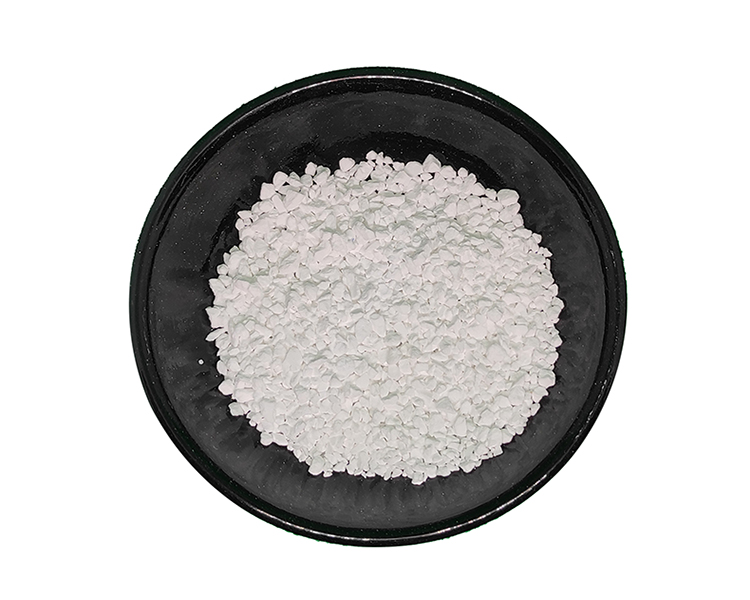
Solubility and dissolution speed are often treated as interchangeable in SDIC (sodium dichloroisocyanurate) discussions, but they answer different questions. Solubility tells you how much SDIC can stay dissolved in water at a given temperature under equilibrium conditions. Dissolution speed tells you how fast a given amount of SDIC goes into solution. A product can have high solubility but dissolve slowly, or lower solubility but dissolve quickly. The distinction matters because dosing, feeding, mixing, and residual control depend on both—and sometimes on one more than the other.
Definitions That Keep the Comparison Clear
Solubility is an equilibrium property. It is usually reported as grams per 100 mL or grams per liter at a stated temperature. Once the water holds the maximum dissolved SDIC for that temperature, additional solid will remain undissolved. Solubility changes with temperature, the presence of other dissolved substances, and the specific SDIC form—anhydrous versus dihydrate—but it does not describe how long the material takes to reach that limit.
Dissolution speed is a kinetic property. It describes the rate at which solid SDIC enters solution, often expressed as mass per unit time or as a time to reach a target concentration under defined conditions. It depends on particle size, surface area, agitation, temperature, water chemistry, and the form of the product. A coarse granule and a fine powder of the same SDIC can have the same ultimate solubility while dissolving at very different rates.
| Property | What it describes | Typical way it is reported | Main controlling factors | What it does not tell you |
|---|---|---|---|---|
| Solubility | Maximum amount that can dissolve at equilibrium | g/100 mL or g/L at a stated temperature | Temperature, form (anhydrous/dihydrate), other dissolved solids, pH | How fast the material will dissolve |
| Dissolution speed | Rate at which solid SDIC goes into solution | Time to reach a target concentration, or mass/time under defined agitation | Particle size, surface area, agitation, temperature, wetting, formulation | Whether the final concentration is below the solubility limit |
Why the Difference Matters in Practice
Dosing Accuracy and Residual Control
If you confuse solubility with dissolution speed, you may add SDIC based on the maximum soluble amount and then assume it is fully available after a short mix. In reality, a slow-dissolving product can leave undissolved particles that continue to release available chlorine after the intended contact time. That can produce a lower initial residual than expected, followed by a later increase as the remaining solids dissolve. The opposite error is also possible: adding a fast-dissolving product too quickly can create a locally concentrated solution that exceeds the solubility limit, causing temporary precipitation or uneven distribution.
For any process that depends on a measured chlorine residual, the safe approach is to confirm both the solubility limit at your water temperature and the dissolution time under your mixing conditions. Do not assume one from the other.
Feeder and Erosion Systems
Erosion feeders and tablet systems are driven mainly by dissolution speed, not by the solubility ceiling. The feeder exposes SDIC to water, and the rate at which the solid dissolves controls how much available chlorine enters the water over time. A product with high solubility can still erode too slowly for a given feeder, while a more rapidly dissolving product may release chlorine faster than the system can control. In these systems, changing particle size or compression can change the feed rate even if the chemical form and solubility remain the same.
Mixing Time and Undissolved Solids
Dissolution speed determines how long you must mix before the SDIC is fully in solution. If the dissolution speed is slow, undissolved solids can settle, coat surfaces, or clog strainers and injection points. If the solubility limit is low or the dose is too high, no amount of mixing will dissolve all the material. The practical check is to compare your target concentration with the solubility at your lowest expected water temperature, then verify that the dissolution time fits your batch or continuous process.
Form and Particle Size Effects
Anhydrous SDIC and SDIC dihydrate are not interchangeable in every respect. They differ in available chlorine content, moisture behavior, and how they are formulated. A supplier’s solubility or dissolution data for one form should not be applied to the other without confirmation. Particle size distribution is equally important: the same SDIC chemistry can be offered as fine powder, granules, or tablets, and each will dissolve at a different rate. Finer particles generally dissolve faster because they expose more surface area, but they can also create dust, caking, and handling concerns. Larger particles dissolve more slowly and may be preferred in erosion feeders, but they can leave undissolved residue if agitation is insufficient.
Common Misconceptions to Avoid
- “High solubility means fast dissolution.” Solubility is a ceiling; dissolution speed is a rate. A highly soluble coarse granule can dissolve more slowly than a less soluble fine powder.
- “A fine powder is always better.” Fine powders dissolve quickly, but they can generate dust, absorb moisture, and release chlorine rapidly when wetted. Handling and safety requirements may make a granule or tablet more suitable.
- “Warm water only changes solubility.” Temperature affects both solubility and dissolution speed, but not necessarily to the same degree or in the same direction for every form. Higher temperature can also accelerate SDIC decomposition, so it is not a universal solution.
- “If it looks dissolved, it is fully available.” Clear water does not always mean all SDIC is dissolved. Very fine particles or temporary turbidity can be missed, and some undissolved material may settle out of view.
- “Data from one SDIC product applies to another.” Anhydrous and dihydrate forms, different particle sizes, and different formulations can behave differently. Always use data for the exact product and conditions.
What to Check Before You Choose or Use an SDIC Grade
When the difference between solubility and dissolution speed matters for your process, ask for or confirm the following:
- The specific SDIC form: anhydrous, dihydrate, or a formulated product.
- Solubility data at the lowest and highest water temperatures you expect, with the test method stated.
- Dissolution rate data under agitation and water chemistry conditions that resemble your process, not just a generic stirring test.
- Particle size distribution and any recommended maximum concentration to avoid undissolved solids.
- Compatibility with your feeder, mixing equipment, and other chemicals in the water. SDIC is an oxidizing agent and must not be mixed with incompatible materials.
- Safety data and handling instructions for the exact product, including dust control and personal protective equipment.
If any of these points are missing, treat them as items to confirm rather than assuming they are the same as another product. A supplier should be able to explain how their solubility and dissolution data were generated and whether those conditions match your application.
Practical Steps to Match SDIC to Your Process
- Define your target concentration and the contact time required. This tells you whether you need high solubility, fast dissolution, or both.
- Measure or obtain the water temperature range. Solubility and dissolution speed both change with temperature, but the effect on each may differ.
- Confirm the dissolution time under your actual agitation. A lab stir bar result may not predict performance in a low-shear tank or feeder.
- Check that your target concentration stays below the solubility limit at the coldest expected temperature. If it does not, adjust the dose, increase dilution, or change the product form.
- If using a feeder, match the product form and particle size to the feeder’s design and desired feed rate. Do not rely on solubility alone.
- Follow the manufacturer’s instructions for adding SDIC to water. Never mix SDIC with acids, ammonia, or other incompatible chemicals, and never add water to the chemical as a general practice unless the product label specifically directs it.
These steps keep the focus on the physical behavior that affects your process: how much can dissolve, and how fast it actually does.
If you are comparing SDIC grades for a specific solubility and dissolution-speed window, contact ENVO CHEMICAL with your water temperature, target concentration, agitation method, and required contact time. We can help you review the relevant product data and identify what still needs confirmation for your application.
