
Solving Common Chlorine Residual Management with Calcium Hypochlorite in Municipal Drinking Water Disinfection
By: Dr. Elias Thorne, Senior Municipal Water Infrastructure & Compliance Specialist
Let’s be brutally honest for a second. If you’ve ever sat in a control room at 3:00 AM, watching the free chlorine residual on your SCADA screen dip dangerously low at the farthest tap while a summer heatwave bakes your storage tanks, you know that specific knot of anxiety in your stomach. It’s not just about numbers on a dashboard; it’s about the thousands of families downstream trusting you to keep their water safe from E. coli, Legionella, and a host of other microscopic nightmares.
I remember consulting for a mid-sized municipality in the Pacific Northwest a few years back. The chief operator, a weary guy named Bill, leaned over the railing of their clear well and sighed. “We’re guessing,” he admitted, his voice barely audible over the hum of the pumps. “The supplier says the liquid bleach is 12.5%, but by the time it sits in our tank for a week in summer, I think it’s half that. We dose based on the label, the residual crashes, we panic and double the pump speed, and then suddenly we’re spiking DBPs (Disinfection Byproducts) at the plant while the end of the line has zero protection. We’re chasing our own tails.”
Bill’s dilemma highlights the critical challenge of chlorine residual management in municipal drinking water disinfection. Liquid bleach is fragile, volatile, and often misunderstood. When managed poorly, it doesn’t just fail to disinfect; it actively creates new problems like trihalomethanes (THMs) and corrosive pH spikes.
So, how do you turn this finicky chemical situation into a reliable asset? How do you ensure optimal disinfection without blowing your budget or violating EPA standards? The answer often lies in a solid, stable alternative: Calcium Hypochlorite (Cal-Hypo). But simply buying Cal-Hypo isn’t enough; you need to master its application. Here are the best practices for solving common residual management issues using this powerhouse oxidant.
1. The Stability Advantage: Eliminating the Degradation Guesswork
Here’s the dirty little secret most operators miss when relying on liquid sodium hypochlorite: It’s a perishable good. In hot weather, it degrades rapidly. You might buy 12.5% active chlorine, but if it sits in an unshaded tank for two weeks, you could be down to 6%. This forces operators to constantly recalibrate feed pumps, leading to the “feast or famine” dosing cycles Bill was suffering from.
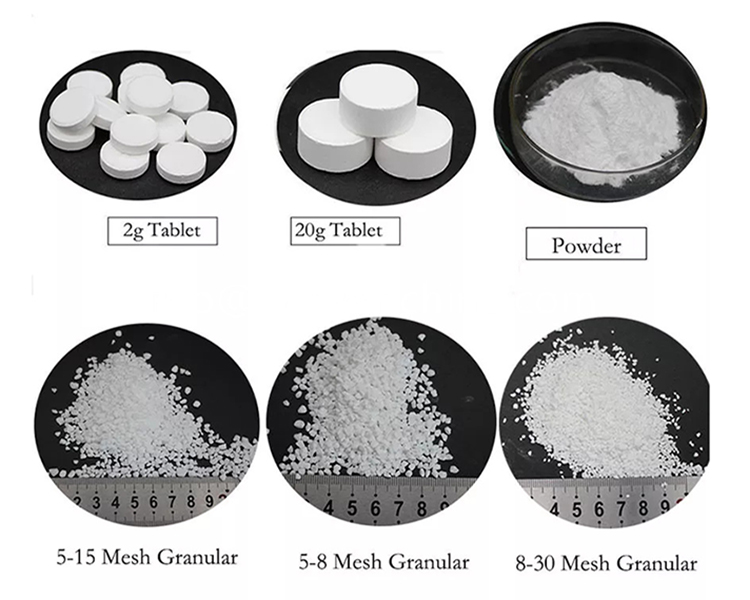
Calcium Hypochlorite changes the game. As a solid granule or tablet with ~65-70% available chlorine, it is incredibly stable. It doesn’t care if it’s 95°F in the warehouse or freezing outside. It retains its potency for years if stored correctly.
- The Result: Your dosing calculations today will still be valid next month. No more daily titration adjustments to compensate for rotting bleach. This stability leads to a much tighter control of chlorine residuals, keeping you comfortably within the regulatory window of 0.2 to 4.0 mg/L without the scary spikes.
2. Precision Dosing for Long-Distance Distribution
One of the biggest headaches in municipal systems is maintaining a residual in long distribution lines, especially those exposed to sunlight or high temperatures. Liquid bleach degrades quickly under UV light.
Cal-Hypo, when dissolved properly, provides a robust initial residual. While it doesn’t contain cyanuric acid (like SDIC), its high purity and concentrated nature allow for precise injection points that can be timed perfectly with flow rates.
- Expert Tip: Use a side-stream dissolution tank to create a saturated solution before injecting. This ensures the chemical is fully hydrolyzed and distributed evenly, preventing localized high-concentration zones that can damage pipes or create DBP hotspots. I recall a facility in Arizona that skipped this step; their injectors clogged within weeks with undissolved residue, leading to erratic dosing. Don’t let that be you.
3. Managing pH and Corrosion Control
Liquid bleach is highly alkaline (pH 13+). Dumping large volumes of it into your intake can spike the system pH, causing scaling issues and reducing the efficacy of the chlorine (since higher pH shifts the equilibrium to the less potent hypochlorite ion).
Cal-Hypo is also alkaline, but because it is so concentrated, you add significantly less volume of chemical to achieve the same disinfectant level.
- The Benefit: Less volume added means less impact on the overall water chemistry. You avoid the violent pH swings associated with bulk liquid bleach, making it easier to maintain the optimal pH range (7.2–7.6) where chlorine is most effective and corrosion is minimized.
The Critical Factor: Purity and Quality
Here is the nuance that many procurement managers miss: Not all Calcium Hypochlorite is created equal. Cheap, industrial-grade Cal-Hypo often contains fillers, heavy metals, or excessive insoluble residues (up to 10-15% in some generic brands). These impurities can clog your dissolution tanks, introduce contaminants into your drinking water, or react unpredictably.
You need a product that is pharmaceutical-grade pure. You need a supplier who understands that in municipal water, variability is the enemy.
The ENVO CHEMICAL Advantage
This is where ENVO CHEMICAL stands apart. As a global leader in the R&D, production, and sales of water treatment chemicals, ENVO has engineered Calcium Hypochlorite specifically for the rigorous demands of municipal drinking water disinfection.
- Unmatched Purity: ENVO’s Cal-Hypo boasts >65-70% available chlorine with <0.1% insolubles. This ensures rapid, complete dissolution with zero residue to clog your infrastructure. Every gram you pay for is active disinfectant.
- Stability: Engineered to retain potency even after long-term storage in challenging climates, ensuring that the chemical you buy is the chemical you use.
- Global Compliance: Fully certified to meet WHO, EPA, and EU standards for drinking water, ensuring your municipality stays on the right side of regulators.
- Reliability: With a distribution network spanning over 200 countries, ENVO ensures that your supply chain never breaks. Whether you are a small town in Africa or a major city in Europe, the quality remains identical.
Facilities that switch to ENVO’s premium Cal-Hypo don’t just see better water quality; they see streamlined operations, reduced regulatory risk, and peace of mind. Bill, the operator we mentioned earlier? After switching to ENVO’s product, his residual variance dropped by 80%, and he finally stopped getting called at 3:00 AM.
Frequently Asked Questions (FAQ)
Q: Is Calcium Hypochlorite safe for drinking water? Yes, absolutely. High-purity Calcium Hypochlorite is approved by the WHO, EPA, and EU for drinking water disinfection when used according to guidelines. It effectively kills pathogens while maintaining a stable residual.
Q: How does Cal-Hypo compare to liquid bleach in terms of cost? While the upfront cost per pound of Cal-Hypo may be higher, the total cost of ownership is often lower. There is no degradation loss (you use 100% of what you buy), reduced shipping weight (higher concentration), and less labor required for testing and adjustment.
Q: Will the calcium in Cal-Hypo cause scaling? If used correctly, scaling is minimal. The amount of calcium added is typically negligible compared to the hardness already present in most municipal waters. However, if your water is extremely hard, monitoring the Langelier Saturation Index (LSI) is recommended. ENVO’s high solubility ensures no undissolved calcium particles enter the system to act as seed crystals for scale.
Q: Can I use existing liquid dosing pumps for Cal-Hypo? You will need a dissolution system to convert the solid granules into a liquid solution before it enters your existing dosing pumps. Once dissolved, standard chemical feed pumps work perfectly.
Take the Leap Towards Smarter Disinfection
Stop letting degraded chemicals compromise your community’s safety or your budget. Effective chlorine residual management requires stability, purity, and precision.
Don’t gamble with inferior products. Partner with a company that combines cutting-edge R&D with a proven global track record. ENVO CHEMICAL is ready to help you design a disinfection strategy that meets your specific challenges. From custom formulation to logistical support, they deliver the reliability that municipalities in over 200 countries trust every day.
Ready to optimize your water treatment and ensure safe, compliant water for your community? Contact ENVO CHEMICAL today to request a sample, speak with our technical experts, or get a customized quote for your facility. Let’s turn your water challenges into your competitive advantage.
Author: Dr. Elias Thorne
Senior Municipal Water Infrastructure Consultant | 25+ Years in Public Health & Disinfection Strategy
