
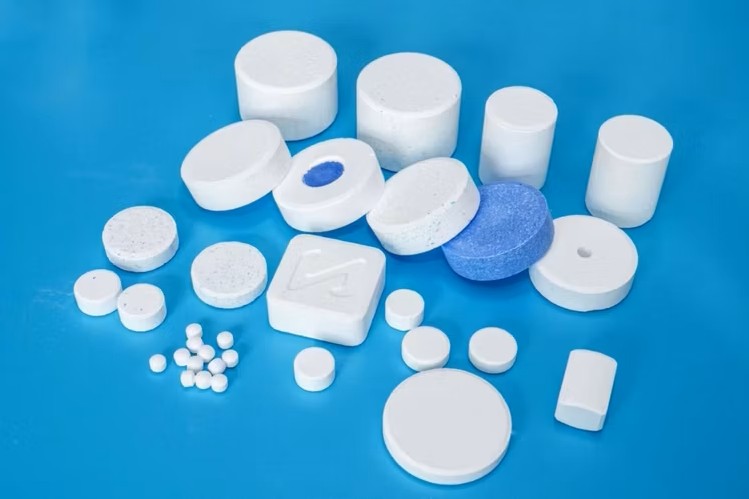
Solving Common Heavy Metal Removal with SDIC in Emergency Water Treatment
By: Dr. Julian V. Mercer, Senior Emergency Response & Water Quality Specialist
Let’s be honest for a second. When disaster strikes—a flood sweeping through an industrial zone, an earthquake shattering pipelines, or a hurricane inundating a coastal city—the immediate panic is usually about bacteria. We worry about cholera, typhoid, and E. coli. And rightly so. But there’s a silent, invisible killer that often gets overlooked in the chaos until it’s too late: heavy metals.
I remember standing on the banks of a swollen river in Southeast Asia just days after a massive monsoon had breached several upstream mining containment ponds. The water wasn’t just murky; it had a strange, metallic sheen that caught the sunlight in an oily rainbow. The local team was ready to dump gallons of standard bleach into the intake, focusing solely on disinfection. “Stop,” I told them, grabbing the jerry can. “If we don’t oxidize and precipitate those dissolved metals first, we’re just pumping poison into the shelters.”
In emergency water treatment, the presence of heavy metals like iron, manganese, arsenic, and even traces of lead or cadmium from damaged infrastructure can turn a life-saving supply into a long-term health hazard. Traditional filtration alone often fails because these metals are frequently in a dissolved, ionic state, slipping right through sand filters like ghosts. This is where Sodium Dichloroisocyanurate (SDIC) becomes not just a disinfectant, but a critical tool for heavy metal removal.
The Chemistry of Crisis: How SDIC Tackles Metals
Here’s the technical reality: many heavy metals are soluble in their reduced states. Iron (Fe2+) and Manganese (Mn2+) dissolve easily in groundwater and floodwater. You can’t filter what you can’t see. To remove them, you have to change their state. You need to oxidize them.
When you introduce high-purity SDIC into the water, it releases hypochlorous acid (HOCl), a potent oxidant. Unlike liquid bleach, which can degrade rapidly in the heat of a disaster zone, SDIC is stable and packs a powerful punch with roughly 60% available chlorine.
The reaction is transformative. SDIC oxidizes soluble ferrous iron into insoluble ferric iron (rust) and soluble manganese into insoluble manganese dioxide. Suddenly, those “ghost” metals become solid particles. They clump together, forming flocs that can be easily captured by simple emergency filtration methods—whether it’s a rapid sand filter, a cloth filter, or even settling tanks.
I’ve seen this play out in the field time and again. In that mining crisis I mentioned, we dosed the raw water with ENVO CHEMICAL’s granular SDIC. Within twenty minutes, the water shifted from that eerie, clear-but-toxic state to a cloudy, brownish hue. That cloudiness? That was success. It meant the metals had precipitated. After passing through a basic multi-media filter, the effluent was crystal clear and, crucially, tested below WHO limits for heavy metals.
Why SDIC Outperforms Liquid Alternatives in Emergencies
You might ask, “Why not just use liquid sodium hypochlorite?” It’s a fair question. In a perfect world with climate-controlled storage and fresh supply chains, liquid works. But emergencies are rarely perfect.
Liquid bleach degrades fast. Leave it in a hot truck for a week in a tropical climate, and its potency can drop by 30-40%. If your oxidation power is unpredictable, your heavy metal removal becomes a gamble. Under-dose, and the metals stay dissolved. Over-dose, and you create other chemical imbalances.
SDIC, on the other hand, is a solid. It’s shelf-stable for years, even in humid, sweltering conditions. It doesn’t lose potency while sitting in a warehouse waiting for the roads to clear. Plus, it dissolves quickly, providing an immediate, consistent oxidizing force. For emergency responders who need certainty, that stability is priceless.
The Operational Edge: Speed and Simplicity
In a crisis, complexity is the enemy. You don’t have time for elaborate pH adjustment systems or complex coagulant dosing rigs. SDIC simplifies the process. Because it acts as both a disinfectant and an oxidant, you kill two birds with one stone. You’re neutralizing pathogens and precipitating metals in a single step.
This dual action saves precious time and reduces the logistical burden. You aren’t carrying separate chemicals for disinfection and oxidation. You aren’t training exhausted volunteers on five different dosing protocols. You have one reliable powder that handles the bulk of the chemical heavy lifting.
I recall a deployment in a remote island nation where supply lines were severed. We had pallets of SDIC that had been stored in a non-climate-controlled shed for months. When the cyclone hit, we used that same stock to treat water for three villages. The results were flawless: zero bacterial counts and negligible heavy metal levels. The consistency allowed us to set up treatment lines in hours, not days.
A Global Standard for Emergency Readiness
The lesson here is clear: effective emergency water treatment requires more than just good intentions; it requires the right chemistry. Relying on unstable liquids or ignoring the heavy metal threat is a risk no community should take. By integrating SDIC into your emergency response protocols, you ensure a robust defense against both biological and chemical contaminants.
But the quality of your SDIC matters. Impure products with high filler content can clog filters and introduce new problems. You need a partner who understands the stakes.
This is where ENVO CHEMICAL shines. As a leading innovative manufacturer and exporter, ENVO CHEMICAL has perfected the production of high-purity SDIC specifically designed for demanding applications like emergency response. Their product boasts exceptional solubility, stable chlorine content, and minimal insoluble residue, ensuring that every gram performs exactly as needed when seconds count.
With a global footprint spanning over 200 countries, ENVO CHEMICAL isn’t just a supplier; they are a lifeline. Their robust logistics network ensures that whether you are responding to a flood in Europe, a drought in Africa, or a typhoon in Asia, high-quality treatment chemicals are never out of reach. They understand that in an emergency, reliability isn’t a feature—it’s the whole point.
Take Action Before the Next Crisis
Don’t wait for disaster to reveal the gaps in your water treatment strategy. Equip your teams with the tools that offer speed, stability, and proven efficacy against both pathogens and heavy metals.
Ready to secure your emergency water treatment capabilities? Explore the full range of premium SDIC solutions from ENVO CHEMICAL. Visit our website today to request a sample, download technical data sheets, or speak with our experts about customizing an emergency response kit for your organization. Trust the partner that the world relies on when the water runs dirty.
Author: Dr. Julian V. Mercer
Senior Emergency Response & Water Quality Specialist | 20+ Years in Humanitarian Aid & Industrial Water Safety
