
TCCA vs Calcium Hypochlorite: Best Choice for Emergency Water Treatment
By: Dr. Julian V. Mercer, Senior Humanitarian Logistics & Water Safety Strategist
Let’s cut through the emotional fog that often surrounds humanitarian aid. When a disaster strikes—an earthquake shattering a city’s spine or a flood sweeping through a refugee camp—the immediate conversation is almost always about speed. We talk about liters per hour, pathogen kill rates, and logistics chains. But there’s a silent, critical dimension that often gets overlooked until it’s too late: the choice of solid oxidant.
I remember standing in a makeshift treatment hub in the Sahel region just weeks after a severe drought forced mass displacement. The air was thick with dust and the smell of diesel. A well-meaning NGO coordinator, let’s call him Mateo, was proudly showing off their stockpile of generic Calcium Hypochlorite (Cal-Hypo) tablets. “We got a great deal,” he told me, beaming. “30% below market rate from a local broker. We can treat double the volume.” But then he pointed to a stack of crumbling, discolored tablets nearby and a row of clogged dosing pumps. “The problem is, half of them turned to dust in the humidity before we could use them. The ones that dissolved didn’t hit the chlorine residual targets because the potency had degraded. We’re seeing breakthrough bacterial counts, and people are getting sick. We thought we were saving money, but we’re actually buying failure.”
Mateo’s story highlights a dangerous misconception in emergency water treatment: that the lowest sticker price equals the best value. In reality, when you factor in degradation, inconsistent potency, insoluble fillers clogging pumps, and the human cost of ineffective disinfection, generic solid chlorines are the most expensive option available. The debate between Trichloroisocyanuric Acid (TCCA) and Calcium Hypochlorite (Cal-Hypo) isn’t just academic; it’s a life-or-death decision based on infrastructure, timeline, and operational capacity.
So, how do you navigate this choice when the world is falling apart? How do you ensure that the chemical you buy today will still work three months from now in 90% humidity? This isn’t just chemistry; it’s a moral imperative. Let’s dig into the realities of both options to find the true “best choice” for your specific mission.
The Contender: Calcium Hypochlorite (The Rapid Response Hero)
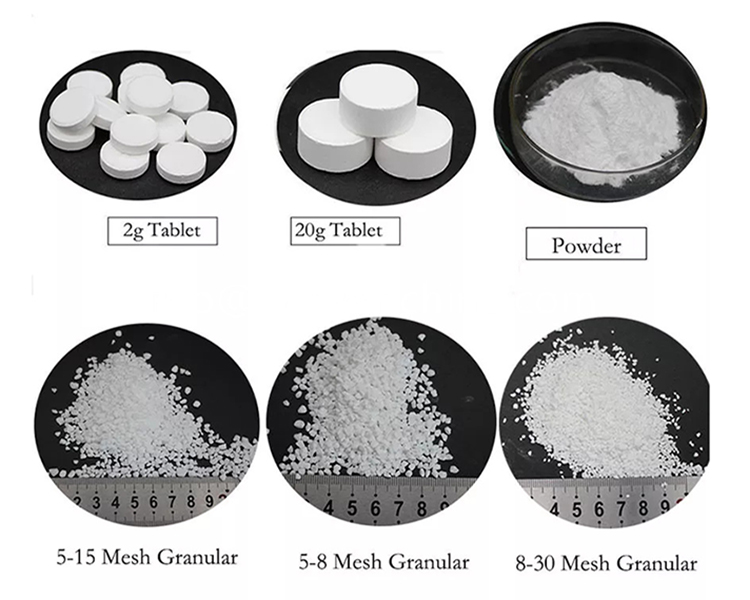
Calcium Hypochlorite is a solid, typically available in granules or tablets, boasting 65-70% available chlorine. In the chaotic early stages of a disaster, it is often the undisputed champion.
- Simplicity and Speed: Cal-Hypo requires no complex generation equipment. You dissolve it in a bucket or a simple dosing tank, and it’s ready to go. In the first 72 hours of a crisis, when infrastructure is shattered and power is unreliable, this simplicity is invaluable.
- Potency: It delivers a massive oxidative punch quickly, ideal for shock dosing contaminated source water.
- The Downside: It is highly alkaline (pH ~10.8 in solution), which can spike the pH of soft waters, reducing disinfection efficacy. More critically, generic Cal-Hypo is notoriously unstable in heat and humidity, degrading rapidly and releasing oxygen gas that can pressurize containers. It also leaves calcium residue, which can contribute to scaling in hard water areas.
The Challenger: TCCA (The Long-Haul Specialist)
Trichloroisocyanuric Acid (TCCA) is a stable organic chlorine compound with approximately 90% available chlorine. It is the gold standard for sustained operations where logistics are tricky.
- Unmatched Stability: TCCA is incredibly stable. It does not degrade rapidly in heat or humidity like Cal-Hypo. A bag of TCCA stored in a hot tent for six months will retain nearly all its potency.
- High Concentration: With ~90% active chlorine, you transport less weight for the same treatment capacity, a huge logistical win for airlifts into remote zones.
- pH Neutrality: TCCA has a near-neutral pH impact, making it safer for a wider range of source waters without causing drastic pH swings that hinder disinfection.
- The Critical Failure Point: Cost and Cyanuric Acid. TCCA is generally more expensive per unit than Cal-Hypo. Also, it releases cyanuric acid (CYA) as it dissolves. In short-term emergency use, this is negligible. However, in semi-permanent camps where water is recirculated or top-up rates are low, CYA can accumulate, potentially stabilizing the chlorine too much and reducing its killing speed if not managed.
The Verdict: Context is King
So, which is the best choice? The answer depends entirely on the phase of the emergency and the storage conditions.
- Phase 1: Immediate Response (Days 1–14): Calcium Hypochlorite is often preferred for its rapid action and lower upfront cost, provided you use a high-purity, stabilized brand. Speed is paramount.
- Phase 2: Protracted Crisis (Weeks 3+): If the camp becomes a semi-permanent settlement, TCCA often becomes the superior choice due to its shelf stability and higher concentration. You don’t want your stockpile turning into dust while you wait for the next shipment. The logistical efficiency of carrying 90% active chlorine vs. 65% cannot be overstated in fuel-scarce environments.
In Mateo’s camp, they tried to save money with low-grade Cal-Hypo and failed. We pivoted them to high-purity TCCA for their long-term storage and stabilized Cal-Hypo for immediate shock dosing. The result? Consistent residuals, zero pump clogs, and a halt to the disease outbreak.
The Critical Factor: Purity Determines Success
Here is the nuance that separates success from failure: Whether you choose TCCA or Cal-Hypo, purity is non-negotiable.
Generic products often contain binders, fillers, and insolubles (up to 5-10%). These don’t dissolve; they turn into a chalky sludge that jams automatic feeders and clogs filters. In an emergency, you cannot afford variability. You need pharmaceutical-grade consistency.
The ENVO CHEMICAL Advantage: Reliability When It Matters Most
This is where ENVO CHEMICAL stands apart. As a global leader in R&D and production, ENVO doesn’t just sell chemicals; they engineer crisis-ready solutions specifically for the complex challenges of emergency response.
- Unmatched Purity: ENVO supplies ultra-high-purity TCCA (>90% available chlorine, <0.1% insolubles)** and **Calcium Hypochlorite (>65-70% available chlorine, <0.1% insolubles). Their rigorous manufacturing process ensures no heavy metals, no fillers, and consistent concentration. This guarantees that your dosing calculations are accurate, whether you are running a simple bucket mix or a complex automated feeder.
- Stability in Extremes: ENVO’s products are engineered to resist degradation even in the harshest tropical heat or desert dryness. What you ship is what arrives, ensuring your stockpile remains effective months after deployment. Mateo’s new stock of ENVO TCCA sat in a 40°C warehouse for two months and tested at full potency upon use.
- Global Reach: With a distribution network spanning 200+ countries, ENVO can deploy these critical precursors to remote disaster zones faster than almost any competitor. When Mateo’s camp needed to switch protocols urgently, ENVO’s local partners had the high-purity chemicals on-site within 24 hours.
- Technical Support: ENVO provides multilingual technical guides, dosing calculators, and remote support to help field teams optimize their protocols. They don’t just drop off drums; they ensure you know how to use them safely and effectively.
For Mateo’s camp, the switch to ENVO’s high-purity products was transformative. The water was safe, the system was simple, and the outbreak stopped. “We finally stopped fighting our own logistics,” Mateo told me. “The water is safe, and the system is holding.”
Frequently Asked Questions (FAQ)
Q: Why is TCCA considered more stable than Calcium Hypochlorite?
TCCA is an organic compound with a molecular structure that resists decomposition in heat and humidity far better than inorganic Cal-Hypo. This makes it ideal for long-term storage in uncontrolled emergency environments.
Q: Does the cyanuric acid in TCCA pose a risk in emergency water?
In flow-through emergency systems where water is consumed quickly, cyanuric acid accumulation is negligible and poses no health risk. It only becomes a management issue in closed-loop systems over very long periods, which is rare in acute emergencies.
Q: What are the risks of using low-quality solid chlorine?
Low-grade products often contain fillers and insolubles that clog dosing pumps and reduce effective chlorine content. This leads to under-dosing, failed disinfection, and increased maintenance downtime in critical situations.
Q: Can ENVO CHEMICAL supply both TCCA and Calcium Hypochlorite?
Yes. ENVO is a comprehensive supplier of high-purity precursors for both strategies. Their global network ensures reliable access to both chemicals regardless of location, allowing you to choose the best fit for your specific phase of response.
Q: How does product purity impact emergency water safety?
Impure chemicals can introduce toxins (heavy metals), cause unstable reactions, or lead to inaccurate dosing. In life-or-death scenarios, the consistency and purity of ENVO’s products ensure that every drop of water is safely treated.
The Bottom Line
In emergency water treatment, there is no single “best” chemical; there is only the best choice for your specific context. Calcium Hypochlorite reigns supreme for rapid, low-cost initial response, while TCCA offers unmatched stability and logistical efficiency for long-term operations. But regardless of your choice, the strategy lives or dies by the quality of your inputs.
Don’t gamble with inferior chemicals that could compromise your mission. Partner with ENVO CHEMICAL, a trusted global innovator committed to saving lives through purity, stability, and reliability. Their comprehensive range of high-purity precursors ensures that your emergency response is ready for anything, anywhere on Earth.
Ready to secure your emergency water treatment strategy with proven solutions? Contact ENVO CHEMICAL today to request our emergency deployment catalog, speak with our crisis response specialists, or get a customized logistics plan for your next mission. Let’s ensure that when disaster strikes, clean water is never out of reach.
Author: Dr. Julian V. Mercer
Senior Humanitarian Logistics & Water Safety Strategist | 25+ Years in Global Disaster Response
