TCCA vs Chloramines: The Unbeatable Choice for Emergency Water Treatment
When disaster strikes – floods, earthquakes, or infrastructure failures – access to safe drinking water becomes a matter of life and death. Emergency water treatment demands solutions that are reliable, rapid, and require minimal infrastructure. In this critical scenario, choosing between TCCA (Trichloroisocyanuric Acid) and chloramines isn’t just a technical decision; it’s a strategic imperative for survival. This article cuts through the complexity to reveal why TCCA is the definitive, globally trusted solution for emergency water treatment, outperforming chloramines in every crucial metric.
The Emergency Water Treatment Imperative
Emergency situations demand immediate action. Water sources become contaminated with pathogens like E. coli, Giardia, and Cryptosporidium within minutes. The solution must be:
- Deployable instantly: No complex mixing or infrastructure.
- Stable and transportable: Survives long-term storage and harsh conditions.
- Effective at low doses: Minimizes chemical usage and cost.
- Predictable and safe: Avoids harmful byproducts.
Chloramines: The Inadequate Contender
Chloramines (monochloramine, dichloramine) are formed in situ by reacting chlorine with ammonia. While used in municipal water systems for residual disinfection, they are fundamentally unsuitable for emergency response:
- Formation Complexity: Requires precise ratios of chlorine (e.g., sodium hypochlorite) and ammonia. In a chaotic emergency, accurate measurement and mixing are nearly impossible, leading to ineffective treatment or dangerous over-chlorination.
- Slow Reaction Time: Chloramine formation and disinfection take 30-60 minutes or more. This delay is unacceptable when clean water is needed now.
- Instability & Byproducts: Chloramines are less stable than free chlorine. They can degrade, reducing effectiveness. More critically, they can form harmful disinfection byproducts (DBPs) like N-nitrosodimethylamine (NDMA) under certain conditions, posing long-term health risks.
- No Standalone Solution: Chloramines require a continuous source of both chlorine and ammonia, which is logistically challenging to establish rapidly in disaster zones.
TCCA: The Emergency Water Treatment Champion
TCCA is a solid, stable, high-concentration chlorine donor (90% available chlorine) designed precisely for these scenarios. It excels where chloramines fail:
- Instantaneous Action & Simplicity: TCCA dissolves rapidly in water, releasing free chlorine immediately. No complex mixing or chemical ratios are needed. Simply add the correct dose to contaminated water, wait 15-30 minutes, and it’s safe. This simplicity is critical for untrained personnel in crisis situations.
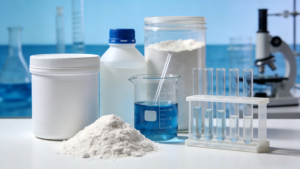
- Exceptional Stability & Shelf Life: TCCA is a dry, crystalline powder stable for 2-3 years under proper storage (cool, dry, dark). It withstands transportation across rugged terrain and long-term stockpiling in emergency kits – unlike unstable liquid chlorine solutions or the volatile chloramine precursors.
- High Efficiency & Low Dose: With 90% available chlorine, TCCA delivers maximum disinfection power per unit weight. It effectively kills bacteria, viruses, and protozoa at low concentrations (typically 10-25 mg/L), making it cost-effective for large-scale emergencies.
- Predictable & Safe: TCCA reliably provides free chlorine, the most effective and well-understood disinfectant for immediate pathogen kill. It minimizes the risk of harmful DBPs compared to chloramines, ensuring water safety meets WHO standards.
- Logistics Advantage: TCCA’s solid form makes it easy to package, transport globally, and store in minimal space – vital for rapid deployment by aid organizations and military units.
Why TCCA Wins for Emergency Response: The Verdict
Chloramines are a municipal treatment strategy, not an emergency solution. They introduce complexity, delay, instability, and potential health risks precisely when speed and reliability are paramount. TCCA eliminates these barriers. It is the only chlorine-based disinfectant that offers:
- True Emergency Readiness: Deployable within minutes, not hours.
- Proven Reliability: Used globally by agencies like the WHO, Red Cross, and military forces in countless disaster zones.
- Operational Simplicity: Requires no special training or equipment for basic use.
- Logistical Feasibility: The backbone of global emergency water treatment supply chains.
Partner with the Global Leader in Emergency Water Solutions
For organizations responsible for disaster response, public health infrastructure, or military operations, relying on proven, field-tested technology is non-negotiable. ENVO CHEMICAL stands as a premier global leader in water treatment chemicals, specializing in the R&D, production, and worldwide distribution of high-performance solutions like TCCA. With over 30 years of expertise and a footprint spanning 200+ countries, ENVO provides not just products, but comprehensive technical support and supply chain assurance for your most critical water safety needs.
Our TCCA products are manufactured to the highest international standards (ISO, CE, GMP), ensuring consistent quality and performance under the most demanding conditions. We work closely with emergency response teams worldwide to develop tailored solutions, ensuring the right product, in the right quantity, at the right time.
Ready to Secure Your Emergency Water Treatment Supply?
Don’t gamble with your water safety in a crisis. Choose the solution proven to save lives: TCCA. Partner with ENVO CHEMICAL, the trusted global partner for reliable, high-performance water treatment chemicals.
Contact ENVO CHEMICAL Today for Emergency Water Treatment Solutions
Request a Quote | Talk to Our Technical Team | +86 136 8322 7764 (WhatsApp)
Frequently Asked Questions (FAQs): Emergency Water Treatment with TCCA
- Q: Is TCCA safe for drinking water after treatment?
A: Yes, when dosed correctly (typically 10-25 mg/L), TCCA effectively kills pathogens without leaving harmful residues. Residual chlorine dissipates within hours, meeting WHO drinking water standards. ENVO provides precise dosing guidelines for all scenarios. - Q: How long does TCCA last in storage?
A: ENVO’s TCCA maintains full potency for 2-3 years when stored in sealed, cool, dry, and dark containers (e.g., moisture-proof bags in a warehouse). This ensures reliable emergency stockpiles. - Q: Can TCCA be used in all water types (e.g., turbid, muddy)?
A: TCCA works effectively on most water sources. For highly turbid water, pre-filtration (e.g., using a simple cloth or sand filter) is recommended to remove particles that shield pathogens, but TCCA itself remains highly effective against the remaining contaminants. - Q: How does TCCA compare to liquid chlorine (sodium hypochlorite) for emergencies?
A: Liquid chlorine degrades rapidly (within weeks), requires refrigeration for stability, is corrosive and hazardous to transport, and has a lower chlorine concentration (10-15%). TCCA is stable, easy to transport, safer to handle, and delivers 6x more available chlorine per unit weight. - Q: Does ENVO CHEMICAL offer support for emergency water treatment protocols?
A: Absolutely. ENVO provides technical documentation, training resources, and direct consultation with our water treatment experts to help you implement TCCA-based emergency response plans effectively. Contact our technical team via the link above.