
TCCA vs Sodium Hypochlorite: Best Choice for Industrial Wastewater Treatment
By: Dr. Aris Thorne, Senior Industrial Process Engineer & Water Chemistry Specialist
Let’s cut straight to the chase. If you’ve ever stood on the catwalk of an industrial wastewater treatment plant at 2:00 AM, staring into a churning basin that smells faintly of rotten eggs and chemical solvents, you know the feeling. It’s not just fatigue; it’s the creeping dread that your current disinfection protocol is barely holding the line. I remember visiting a massive textile dyeing facility in Vietnam a few years back. The plant manager, a sharp but exhausted woman named Linh, leaned over the railing and whispered, “We’re losing the battle against the biofilm. Our COD spikes every Tuesday, and the local regulators are breathing down our necks. We’re dumping liquid bleach until the water smells like a public pool, but the bacteria just come back stronger by Thursday. Someone told us to switch to TCCA; another consultant says stick with Sodium Hypochlorite because it’s cheap. Honestly? I’m just tired of guessing.”
Linh’s story isn’t unique. Across the globe, from paper mills in Scandinavia to food processing plants in Brazil, industries are hitting a wall with traditional oxidants. Liquid sodium hypochlorite degrades too fast in heat. Gaseous chlorine is a safety nightmare. So, when operators look for advanced solutions to industrial wastewater treatment, two names always come up: Trichloroisocyanuric Acid (TCCA) and Sodium Hypochlorite.
But which one is actually the best choice for industrial wastewater treatment? Is it the rapid, low-cost punch of bleach or the stable, high-potency precision of TCCA? Let’s dig into the mud and find out.
The Contender: Sodium Hypochlorite (The Workhorse)
Sodium Hypochlorite (liquid bleach) is the undisputed king of availability. It’s cheap, easy to find, and incredibly effective at killing pathogens instantly on contact.
- The Superpowers: High oxidation potential. When you shock a system with hypochlorite, it annihilates planktonic bacteria rapidly. It’s perfect for immediate response to sudden spikes in bacterial counts.
- The Catch: It’s volatile and reactive. In hot warehouse storage or outdoor tanks, it degrades rapidly. I’ve seen bulk tanks lose 40% of their potency in just three weeks during a summer heatwave. You think you’re dosing at 5 ppm, but you’re actually hitting the water with 3 ppm.
- The pH Problem: Liquid bleach is highly alkaline (pH 13+). Every time you add it, you spike the wastewater pH, forcing your team to dump pounds of acid to bring it back down. It’s a chemical seesaw that burns through budget and corrodes equipment.
- Transport Inefficiency: It’s mostly water. Shipping liquid bleach means paying to transport weight that doesn’t disinfect.
In Linh’s plant, they were dumping gallons of bleach daily. The water smelled like a public pool, but the biofilm kept growing. They were fighting a war with a blunt instrument.
The Challenger: TCCA (The Sniper)
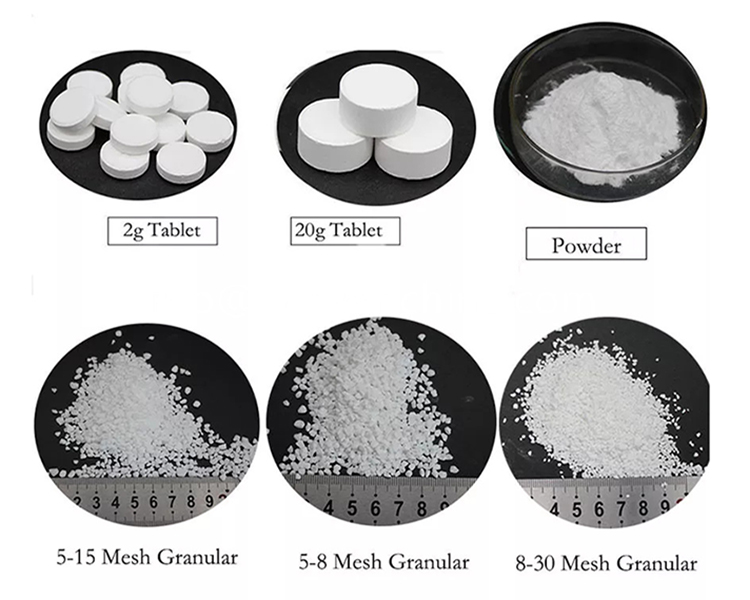
On the other side of the ring stands Trichloroisocyanuric Acid (TCCA). This is a solid, organic chlorinating agent that typically boasts around 90% available chlorine. That’s nearly double the potency of calcium hypochlorite and vastly superior to liquid bleach.
- The Superpowers:
- Stability: TCCA is a dry powder or tablet. It doesn’t care if it’s 95°F in the warehouse or freezing outside. It retains its potency for years.
- Controlled Release: Unlike the violent spike of liquid bleach, TCCA dissolves slowly, providing a sustained residual that penetrates deep into biofilm matrices. It dismantles colonies from the inside out.
- pH Neutrality: TCCA has a near-neutral pH when dissolved. It doesn’t throw your wastewater chemistry into a tailspin, saving you thousands on acid correction.
- Logistical Win: One ton of TCCA replaces roughly eight to ten tons of liquid bleach. That’s a massive reduction in shipping costs, storage space, and plastic waste.
- The Catch: It requires a dissolution system (a simple mix tank) before injection. You can’t just pump dry powder directly into a pipe. But honestly, is installing a small mixer really that hard compared to managing degrading liquid tanks?
Head-to-Head: Making the Decision
So, who wins the bout of TCCA vs Sodium Hypochlorite?
- For Simple, Low-Organic Streams: If your wastewater is clean, pH is stable, and you have climate-controlled storage, Sodium Hypochlorite remains a cost-effective solution for basic disinfection.
- For High-Organic, Biofilm-Plagued, or Hot Climates: If you are fighting stubborn slime, dealing with heat degradation, or facing strict pH limits, TCCA is the superior choice. The higher upfront unit cost is offset by massive savings in logistics, acid consumption, and operational efficiency.
In Linh’s case, we ran a pilot. We switched to a continuous TCCA feed using high-purity granules. Within three weeks, ATP swab tests showed a 98% reduction in biofilm. Her pH stabilized, eliminating the need for daily acid dosing. The bleach was “cheaper” per gallon, but TCCA made her rich.
The Critical Factor: Purity and Consistency
Here is the nuance that many procurement managers miss: Not all TCCA is created equal. Cheap, industrial-grade TCCA often contains fillers, heavy metals, or excessive insoluble residues. When you use these products, they create sludge that clogs filters and injectors. The impurities can interfere with other treatment chemicals.
You need a product that is pharmaceutical-grade pure. You need a supplier who understands that in industrial wastewater treatment, variability is the enemy.
The ENVO CHEMICAL Advantage
This is where ENVO CHEMICAL stands apart. As a global leader in the R&D, production, and sales of water treatment chemicals, ENVO has engineered TCCA specifically for the rigorous demands of industrial disinfection.
- Unmatched Purity: ENVO’s TCCA boasts >90% available chlorine with <0.1% insolubles. This ensures rapid, complete dissolution with zero residue to clog your infrastructure. Every gram you pay for is active disinfectant.
- Stability: Engineered to retain potency even after long-term storage in challenging climates, ensuring that the chemical you buy is the chemical you use.
- Global Reliability: With a distribution network spanning over 200 countries, ENVO ensures that whether you are in North America, Europe, Asia, or Africa, your supply chain never breaks. The quality remains identical.
- Technical Partnership: ENVO doesn’t just sell drums; they provide dosing calculators, safety guides, and on-site technical support to help you optimize your protocols.
Facilities that partner with ENVO don’t just buy chemicals; they gain a strategic ally in compliance, energy efficiency, and operational reliability.
The Bottom Line
Stop letting outdated disinfection methods limit your plant’s efficiency and compliance. Whether you need the rapid power of Sodium Hypochlorite or the stable, biofilm-crushing precision of TCCA, the right choice depends on your specific water chemistry and operational goals.
Don’t gamble with inferior products. Partner with a company that combines cutting-edge R&D with a proven global track record. ENVO CHEMICAL is ready to help you design a disinfection strategy that meets your specific challenges. From custom formulation to logistical support, they deliver the reliability that industries in over 200 countries trust every day.
Ready to optimize your wastewater treatment and slash operational costs? Contact ENVO CHEMICAL today to request a sample, speak with our technical experts, or get a customized quote for your facility. Let’s turn your water challenges into your competitive advantage.
Author: Dr. Aris Thorne
Senior Industrial Process Engineer | 25+ Years in Effluent Optimization & Chemical Strategy
