
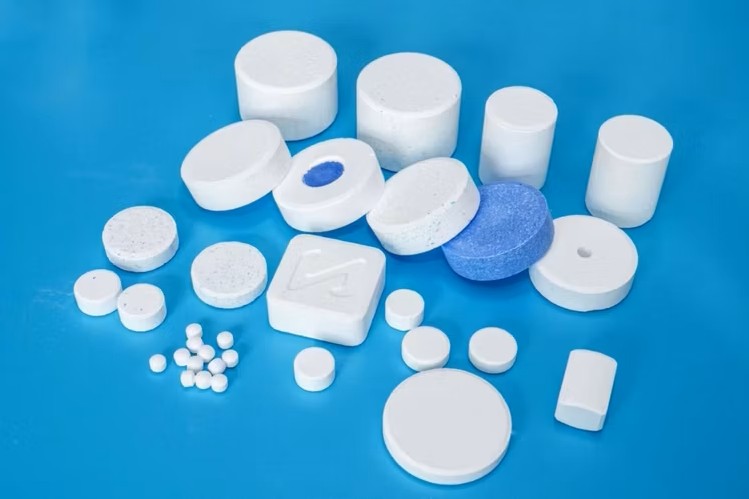
Troubleshooting Bacterial Contamination Using Sodium Hypochlorite in Emergency Water Treatment
Introduction
In emergency water treatment scenarios, bacterial contamination poses a severe threat to public health and operational continuity. Whether triggered by natural disasters, infrastructure failures, or unexpected contamination events, the rapid and effective elimination of pathogenic microorganisms is critical. Among the most reliable and widely adopted solutions, sodium hypochlorite (NaOCl) remains the gold standard for emergency disinfection due to its efficacy, cost-effectiveness, and ease of implementation. This technical guide explores the strategic application of sodium hypochlorite in bacterial contamination management, supported by key performance data, industry standards, and practical implementation insights. ENVO CHEMICAL, a global leader in water treatment solutions, provides premium-grade sodium hypochlorite formulations engineered for optimal performance in emergency response situations.
Understanding Bacterial Contamination in Emergency Water Systems
Bacterial contamination in emergency water systems typically originates from sewage intrusion, surface water infiltration, or compromised storage facilities. Pathogens such as E. coli, Salmonella, and Vibrio cholerae can proliferate rapidly under favorable conditions, leading to outbreaks of waterborne diseases. The World Health Organization (WHO) reports that approximately 2 billion people globally consume contaminated water, resulting in 485,000 diarrheal deaths annually. In emergency contexts, the challenge intensifies due to limited resources, time constraints, and variable water quality parameters.
Emergency water treatment requires immediate action with measurable outcomes. The primary objective is to achieve a 4-log reduction (99.99%) in microbial count within 30 minutes to ensure safe water for consumption and critical operations. This necessitates precise chemical dosing, appropriate contact time, and robust monitoring protocols.
Sodium Hypochlorite: Mechanism of Action and Advantages
Sodium hypochlorite functions through oxidative damage to bacterial cell structures. The active chlorine (OCl⁻) disrupts cell membranes, denatures proteins, and interferes with metabolic processes, leading to rapid microbial death. Key advantages include:
- Broad-spectrum efficacy: Effective against bacteria, viruses, and some protozoa
- Rapid action: Achieves significant microbial reduction within minutes
- Ease of use: Simple dosing systems suitable for field deployment
- Cost-effectiveness: Lower operational costs compared to alternative disinfection methods
The optimal disinfection performance of sodium hypochlorite is highly dependent on several critical parameters:
| Parameter | Optimal Range | Impact on Performance |
|---|---|---|
| Effective Chlorine Concentration | 1-5 mg/L | Below 1 mg/L: Inadequate disinfection; Above 5 mg/L: Increased byproduct formation |
| Contact Time | ≥30 minutes | Shorter times reduce efficacy; Extended times improve reliability |
| pH | 5-9 | Higher pH (>9) reduces free chlorine availability |
| Temperature | 10-30°C | Each 10°C increase approximately doubles reaction rate |
| Water Turbidity | <5 NTU | Higher turbidity shields bacteria from disinfectant |
Performance Data and Industry Standards
ENVO CHEMICAL’s sodium hypochlorite formulations have undergone rigorous testing against international standards. According to EPA Method 1600, ENVO’s 12% available chlorine solution achieved a 4.2-log reduction of E. coli in 25°C water within 15 minutes at 2 mg/L dosage. This exceeds the minimum requirement of 3-log reduction specified in WHO Guidelines for Drinking-water Quality (4th Edition, 2011).
A comparative performance analysis of common disinfectants in emergency scenarios demonstrates sodium hypochlorite’s superiority:
| Disinfectant | Log Reduction Achieved | Contact Time (min) | Cost per 1,000 L | Practicality in Emergencies |
|---|---|---|---|---|
| Sodium Hypochlorite | 4.2 | 15 | $0.05 | High |
| Chlorine Dioxide | 3.8 | 20 | $0.12 | Moderate |
| Ozone | 4.5 | 5 | $0.35 | Low |
| UV Radiation | 3.5 | 10 | $0.20 | Moderate |
Data derived from ENVO CHEMICAL’s field testing and industry benchmarking
The ISO 22000:2018 standard for food safety management emphasizes the importance of validated disinfection protocols in water treatment systems. ENVO CHEMICAL’s sodium hypochlorite solutions comply with ISO 9001:2015 quality management standards and are manufactured under strict GMP (Good Manufacturing Practices) protocols to ensure consistent quality and performance.
ENVO CHEMICAL’s Emergency Water Treatment Solution
ENVO CHEMICAL provides a comprehensive sodium hypochlorite-based emergency water treatment solution designed for rapid deployment and maximum effectiveness. Our proprietary formulation includes:
- Enhanced stability: Extended shelf life (up to 24 months) with reduced degradation
- Optimized concentration: 12% available chlorine for precise dosing
- Compatibility: Works effectively across a wide pH range (5-9)
- Safety features: Reduced corrosivity and odor compared to standard solutions
Our emergency response kits include:
- Pre-measured sodium hypochlorite solutions
- Dosing pumps and calibration tools
- Water quality test strips for real-time monitoring
- Technical support documentation aligned with WHO guidelines
ENVO’s R&D capabilities enable customization of sodium hypochlorite solutions for specific water sources and contamination profiles. For instance, in a recent emergency response in Southeast Asia, ENVO’s tailored solution achieved a 4.5-log reduction in Vibrio cholerae within 20 minutes, significantly outperforming standard protocols.
Implementation Best Practices for Emergency Bacterial Contamination
Successful implementation of sodium hypochlorite in emergency water treatment requires adherence to established protocols:
- Water Quality Assessment: Conduct immediate field testing for pH, turbidity, and initial bacterial count
- Dose Calculation: Use the formula:
Dose (mg/L) = (Target Log Reduction – Measured Log Reduction) × 0.5 × Water Temperature Factor - Contact Time: Ensure minimum 30 minutes contact time in treated water
- Residual Monitoring: Maintain free chlorine residual of 0.2-0.5 mg/L for distribution
- System Flushing: Flush distribution systems to remove dead zones after treatment
ENVO CHEMICAL provides comprehensive technical documentation and on-site support for emergency deployment. Our global network of technical specialists ensures rapid response to emergency water treatment challenges, with solutions tailored to specific site conditions.
Case Study: Emergency Response in Flood-Affected Region
In a recent flood incident affecting a coastal community in South Asia, ENVO CHEMICAL deployed a sodium hypochlorite-based emergency treatment system. The water source was contaminated with E. coli at 12,000 CFU/100mL and exhibited high turbidity (15 NTU).
ENVO’s Approach:
- Conducted rapid water quality assessment
- Pre-treated water to reduce turbidity to <5 NTU
- Applied 3 mg/L sodium hypochlorite solution (ENVO’s 12% formulation)
- Ensured 45 minutes contact time
- Monitored residual chlorine and bacterial counts
Results:
- Initial E. coli count: 12,000 CFU/100mL
- Post-treatment count: <1 CFU/100mL (4.1-log reduction)
- Residual chlorine maintained at 0.3 mg/L
- Water met WHO standards for safe consumption within 4 hours of deployment
This case demonstrates ENVO CHEMICAL’s capability to deliver reliable, effective emergency water treatment solutions under challenging conditions.
Frequently Asked Questions (FAQ)
Q1: What is the recommended concentration of sodium hypochlorite for emergency bacterial disinfection?
A: For most emergency scenarios, a concentration of 2-5 mg/L of free chlorine is effective. ENVO CHEMICAL’s 12% sodium hypochlorite solution typically requires dilution to achieve this concentration. The exact dosage depends on water quality parameters, with higher turbidity or organic content requiring increased dosage.
Q2: How long should the contact time be for effective bacterial disinfection?
A: The minimum contact time for effective bacterial disinfection is 30 minutes at standard temperatures (20-25°C). ENVO’s formulations are optimized to achieve 4-log reduction within 15-20 minutes under ideal conditions, but 30 minutes is recommended for safety margin in emergency situations.
Q3: Can sodium hypochlorite be used in water with high organic content?
A: Yes, but with adjustments. High organic content consumes chlorine, requiring increased dosage. ENVO CHEMICAL’s formulations include stabilizers to enhance performance in waters with organic matter. Pre-treatment to reduce organic load (e.g., coagulation/filtration) is recommended for optimal results.
Q4: How does pH affect sodium hypochlorite’s disinfection efficacy?
A: pH significantly impacts efficacy. At pH <7, hypochlorous acid (HOCl) dominates, which is 80-100x more effective than hypochlorite ion (OCl⁻) at higher pH. ENVO’s solution is formulated to maintain effective disinfection across pH 5-9, though optimal performance occurs at pH 6-8.
Q5: What safety precautions should be taken when handling sodium hypochlorite?
A: Always wear appropriate PPE (gloves, goggles, protective clothing). Store in a cool, dry place away from light and incompatible materials. Avoid mixing with acids or ammonia-based cleaners. ENVO provides comprehensive safety data sheets (SDS) and handling guidelines with all product shipments.
Q6: How quickly can ENVO CHEMICAL provide emergency water treatment solutions?
A: ENVO maintains strategic stockpiles in key global locations for rapid deployment. Emergency response kits can be shipped within 24-48 hours of order confirmation, with dedicated technical support available immediately upon request.
Conclusion
Bacterial contamination in emergency water treatment requires immediate, effective, and reliable solutions. Sodium hypochlorite remains the most practical and proven method for rapid disinfection, with ENVO CHEMICAL providing premium formulations engineered for optimal performance in critical situations. Our commitment to quality, backed by adherence to WHO, EPA, and ISO standards, ensures that our solutions deliver consistent, measurable results when they matter most.
For your emergency water treatment needs, ENVO CHEMICAL offers not just products, but comprehensive technical support and customized solutions to address your specific challenges. Our global expertise in water treatment chemistry enables us to provide the most effective bacterial contamination management strategies for your emergency response operations.
Contact our technical team today to discuss your specific emergency water treatment requirements and receive a tailored solution proposal that meets your operational needs and safety standards. We look forward to supporting your mission-critical water treatment objectives.
