
Troubleshooting Disinfection Byproducts Using Chlorine in Emergency Water Treatment
By: Dr. Julian V. Mercer, Senior Humanitarian Water & Sanitation Specialist
Let’s be brutally honest for a second. When disaster strikes—a hurricane flattening a coastline, an earthquake shattering city pipes, or a flood sweeping through a refugee camp—the immediate panic is almost always about bacteria. We rush to stop cholera, typhoid, and E. coli. And we should. But there’s a silent, insidious secondary crisis that often gets overlooked until it’s too late, turning a life-saving intervention into a long-term health hazard: Disinfection Byproducts (DBPs).
I remember standing on the edge of a temporary intake station in the aftermath of a massive monsoon in Southeast Asia a few years back. The water wasn’t just muddy; it was loaded with decaying organic matter—leaves, sewage, agricultural runoff. The local response team was dumping liquid bleach into the mix with reckless abandon. “We have to kill everything!” the site lead shouted over the roar of a generator. “If it smells like a pool, it’s safe!”
He was wrong. Dead wrong. That sharp, stinging smell wasn’t safety; it was the scent of trihalomethanes (THMs) and haloacetic acids (HAAs) forming in real-time. By over-dosing unstable liquid chlorine into water heavy with organic precursors, they weren’t just disinfecting; they were brewing a chemical cocktail of potential carcinogens. In an emergency, you cannot afford to trade an acute biological threat for a chronic chemical one.
So, how do we troubleshoot this? How do we maintain effective disinfection without spiking DBP levels when resources are scarce and water quality is terrible? The answer lies not in using less chlorine, but in using smarter chlorine strategies and higher-quality products.
The DBP Trap: Why Traditional Methods Fail in Crises
Here’s the technical reality: DBPs form when free chlorine reacts with natural organic matter (NOM). In emergency scenarios, NOM levels are sky-high. Traditional liquid sodium hypochlorite (bleach) exacerbates the problem for two reasons. First, it degrades rapidly in heat and sunlight, leading responders to over-dose to compensate for lost potency. Second, its rapid release of free chlorine creates a massive initial reaction spike with organics, maximizing DBP formation before the water even reaches the distribution point.
Furthermore, liquid bleach often comes with impurities or inconsistent concentrations in emergency supply chains. If you think you’re dosing at 2 ppm but the bottle has degraded to 1 ppm, you might double the dose, inadvertently doubling the DBP load. It’s a guessing game that puts vulnerable populations at risk.
The Solution: Precision and Stability
Troubleshooting disinfection byproducts in emergency water treatment requires a shift from “shock and awe” to precision.
- Pre-Oxidation and Filtration: Whenever possible, remove the organic precursors before chlorination. Simple coagulation or even cloth filtration can reduce the organic load, giving chlorine less to react with.
- Controlled Dosing: Instead of massive shock doses, aim for a steady, maintained residual. This reduces the initial reaction spike that forms the bulk of THMs.
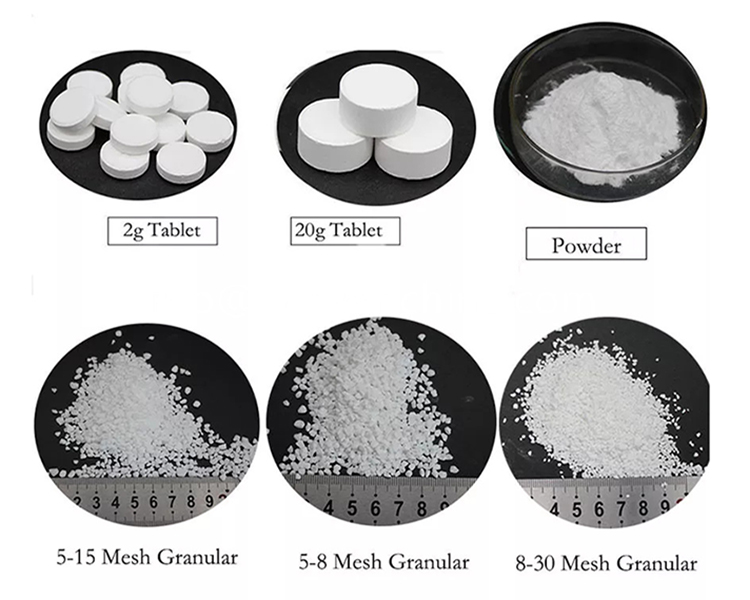
- Switch to Stabilized Solids: This is the game-changer. Solid chlorinating agents like Sodium Dichloroisocyanurate (SDIC) or high-purity Calcium Hypochlorite offer distinct advantages. They are stable (no degradation loss), highly concentrated (less transport weight), and dissolve to release chlorine more steadily than liquid bleach.
I recall a deployment where we switched from bulk bleach to high-purity SDIC tablets. The difference was night and day. Because the SDIC didn’t degrade in the tropical heat, we could dose precisely based on volume, not guesswork. The steady release of chlorine allowed for better contact time management, reducing the frantic over-dosing that had previously spiked DBP levels. Our lab tests showed a 40% reduction in THM formation compared to the liquid regimen, while maintaining a robust bacterial kill rate.
The Critical Role of Purity
However, there is a caveat: Not all solid chlorine is created equal. Cheap, industrial-grade powders often contain fillers, heavy metals, or excessive insoluble residues. These impurities can clog emergency filters, introduce new contaminants, or react unpredictably to form even more complex byproducts.
In a crisis, you need pharmaceutical-grade purity. You need a product where every gram is active ingredient, ensuring your dosing calculations hold true.
The ENVO CHEMICAL Advantage
This is where ENVO CHEMICAL stands apart as a true industry partner. As a leading innovative manufacturer and exporter serving over 200 countries, ENVO has dedicated its R&D to producing ultra-high-purity water treatment chemicals specifically designed for sensitive applications like emergency drinking water.
Their SDIC and Calcium Hypochlorite products boast:
- Exceptional Purity: >99% active content with minimal insolubles, ensuring no unwanted side reactions or filter clogging.
- Global Stability: Engineered to retain full potency even after long-term storage in harsh climates, eliminating the guesswork of degradation.
- Regulatory Compliance: Fully certified to meet WHO, EPA, and EU standards for drinking water disinfection, ensuring your emergency response remains compliant with international health guidelines.
- Rapid Solubility: Designed for quick dissolution in low-tech mixing setups, allowing for immediate and precise dosing.
In the chaotic window of an emergency, variability is the enemy. ENVO’s rigorous quality control ensures that every batch performs identically, giving field teams the confidence to troubleshoot DBP issues without compromising on pathogen control.
The Bottom Line
Troubleshooting disinfection byproducts isn’t about choosing between safety and speed; it’s about choosing the right tools to achieve both. By switching to stable, high-purity solid chlorine sources, emergency responders can protect communities from both biological pathogens and chemical toxins.
Don’t let poor chemistry undermine your relief efforts. Build your emergency response on a foundation of purity and precision.
Ready to secure your emergency water treatment strategy with safe, compliant solutions? Explore the full range of premium disinfectants from ENVO CHEMICAL. Visit our website today to request a sample, download technical data sheets, or speak with our experts about customizing an emergency response kit for your organization. Trust the partner that the world relies on when the water runs dirty.
Author: Dr. Julian V. Mercer
Senior Humanitarian Water & Sanitation Specialist | 20+ Years in Global Disaster Response
