
Troubleshooting Disinfection Byproducts Using Chlorine in Swimming Pool Disinfection
By: Elias Thorne, Senior Aquatic Facility Consultant
Let’s be honest for a second. There is nothing quite like the smell of a public pool on a humid Saturday afternoon. But wait—what exactly are you smelling? Most people point to the water and say, “Wow, that smells like strong chlorine.” They’re wrong. Dead wrong. That sharp, stinging scent that burns the back of your throat and makes your eyes water isn’t the smell of clean water; it’s the smell of failure. It’s the odor of disinfection byproducts (DBPs), specifically chloramines, forming right under your nose.
I remember walking into a large municipal complex in Ohio a few years back. The air was so thick with that chemical haze you could almost taste it. Kids were coughing as they climbed out of the water, and parents were rubbing their red, irritated eyes. The facility manager, a guy named Dave who’d been in the business for thirty years, looked defeated. “We’re dumping more chlorine in every hour,” he told me, gesturing to the dosing pump running at full tilt. “But the smell just gets worse, and the health inspector is threatening to shut us down.”
Dave was making the classic mistake. He was fighting fire with fire. By adding more free chlorine to water already loaded with bather waste (sweat, urine, lotions), he wasn’t cleaning the pool; he was feeding the reaction that created more toxic byproducts. This is the paradox of chlorine in swimming pool disinfection: the very tool we use to kill pathogens can, if mismanaged, create an environment that feels unsafe and unhealthy.
The Invisible Enemy: How DBPs Form
Here’s the science, stripped of the jargon. When free chlorine meets organic contaminants introduced by swimmers, it doesn’t just vanish. It reacts. First, it forms combined chlorine (monochloramine, dichloramine, and trichloramine). Monochloramine is actually a decent disinfectant, but dichloramine and especially trichloramine? Those are the villains. They are volatile, meaning they escape the water and hang in the air above the pool deck. This is what causes respiratory irritation, asthma flare-ups, and that dreaded “chlorine smell.”
But it goes deeper. In pools with high organic loads and poor ventilation, chlorine can react with natural organic matter to form regulated DBPs like trihalomethanes (THMs) and haloacetic acids (HAAs). These are carcinogens. Regulators are tightening limits on these compounds globally, and for good reason. If your pool tests high for THMs, you aren’t just risking customer comfort; you’re risking massive fines and liability lawsuits.
So, how do you troubleshoot this without closing the pool for a week?
The Solution: Precision Over Power
The instinctive reaction—like Dave’s—is to shock the pool with massive doses of liquid bleach. But here’s the thing: liquid sodium hypochlorite is unstable. In hot weather, it degrades before it even hits the water. This leads to a cycle of under-dosing (allowing bacteria to grow) followed by panic over-dosing (creating a spike in DBPs). It’s a rollercoaster that never ends.
The smarter approach involves two key shifts: oxidation efficiency and stabilization.
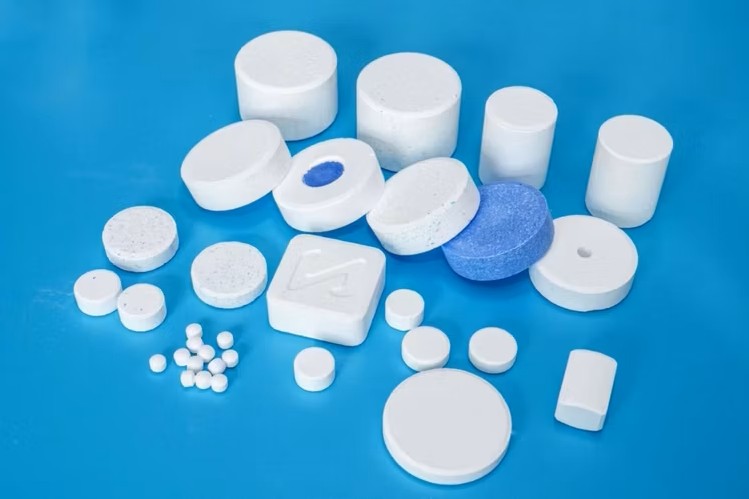
First, you need an oxidant that breaks down the organic precursors before they can react with chlorine to form nasty byproducts. This is where high-quality stabilized chlorine products come into play. Unlike generic liquids, premium granular or tablet forms of stabilized chlorine (like Sodium Dichloroisocyanurate or Trichloroisocyanuric Acid) release chlorine slowly and steadily. This consistent residual prevents the “feast or famine” cycles that drive DBP formation.
Second, you must address the source. No chemical can fix a pool if the filtration and ventilation aren’t working. But assuming your mechanics are sound, switching to a high-purity, stable chlorine source can reduce the total chemical load required. I’ve seen facilities switch to premium stabilized products and see their combined chlorine levels drop by 40% within a week, simply because the chlorine was working with the system, not against it.
A Real-World Turnaround
Let’s go back to Dave’s pool. We stopped the frantic dumping of bulk bleach. Instead, we implemented a regimen using high-purity, stabilized chlorine tablets for baseline sanitation and a specialized shock treatment using a non-chlorine oxidizer once a week to break down organics without adding more chlorine to the mix. We also optimized the pH to keep it between 7.4 and 7.6, where chlorine is most effective and least likely to form irritating byproducts.
The result? Within ten days, the sharp chemical smell vanished. The water felt softer, silkier. The kids stopped coughing. And when the health inspector returned, the THM levels were well below the regulatory limit. Dave didn’t have to spend a fortune on new equipment; he just needed to change his chemistry strategy.
The Bottom Line: Quality Matters
Troubleshooting disinfection byproducts isn’t about using less chlorine; it’s about using better chlorine. Impure products with fillers or inconsistent strength lead to dosing errors that spike DBP formation. You need a supplier who understands that purity equals safety.
This is where ENVO CHEMICAL stands apart. As a global leader in the research, development, and production of water treatment solutions, ENVO has engineered high-purity chlorine products specifically designed to minimize byproduct formation while maximizing disinfection power. Their rigorous quality control ensures that every granule and tablet delivers precise, stable active chlorine, eliminating the guesswork that leads to chemical imbalances.
With a distribution network spanning over 200 countries, ENVO CHEMICAL provides reliable access to premium pool chemicals regardless of your location. Whether you are managing a small hotel pool or a massive aquatic center, their expertise helps you navigate complex regulatory requirements while keeping your swimmers safe and comfortable.
Don’t let bad chemistry ruin your reputation. Take control of your water quality today.
Ready to eliminate odors and ensure a safer swim? Contact ENVO CHEMICAL now to explore our range of premium pool disinfection products. Let our experts help you design a treatment plan that reduces byproducts, saves money, and keeps your customers coming back.
Author: Elias Thorne
Senior Aquatic Facility Consultant | 25+ Years in Pool Operations & Water Chemistry
