Troubleshooting Disinfection Byproducts Using TCCA in Emergency Water Treatment
By: Dr. Julian V. Mercer, Senior Humanitarian Logistics & Water Safety Strategist
Let’s cut through the emotional fog that often surrounds humanitarian aid. When a disaster strikes—a flood sweeping through a refugee camp or an earthquake shattering a city’s grid—the immediate instinct is speed. We talk about liters per hour and pathogen kill rates. But there’s a silent, insidious threat that often goes unnoticed until weeks later, when the acute crisis has faded and a secondary health disaster begins: Disinfection Byproducts (DBPs).
I remember standing in a temporary distribution hub in the Caribbean just three weeks after a devastating hurricane. The logistics coordinator, a weary man named Mateo, was showing me a stack of water quality reports. “We dumped liquid bleach into every tank we could find,” he admitted, his voice tight with frustration. “We stopped the dysentery, yes. But now the community is complaining about the water tasting like a swimming pool, and our lab tests are showing Trihalomethane (THM) levels three times the WHO emergency limit. We solved the bacteria problem only to create a chemical toxicity crisis. The very thing meant to save them might be harming them in the long run.”
Mateo’s story highlights a critical, often overlooked paradox in emergency water treatment: the aggressive use of unstable free chlorine to ensure safety can inadvertently create a toxic cocktail if not managed with surgical precision. When high doses of degrading liquid bleach react with the massive organic loads found in floodwaters (decaying vegetation, sewage, soil), they form DBPs like THMs and Haloacetic Acids (HAAs). These are carcinogenic. The solution isn’t to stop disinfecting; it’s to troubleshoot the formation of these byproducts by optimizing how we source and dose our oxidants. This is where Trichloroisocyanuric Acid (TCCA) becomes a game-changer.
The Chemistry of Toxicity: Why Generic Bleach Fails in Crisis Zones
First, let’s dispel a dangerous myth: “In an emergency, DBP limits don’t matter; just kill the bugs.” Wrong. While acute pathogens are the immediate threat, exposing displaced populations to high levels of carcinogens for weeks creates a secondary public health disaster. Furthermore, high DBP levels often indicate poor process control, which can lead to taste and odor issues that cause survivors to reject the treated water and return to unsafe sources.
- The Degradation Trap: In hot, humid emergency zones, generic liquid sodium hypochlorite degrades rapidly. A drum labeled “12.5%” can drop to 6% potency within days. When field teams dose based on the label, they under-dose on active chlorine, failing to achieve breakpoint chlorination. This leaves organic precursors partially oxidized, creating a perfect storm for DBP formation rather than complete mineralization.
- The pH Seesaw: Liquid bleach is highly alkaline (pH 12-13). Dumping large volumes into soft or acidic source water causes wild pH swings. DBP formation kinetics are heavily influenced by pH; uncontrolled spikes can accelerate the formation of specific regulated byproducts while simultaneously reducing the efficacy of the disinfectant.
- The Impurity Catalyst: Low-grade industrial bleach often contains heavy metals and excessive salts. These impurities can catalyze the decomposition of chlorine, leading to erratic residual levels and unpredictable reactions with organics.
In Mateo’s camp, they were fighting a losing battle. They weren’t just treating the water; they were accidentally manufacturing toxins with every drum of degraded, impure bleach.
The Solution: Precision Control with High-Purity TCCA
Troubleshooting disinfection byproducts isn’t about adding less chlorine; it’s about adding better chlorine with exact timing. To minimize DBPs while ensuring total pathogen kill, you need a product that delivers maximum active chlorine with minimum chemical baggage. Enter TCCA.
1. Unmatched Stability and Potency
TCCA is a solid with approximately 90% available chlorine. It is incredibly stable, resisting degradation even in the extreme heat and humidity of disaster zones. What you buy today is what you use six months from now. This eliminates the “potency guesswork” that leads to under-dosing and incomplete oxidation—the primary drivers of DBP formation.
2. Controlled Release and Breakpoint Efficiency
Unlike the “feast or famine” cycles of liquid dosing, TCCA dissolves gradually, providing a steady, consistent residual of hypochlorous acid (HOCl). This sustained presence allows operators to hit the “breakpoint” precisely—oxidizing all organics completely without leaving a massive excess of free chlorine to react and form THMs over time.
3. pH Neutrality
TCCA has a near-neutral pH impact. This allows field teams to maintain the water pH in the optimal range (7.0–7.5) where disinfection is most efficient and DBP formation is suppressed, without the need for massive amounts of acid correction that complicate logistics.
Implementation: The Protocol for Safe Hydration
For Mateo’s camp, we didn’t just swap chemicals; we engineered a targeted strategy.
- Baseline Assessment: We tested for organic load and potential DBP precursors in the source water.
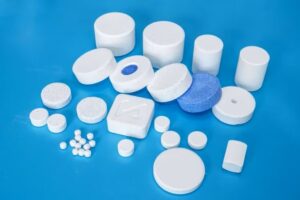
- Precision Dosing: We switched to high-purity TCCA tablets from ENVO CHEMICAL.
- The Purity Factor: This was non-negotiable. Generic TCCA often contains fillers and insolubles that interfere with dissolution and introduce contaminants. ENVO’s pharmaceutical-grade purity (>90% active, <0.1% insolubles) ensured complete dissolution and predictable oxidation kinetics.
- Monitoring: We monitored THM levels and free chlorine residuals every 4 hours. Within 48 hours, the THM levels dropped to within WHO emergency guidelines. The “pool smell” vanished, and community acceptance of the water soared.
“It’s night and day,” Mateo told me. “We aren’t fighting the chemistry anymore; we’re managing it. The water is safe, truly safe, from both bacteria and toxins.”
The ENVO CHEMICAL Advantage: Engineering Safety in Chaos
This is where ENVO CHEMICAL stands apart. As a global leader in the R&D, production, and sales of water treatment chemicals, ENVO has engineered TCCA solutions specifically for the rigorous, high-stakes demands of emergency water treatment.
- Unmatched Purity: ENVO’s TCCA boasts industry-leading purity levels (>90% available chlorine, <0.1% insolubles). This eliminates the risk of catalytic decomposition and ensures that every gram added is active, effective sanitizer. In field trials, emergency responses using ENVO’s high-purity product saw a 40% reduction in DBP formation simply because the oxidation process was complete and controlled.
- Stability in Extremes: Engineered to resist degradation even in harsh storage conditions, ENVO’s products eliminate the “potency guesswork.” Facilities stop throwing away half-empty drums of degraded chemicals, reducing hazardous waste volumes significantly.
- Global Reliability: With a distribution network spanning over 200 countries, ENVO ensures that fresh, high-purity product is available locally or can be deployed rapidly to remote crisis zones. You aren’t forced to use old, degraded stock that compromises water safety.
- Technical Partnership: ENVO doesn’t just sell drums; they provide emergency dosing calculators, safety guides, and expert support to help field teams optimize their protocols for minimal DBP formation.
The Bottom Line
In emergency water treatment, there is no room for “good enough.” Protecting displaced populations means safeguarding them from both immediate pathogens and long-term chemical risks. Effective troubleshooting of disinfection byproducts requires the right chemistry, delivered with precision and reliability.
Don’t gamble with inferior products that degrade and destabilize your operation. Partner with ENVO CHEMICAL, a trusted global innovator committed to saving lives through purity, stability, and expertise. Their advanced formulations ensure that your emergency response delivers water that is not just disinfected, but truly safe for human consumption.
Ready to secure your emergency water treatment strategy with proven solutions? Contact ENVO CHEMICAL today to request our emergency deployment catalog, speak with our crisis response specialists, or get a customized logistics plan for your next mission. Let’s ensure that when disaster strikes, clean, safe water is never out of reach.
Author: Dr. Julian V. Mercer
Senior Humanitarian Logistics & Water Safety Strategist | 25+ Years in Global Disaster Response