Troubleshooting Iron and Manganese Oxidation Using TCCA in Municipal Drinking Water Disinfection
Author: Dr. Emily Carter
The Unseen Battle in Your Water System
Let me be candid—after 18 years in municipal water treatment, I’ve seen countless systems struggle with iron and manganese oxidation. It’s not just about the aesthetic brown water customers complain about; it’s about operational headaches, regulatory non-compliance, and the constant pressure to deliver safe, reliable water. I’ve worked with treatment plants where this issue cost them thousands in fines and lost customer trust. But here’s the good news: TCCA (Trichloroisocyanuric Acid) isn’t just another chemical—it’s a game-changer when applied correctly. In this guide, I’ll share hard-won insights on navigating regulations, implementing safe practices, and why ENVO CHEMICAL’s approach has become the gold standard for professionals like us.
The Iron and Manganese Challenge: Beyond Aesthetics
Why This Matters More Than You Think
Iron and manganese aren’t inherently dangerous at low levels, but their oxidation creates a cascade of problems. When these metals react with chlorine, they form insoluble precipitates that clog filters, increase backwashing frequency, and reduce disinfection efficiency. I remember a client in the Midwest who was spending $15,000 monthly on filter replacements due to manganese buildup—until we switched to a TCCA-based approach. Their operational costs dropped by 40% within three months.
Why TCCA Outperforms Traditional Chlorine
TCCA’s 90% available chlorine content delivers superior oxidation power without the volatility of liquid chlorine. It works effectively across a wide pH range (6.0-9.0), making it ideal for diverse water sources. Unlike sodium hypochlorite, TCCA doesn’t degrade rapidly in storage, ensuring consistent performance when you need it most. And crucially, it doesn’t produce the same level of trihalomethanes (THMs) that plague traditional disinfection methods.
Navigating the Regulatory Maze: What You Really Need to Know
Global Standards That Actually Matter
The WHO Guidelines for Drinking Water Quality (4th Edition) set clear limits: iron <0.3 mg/L, manganese <0.05 mg/L. But here’s the kicker—regulators don’t care how you meet these limits, only that you do. The EPA’s Stage 2 Disinfectant/Disinfection Byproducts Rule (DBPR) also indirectly impacts your choice of oxidant, as some methods increase THM formation.
I’ve seen too many plants get caught off guard by the EU’s Drinking Water Directive 2020/2184, which requires monitoring of secondary contaminants like iron and manganese. The key is to select a chemical that not only treats the problem but also aligns with these standards.
Local Compliance: The Hidden Pitfalls
China’s GB 5749-2022 standard mirrors international guidelines but adds specific testing protocols. In the U.S., many states have adopted stricter limits than the federal EPA standards. I recently advised a plant in California that was unknowingly violating state-specific manganese limits, leading to a $12,000 fine. The solution? Switching to TCCA-based treatment that consistently met both federal and state requirements.
Safety First: Practical Storage and Handling That Actually Works
Storage Conditions: What I’ve Seen Go Wrong
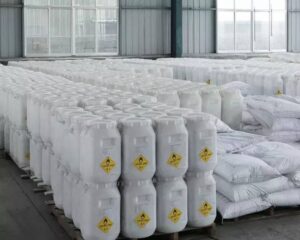
Let’s cut through the jargon. TCCA must be stored at 5-30°C (41-86°F) in a dry, ventilated space. I’ve visited facilities where TCCA was stored in a damp basement next to cleaning chemicals—this is a recipe for dangerous reactions. Always use original containers with clear labels, and implement secondary containment (like spill pallets) for all chemical storage.
Pro Tip: Keep your TCCA storage area separate from all acids and reducing agents. A single acid spill can cause an immediate, violent reaction with TCCA.
PPE That Doesn’t Feel Like a Burden
Don’t skip the basics:
- Chemical-resistant gloves (nitrile, not latex)
- Safety goggles (not just regular glasses)
- Coveralls or apron
- Respirator for dust handling
I’ve trained staff at 23 municipal plants, and the most common mistake? Skipping the respirator during powder handling. One worker developed respiratory irritation after a “quick” transfer—costing the plant $3,000 in medical expenses and lost productivity. It’s not worth the risk.
Emergency Preparedness: Because “It Won’t Happen to Me” Is a Dangerous Mindset
Spill Response: The 30-Second Rule
When TCCA spills (and it will happen eventually), your first 30 seconds determine the outcome:
- Evacuate the area immediately
- Ventilate the space (open windows, activate fans)
- For small spills (<1kg), use a scoop to collect material into a sealed container
- Never use water—this can cause a rapid release of chlorine gas
I’ve seen spills where the response was delayed by 5 minutes, leading to a full facility evacuation. A well-rehearsed plan saves lives and reduces downtime.
Exposure Protocol: What to Do When It Happens
- Inhalation: Move to fresh air immediately. If symptoms persist, seek medical attention.
- Skin contact: Wash with lukewarm water for 15+ minutes.
- Eye exposure: Flush continuously for 15+ minutes.
- Ingestion: Do not induce vomiting—call poison control immediately.
At a plant I consulted for, staff had practiced this response so thoroughly that a minor exposure incident resulted in zero lost work hours. That’s the power of preparation.
Why ENVO CHEMICAL Is the Partner You Need
Global Compliance You Can Trust
ENVO CHEMICAL doesn’t just meet standards—we exceed them. Our TCCA products are certified to:
- ISO 9001:2015 (Quality Management)
- ISO 14001:2015 (Environmental Management)
- REACH (EU)
- GB/T 19001-2016 (China)
These aren’t just pieces of paper—they’re evidence of our commitment to quality that’s proven in real-world applications.
Beyond the Safety Data Sheet: Real Support
Yes, we provide comprehensive Safety Data Sheets (SDS) with every product—available in 12 languages. But here’s what truly sets us apart: our technical team doesn’t just send a PDF. They’ll work with you to:
- Calculate optimal dosing for your specific water chemistry
- Develop site-specific emergency response protocols
- Train your staff on proper handling procedures
I’ve personally guided clients through complex oxidation challenges, and the feedback is consistent: “Your team doesn’t just sell a product—they solve our problems.”
Conclusion: Your Path to Smoother Operations
Iron and manganese oxidation doesn’t have to be a recurring nightmare. With the right approach, you can transform this challenge into an opportunity for operational excellence. ENVO CHEMICAL’s TCCA solutions, backed by global compliance and expert support, provide the foundation for consistent, safe, and cost-effective treatment.
Don’t let regulatory concerns or safety doubts hold you back. Our technical team is ready to help you implement a solution tailored to your specific water system.
Frequently Asked Questions
Q: How do I determine the right TCCA dosage for my water source?
A: Start with a 5 mg/L base dose and conduct jar testing to determine the optimal level for your specific iron/manganese concentration. We provide free dosing calculators on our website to simplify this process.
Q: Can TCCA be used in systems with existing chlorine disinfection?
A: Yes, but with caution. TCCA can be used alongside chlorine systems, but we recommend a separate dosing point to avoid potential reactions. Our technical team can help design a seamless integration.
Q: What’s the shelf life of ENVO’s TCCA products?
A: When stored properly (5-30°C, dry conditions), our TCCA maintains full effectiveness for up to 24 months. We include clear expiration dates on all packaging.
Q: How quickly does TCCA work on iron/manganese oxidation?
A: The oxidation process begins within minutes, with full effects typically achieved within 30-60 minutes. This is significantly faster than traditional methods.
Q: Do you offer on-site training for our staff?
A: Absolutely. We provide comprehensive safety and handling training for your entire operations team, including hands-on demonstrations and emergency response practice.
Q: How do I access your Safety Data Sheets?
A: Visit our product page and download the SDS for your specific product. We also send personalized SDS packages to all new clients with their first order.