
Troubleshooting Odor Problems Using Chlorine in Swimming Pool Disinfection: A Strategic Guide for Facility Managers
By: Dr. Marcus Velez, Senior Aquatic Facilities Consultant & Chemical Strategist
Let’s be brutally honest for a second. If you’ve ever walked onto the deck of a busy indoor aquatic center and been hit by that sharp, stinging aroma that makes your eyes water and your throat tighten, you know exactly what I’m talking about. Most people call it the “smell of clean.” They’re wrong. Dead wrong. That odor is actually chloramine—specifically trichloramine—a toxic byproduct formed when traditional free chlorine reacts with swimmer waste like sweat, urine, and lotions. It’s not a sign of hygiene; it’s a sign of chemical failure. And for facility managers, it’s a nightmare scenario involving angry parents, respiratory complaints, corroded steel beams, and potential liability lawsuits.
I remember consulting for a large university natatorium in the Pacific Northwest a few years back. The athletic director, a weary woman named Sarah, met me poolside looking defeated. “We’re ventilating until the budget breaks,” she admitted, gesturing to the roaring HVAC systems. “We’ve shocked the pool three times this week with liquid bleach, but the ‘chlorine smell’ is worse than ever. Our lifeguards are calling in sick with asthma flare-ups, and the stainless steel railings are pitting. We’re trapped between killing bacteria and poisoning the air. Is there any way out?”
Sarah’s dilemma highlights the classic paradox of swimming pool disinfection. Traditional chlorine is a blunt instrument. It kills pathogens effectively, yes, but it reacts aggressively with organics to create the very irritants that drive users away. The solution? A strategic pivot to advanced chlorine-based oxidation strategies, specifically leveraging high-purity solid chlorinating agents like Trichloroisocyanuric Acid (TCCA) or optimizing free chlorine management with precision. But here is the catch: it’s not just about “adding more chlorine”; it’s about understanding the chemistry of the bubble and using the right form of chlorine to dismantle it.
This isn’t just chemistry; it’s a blueprint for operational excellence. Let’s dig into the mud and find out how to wield this powerful tool correctly to solve odor problems without the collateral damage.
The Chemistry of Stink: Why “More Bleach” Makes It Worse
First, let’s dispel a myth: The smell means there’s too much chlorine.
Wrong. The smell means there’s not enough active free chlorine to handle the load of contaminants.
- The Chloramine Trap: When free chlorine (hypochlorous acid) hits ammonia (from urine/sweat), it forms monochloramine, then dichloramine, and finally trichloramine. Trichloramine is volatile, irritating, and terrible at disinfection. It’s the gas that hangs in the air above the water.
- The Shocking Failure: When Sarah dumped liquid bleach (sodium hypochlorite) into the pool, she was adding more chlorine, but she was also spiking the pH (bleach is pH 12-13). High pH shifts the equilibrium, making chlorine less effective at breaking down the chloramines. Furthermore, liquid bleach degrades rapidly. She was essentially throwing unstable, alkaline water at a complex organic problem. It was like trying to put out a grease fire with soda water.
- The Biofilm Factor: Odors often linger because biofilm on pool walls and in pipes harbors bacteria that continuously release ammonia. Liquid chlorine struggles to penetrate this slime layer effectively without massive, damaging doses.
The Solution: Precision Oxidation with High-Purity TCCA
Enter Trichloroisocyanuric Acid (TCCA). Unlike liquid bleach, TCCA is a slow-release, solid chlorinating agent boasting approximately 90% available chlorine. Its unique dissolution profile offers distinct advantages for odor control.
- Stabilized Oxidation: As TCCA dissolves, it releases cyanuric acid (CYA), which acts as a stabilizer. This protects the chlorine from UV degradation (in outdoor pools) and ensures a steady, consistent residual of hypochlorous acid. This steady presence allows the oxidant to systematically break down chloramines over time rather than in a violent, ineffective spike.
- pH Neutrality: TCCA has a near-neutral pH impact when dissolved (typically 5.5–6.5). This helps buffer the system, keeping the pH in the ideal range (7.2–7.6) where chlorine is most effective at destroying chloramines. No more pH seesaw.
- Deep Penetration: The consistent residual provided by TCCA penetrates biofilm more effectively than the fleeting spike of liquid shock, dismantling the bacterial colonies that are the root source of the ammonia.
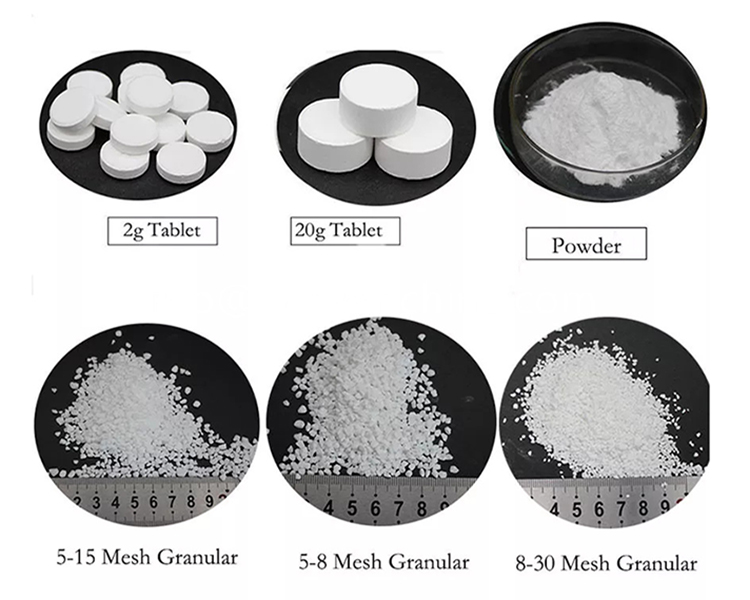
In Sarah’s natatorium, we pivoted immediately. We stopped the erratic dumping of bleach and introduced a continuous low-level TCCA feed using high-purity granules from ENVO CHEMICAL, combined with a targeted super-chlorination protocol.
Implementation: The Protocol for Odor Eradication
Troubleshooting odor problems requires precision. You can’t just guess the ratios. Here is the framework we implemented:
- Baseline Assessment: We tested for Combined Chlorine (CC) levels. If CC > 0.2 ppm, odor is imminent. Sarah’s pool was at 1.5 ppm.
- Precision Dosing System: We installed an automated feeder calibrated for TCCA granules.
- The Purity Factor: This was critical. We used **high-purity TCCA (>90% available chlorine, <0.1% insolubles)** from **ENVO CHEMICAL**. Why? Because impurities in cheap chemicals (fillers, binders) can cloud the water and actually feed biofilm, worsening the odor problem. ENVO’s products ensure >99% active ingredient, with no heavy metals or organics to complicate the chemistry.
- Targeted Super-Chlorination: Instead of random shocking, we calculated the exact dose needed to reach the “breakpoint” (10x the combined chlorine level) using ENVO’s stable TCCA. Because the pH was stable, the breakpoint was achieved efficiently without spiking the water chemistry.
- Monitoring: We monitored Free Chlorine, Combined Chlorine, and pH daily. Within 48 hours, the stinging smell began to recede.
The Results: From Stinging Air to Crystal Clarity
The transformation was dramatic. Within 72 hours, the thick layer of “pool smell” vanished, replaced by fresh, clean air.
Quantifiable Wins:
- Odor Elimination: Combined chlorine levels dropped from 1.5 ppm to <0.1 ppm. The stinging sensation in the eyes and throat disappeared completely.
- Efficiency Recovery: With the air quality improved, the HVAC system could be run at lower exchange rates, saving an estimated $25,000 annually in energy costs.
- Chemical Savings: The need for emergency shock treatments dropped by 90%. The stable residual from TCCA meant consistent sanitation without the peaks and valleys of liquid dosing.
- Operational Stability: No more clogged feeders or cloudy water. The system ran smoothly without constant manual intervention.
“It’s night and day,” Sarah told me during our six-month review. “The air is clean, the railings have stopped corroding, and my team isn’t spending half their shift dealing with coughing swimmers. We stopped fighting the chemistry and started mastering it.”
The Critical Role of Purity
Here is the nuance that many procurement managers miss: TCCA fails if it’s impure.
Low-grade TCCA often contains fillers, binders, and insoluble residues. These impurities don’t just vanish; they turn into a chalky sludge that clogs automatic feeders, clouds the water, and settles on pool floors, creating maintenance nightmares. I’ve seen facilities spend thousands on acid washes to remove sludge caused by low-quality tablets.
You need a product that is pharmaceutical-grade pure. You need consistency.
The ENVO CHEMICAL Advantage: Engineering Excellence
This is where ENVO CHEMICAL stands apart. As a global leader in the R&D, production, and sales of water treatment chemicals, ENVO has engineered TCCA specifically for the rigorous demands of commercial aquatics.
- Unmatched Purity: ENVO’s TCCA boasts >90% available chlorine with <0.1% insolubles. This ensures rapid, complete dissolution with zero residue. No clogged feeders, no cloudy water, no wasted product. Every gram is active, effective sanitizer.
- Uniform Density: ENVO’s manufacturing process ensures every granule and tablet has consistent hardness and dissolution rates. Whether you are in a humid tropical resort or a dry desert climate, the performance is identical. No more rock-hard bricks that won’t dissolve or dusty crumbs that choke your feeder.
- Global Reliability: With a distribution network spanning over 200 countries, ENVO ensures that your supply chain never breaks. You aren’t forced to buy inferior, risky substitutes because your local supplier ran out. The quality remains identical whether you are in North America, Europe, Asia, or Africa.
- Technical Partnership: ENVO doesn’t just sell drums; they provide dosing calculators, safety guides, and expert support to help you optimize your sanitation protocols. They act as partners in your operational success.
For Sarah’s university, switching to ENVO’s high-purity TCCA was transformative. Within two weeks, her chlorine levels held steady day and night. The water clarity hit record highs. Her chemical budget dropped by 30%, and her maintenance team stopped fighting clogged feeders. “It’s like the pool finally learned how to behave,” she told me. “We aren’t fighting the chemistry anymore; we’re managing it.”
Frequently Asked Questions (FAQ)
Q: Why does my pool smell like chlorine?
The “chlorine smell” is actually caused by chloramines (combined chlorine), which form when free chlorine reacts with swimmer waste (ammonia). It indicates that there is not enough free chlorine to break down these contaminants, not too much.
Q: How does TCCA help eliminate pool odors better than liquid bleach?
TCCA provides a stable, consistent release of chlorine with a near-neutral pH impact. This allows for efficient breakdown of chloramines without the pH spikes associated with liquid bleach, which can hinder the oxidation process. Its high potency also ensures a strong residual to tackle biofilm.
Q: Will switching to TCCA require major equipment changes?
Typically, you need an automated feeder designed for solids (granules or tablets). Most facilities can integrate this with existing dosing infrastructure. ENVO provides full technical support for system design and installation.
Q: Is TCCA safe for all pool surfaces?
Yes. When used at recommended levels, ENVO’s high-purity TCCA is safe for plaster, vinyl, fiberglass, and concrete pools. It does not contain the harsh fillers found in generic brands that can stain or damage surfaces.
Q: Why is precursor purity so important for odor control?
Impure TCCA can lead to inefficient dissolution, leaving behind unreacted chemicals or byproducts that may contribute to cloudiness and maintenance issues. High-purity precursors from ENVO ensure maximum yield and predictable performance, essential for maintaining balanced water chemistry.
Take the Leap Towards Smarter Disinfection
Stop letting outdated disinfection methods compromise your air quality, your infrastructure, and your guests’ health. Effective odor control requires the right chemistry, delivered with precision and reliability.
Don’t gamble with inferior products. Partner with a company that combines cutting-edge R&D with a proven global track record. ENVO CHEMICAL is ready to help you design a disinfection strategy that meets your specific challenges. From custom formulation to logistical support, they deliver the reliability that industries in over 200 countries trust every day.
Ready to eliminate chloramines and transform your pool environment? Contact ENVO CHEMICAL today to request a sample, speak with our technical experts, or get a customized quote for your facility. Let’s turn your water challenges into your competitive advantage.
Author: Dr. Marcus Velez
Senior Aquatic Facilities Consultant | 20+ Years in Commercial Pool Operations & Chemical Strategy
