
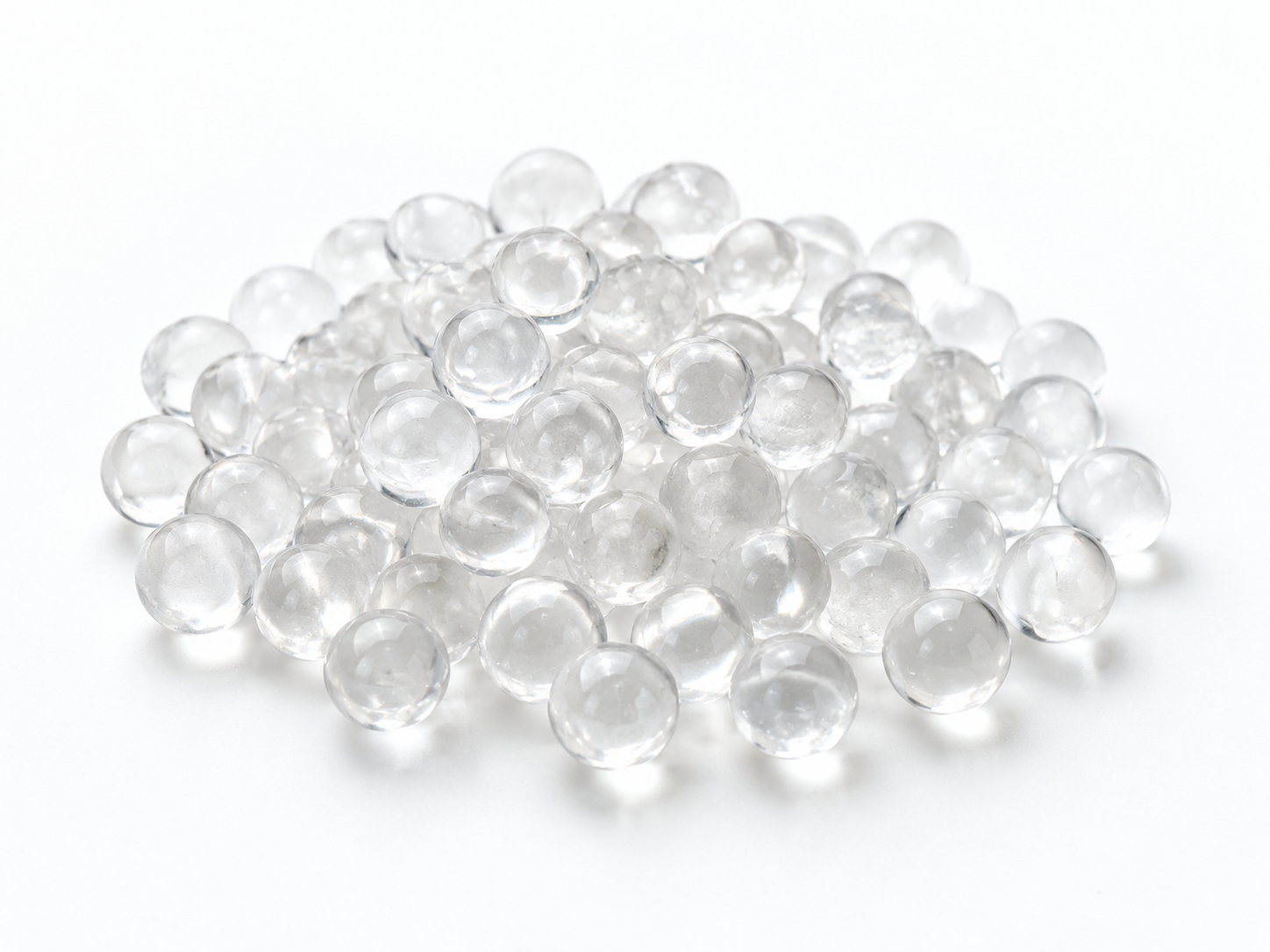
A failed polyphosphate trial is usually not a product failure. It is a qualification failure that only became visible after the sample shipped, the cartridge was installed, and the customer measured the wrong thing. The practical way to improve lead qualification is to treat every failed trial as a structured diagnosis: what did the customer actually expect, what did the water actually need, and which question should have been asked before a quotation was issued?
This article is written for sales engineers, distributors, and technical staff who handle polyphosphate media — including products sold as siliphos crystal, phosphate crystal, or scale-inhibiting polyphosphate — and who want fewer wasted samples and better-qualified opportunities.
Why Failed Polyphosphate Trials Are More Useful Than Successful Ones
A successful trial confirms a sale. A failed trial tells you where your qualification process leaks.
When a trial fails, the cause is almost always one of three things: the material was applied to a problem it does not solve, the system was not able to deliver the material’s intended effect, or no measurable success criterion was defined before the trial started. Each of these can be traced back to a question that was never asked during qualification.
The goal is not to avoid failures. It is to make failures cheap, early, and informative — ideally before a sample leaves the warehouse.
What Polyphosphate Media Can and Cannot Do
Most misqualified trials begin with a category error. Buyers often use “softening,” “scale prevention,” “descaling,” “filtration,” and “corrosion control” as if they were interchangeable. They are not.
| Function | What it actually means | Can polyphosphate media deliver it? |
|---|---|---|
| Water softening | Removing calcium and magnesium ions, usually by ion exchange, so hardness is measurably reduced | No. Hardness ions generally remain in the water; the chemistry works by sequestration and crystal-growth inhibition, not removal |
| Scale inhibition | Preventing new calcium carbonate or similar deposits from forming on surfaces | Yes — this is the core function of most slow-dissolving polyphosphate media, subject to product-specific performance and water conditions |
| Scale removal | Removing deposits that already exist | Limited and product-dependent. Any claim about loosening existing scale must be verified for the exact product and water; it is not equivalent to acid descaling or mechanical cleaning |
| Filtration | Physically trapping suspended particles | No. A cartridge housing may include a filter element, but the polyphosphate crystals themselves are not a filter medium |
| Corrosion inhibition | Reducing metal loss through protective film formation or water chemistry adjustment | Some phosphate-based products are used for corrosion control in certain waters. Suitability is highly condition-dependent and must be confirmed per product |
| Disinfection | Inactivating microorganisms | No. Polyphosphate media have no disinfecting action |
Note that Siliphos is a brand-associated name for a family of slow-dissolving polyphosphate crystals. Not every product marketed as “siliphos crystal,” “phosphate crystal,” or “polyphosphate media” is the same material. Composition, dissolution behavior, approvals, and suitable applications differ between suppliers and grades, so specifications should never be transferred from one product to another.
Mapping Trial Failures Back to Qualification Gaps
Use the failure symptom the customer reports, not the failure they assume. The table below converts common trial complaints into the qualification question that was missed.
| Reported trial failure | What it usually means | Question that should have been asked |
|---|---|---|
| “Hardness is unchanged” | The customer expected softening, not inhibition | Are you trying to reduce measured hardness, or prevent new deposits? |
| “Scale is still there after two weeks” | Expectation of removal rather than prevention, or a timeline shorter than the deposit’s natural dissolution | Is the objective to remove existing scale or stop new scale, and what timeline was agreed in writing? |
| “The cartridge emptied too fast” | Dissolution rate depends on water conditions and flow; the system was sized on assumption rather than data | What are the flow rate, water temperature, and consumption pattern, and what does the supplier’s feed guidance say for those conditions? |
| “Nothing changed at all” | No baseline measurement, so no visible change was possible | What baseline data will we record before installation, and who records it? |
| “We still see corrosion” | Corrosion control was assumed rather than specified | Is corrosion the stated objective, and has the product been confirmed for that duty in this water? |
| “Compliance rejected it” | Discharge, potable-water, or food-contact requirements were never screened | Are there phosphate discharge limits or potable-water approval requirements in the destination market? |
| “It worked in the lab but not on site” | Contact time, residence, or system layout differs from the bench setup | Where exactly will the media sit in the line, and what contact conditions will it see? |
A Qualification Checklist to Run Before Any Sample Ships
The cheapest place to fail is in a conversation. Before approving a trial, confirm the following.
1. The technical objective, stated as a measurable outcome
“Stop scale” is not measurable. “No new visible deposit on the heating element over the trial period” is. If the customer cannot state an outcome, the trial cannot succeed or fail — it can only end.
2. Source-water conditions
Hardness, pH, temperature, iron, manganese, chlorine or chloramine residual, and suspended solids all influence how phosphate-based media behave and how long they last. Ask for an existing water analysis rather than accepting a verbal description.
3. System parameters
Pipe size, flow rate, peak versus average demand, intermittent or continuous operation, and the intended installation point. A media that performs well at steady low flow may behave differently under intermittent high draw-off.
4. Regulatory and disposal constraints
Phosphate dosing adds phosphate to the water. In some markets and applications this matters for discharge, wastewater, or potable-water approval. Confirm this early, because it disqualifies some opportunities regardless of technical performance.
5. Defined trial protocol
Duration, sampling points, who measures, what is measured, and what result counts as success. Put it in writing. A trial without a protocol produces opinions, not data.
6. Commercial reality
Expected consumption, replacement interval, who maintains the unit, and whether the buyer has authority to standardize. A technically successful trial with no internal owner still fails commercially.
Designing Trials So the Result Is Usable Either Way
Good trial design is a qualification tool, not an afterthought. Three elements make the difference.
- Baseline first. Record the condition before installation — photos of the deposit, hardness readings, or whatever metric the customer cares about. Without a baseline, improvement is invisible.
- A control point. If possible, keep an untreated or separately treated line for comparison, so changes can be attributed rather than assumed.
- A fixed review date. Agree in advance when the trial will be evaluated, and what happens at that point: scale-up, adjust the specification, or close the opportunity.
When these three elements are present, a negative result still produces a usable answer. The lead either moves to a different product category — for example, an ion-exchange softener or a dosing system — or it is disqualified for a documented reason.
Turning Trial History Into a Qualification Scorecard
After a handful of trials, patterns appear. Convert them into a simple scoring sheet your team applies before quoting.
- Objective clarity — measurable outcome defined? (Yes / No)
- Water data available — analysis on file? (Yes / Partial / No)
- Application fit — inhibition, not softening, removal, filtration, or disinfection? (Confirmed / Unclear)
- System compatibility — flow, contact conditions, and installation point understood? (Yes / No)
- Regulatory screen — phosphate discharge or potable approval addressed? (Cleared / Blocked / Unknown)
- Internal owner — a named person responsible for evaluating results? (Yes / No)
Leads scoring low on items 1, 3, or 5 should not receive a trial sample yet. They should receive questions. This single change typically removes more wasted trials than any product improvement.
Frequently Asked Questions
Does polyphosphate media soften water?
No. It does not remove hardness ions the way an ion-exchange softener does. It works by inhibiting scale formation and sequestering hardness, so a hardness test may still show the same values. If a customer’s success criterion is a lower hardness reading, this is the wrong category of product.
Can a failed trial be recovered?
Sometimes. If the failure was caused by expectation mismatch, sizing, or installation point rather than the water chemistry itself, a corrected trial may succeed. If the customer needed softening, removal, filtration, or disinfection, the opportunity should be redirected rather than retried.
How long should a trial run?
That depends on the objective, the system, and the deposit being addressed. There is no universal duration. Define the review date with the customer in advance and base it on what is being observed, not on a default calendar period.
Does food grade mean approved for drinking water?
No. Food-grade status and drinking-water suitability are separate questions. Potable-water acceptability depends on the exact product, the application conditions, and the regulations of the destination market. Ask the supplier for documentation specific to the product and market rather than assuming equivalence.
What to Confirm About the Specific Material
Before offering any polyphosphate crystal, confirm with the supplier: the material’s intended function, its documented dissolution and feed guidance for your conditions, its packaging format, any certifications it holds, and whether it is acceptable for the intended water use in the destination market. Where that information is not available, it should be marked as unconfirmed rather than estimated.
ENVO CHEMICAL can discuss application fit and the information needed to evaluate a specific polyphosphate media for your case.
To move a qualification forward efficiently, send the application (scale inhibition, corrosion control, or another objective), your source-water analysis, system details such as flow rate and installation point, the required specification, estimated quantity, destination market, and any phosphate discharge or potable-water constraints. With that information, the discussion can start at the right question instead of ending with another failed trial.
