
Now I have gathered sufficient information about SDIC. Let me compose a comprehensive technical article in English for B2B chemical importers.
Wholesale SDIC for Chemical Importers: Import Deals
Executive Summary
Sodium Dichloroisocyanurate (SDIC) represents one of the most versatile and efficient oxidizing disinfectants in the global chemical marketplace. For chemical importers seeking reliable wholesale partnerships, understanding the technical specifications, regulatory compliance requirements, and market dynamics of SDIC is essential for making informed procurement decisions. This comprehensive guide provides in-depth technical analysis, industry standards, and strategic insights for B2B buyers evaluating SDIC import opportunities.
1. Introduction to Sodium Dichloroisocyanurate (SDIC)
1.1 Chemical Identity and Classification
Sodium Dichloroisocyanurate, commonly abbreviated as SDIC or NaDCC, is an organic chlorinating agent with the chemical formula C₃Cl₂N₃NaO₃. The compound exists in two primary forms:
| Parameter | Anhydrous Form | Dihydrate Form |
|---|---|---|
| CAS Number | 2893-78-9 | 51580-86-0 |
| Molecular Weight | 219.95 g/mol | 255.98 g/mol |
| Available Chlorine | 60% minimum | 54.5-57% |
| Moisture Content | 3% maximum | 8-15% |
1.2 Physical and Chemical Properties
SDIC presents as a white crystalline powder or granular material with distinctive characteristics that make it ideal for industrial and commercial applications:
- Appearance: White crystalline powder or granules
- Odor: Characteristic chlorine-like刺激性 odor
- Melting Point: 240-250°C (decomposition)
- Solubility: Highly soluble in water (approximately 25g/100ml at 25°C), poorly soluble in organic solvents
- pH Value: 5.5-7.0 (1% aqueous solution)
- Density: Approximately 2.0 g/cm³
- Stability: Stable under dry conditions; decomposes upon exposure to moisture
1.3 Mechanism of Action
SDIC functions as a powerful oxidizing agent through the controlled release of hypochlorous acid (HOCl) when dissolved in water. This mechanism provides:
- Broad-spectrum antimicrobial activity
- Sustained chlorine release over extended periods
- Enhanced stability compared to traditional chlorine compounds
- Minimal formation of harmful disinfection byproducts when used correctly
2. Technical Specifications and Quality Standards
2.1 Grade Classifications
Commercial SDIC is available in multiple grades to meet diverse application requirements:
Industrial Grade
- Available Chlorine: 56% minimum
- Moisture: 5-10% maximum
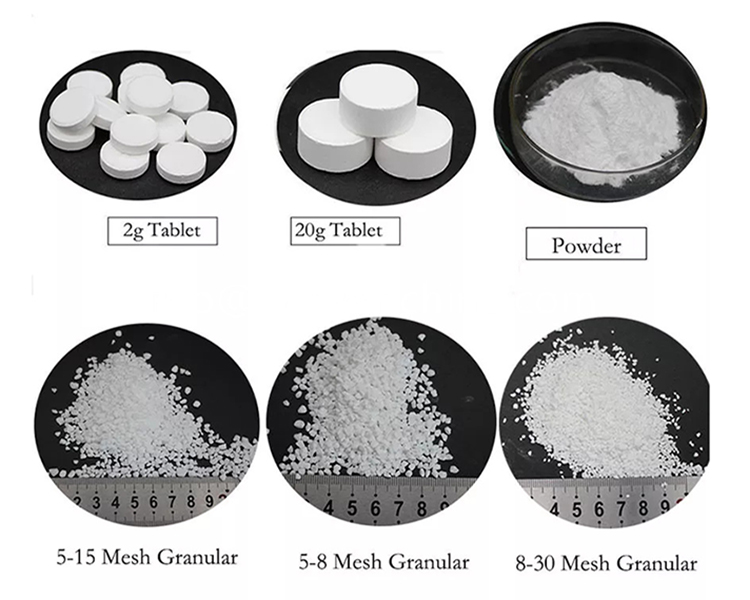
- Particle Size: 8-30 mesh or 16-36 mesh
- Applications: Water treatment, industrial sanitization
Premium Grade
- Available Chlorine: 60% minimum
- Moisture: 3% maximum
- Particle Size: 20-60 mesh
- Applications: Swimming pool treatment, food processing, pharmaceutical applications
Tablet Form
- Available Chlorine: 55-60%
- Weight: 1g, 3g, 20g, 200g tablets
- Dissolution Rate: Controlled release formulations available
- Applications: Residential and commercial pool maintenance
2.2 Analytical Testing Parameters
Reputable suppliers should provide comprehensive Certificate of Analysis (CoA) documentation including:
| Test Parameter | Specification | Test Method |
|---|---|---|
| Available Chlorine | 56-60% | GB/T 23819-2009 / ASTM D1254 |
| Moisture Content | ≤10% | Karl Fischer Titration |
| pH (1% Solution) | 5.5-7.0 | pH Meter |
| Water Insolubles | ≤0.5% | Gravimetric Analysis |
| Heavy Metals (as Pb) | ≤10 ppm | ICP-MS |
| Particle Size Distribution | As specified | Sieve Analysis |
2.3 International Quality Certifications
Leading SDIC manufacturers maintain compliance with recognized international standards:
- ISO 9001:2015: Quality Management Systems
- ISO 14001:2015: Environmental Management Systems
- EN 15072:2013: European Standard for swimming pool water treatment chemicals
- NSF/ANSI 60: Drinking water treatment chemicals certification
- REACH Compliance: European chemical substance registration
3. Regulatory Compliance and Import Requirements
3.1 Hazard Classification and Transportation
SDIC is classified as a hazardous material for transportation purposes:
| Classification Detail | Specification |
|---|---|
| UN Number | UN 2465 |
| Hazard Class | 5.1 (Oxidizing Substance) |
| Packing Group | III |
| HS Code | 2933.69.2910 |
| IMDG Code | 5.1 |
| IATA Classification | 5.1 |
3.2 Documentation Requirements for Import
Chemical importers must ensure proper documentation for customs clearance:
- Commercial Invoice: Detailed product description, quantity, value
- Packing List: Package specifications, net/gross weights
- Certificate of Analysis: Batch-specific quality parameters
- Safety Data Sheet (SDS): 16-section format per GHS standards
- Certificate of Origin: Required for preferential tariff treatment
- Import License: Country-specific chemical import permits
- Dangerous Goods Declaration: For hazardous material shipments
3.3 Regional Regulatory Considerations
European Union
- REACH registration mandatory for quantities exceeding 1 tonne/year
- CLP Regulation labeling requirements
- Biocidal Products Regulation (BPR) for disinfectant applications
United States
- EPA registration required for antimicrobial claims
- TSCA inventory compliance
- DOT hazardous materials transportation regulations
Southeast Asia
- Country-specific chemical control laws
- Import permit requirements vary by jurisdiction
- Local testing and certification may be required
4. Applications and Market Segments
4.1 Water Treatment Applications
SDIC serves as a primary disinfectant in multiple water treatment scenarios:
Municipal Water Treatment
- Dosage: 1-5 ppm depending on water quality
- Contact time: 30 minutes minimum
- Residual chlorine maintenance: 0.2-0.5 ppm
Industrial Cooling Systems
- Biofilm control and prevention
- Algae suppression
- Corrosion inhibition when properly formulated
Wastewater Treatment
- Effluent disinfection before discharge
- Pathogen reduction
- Odor control
4.2 Swimming Pool and Spa Sanitization
SDIC has become the preferred choice for pool maintenance due to:
- Stable chlorine residual in sunlight (cyanuric acid buffer effect)
- Reduced chlorine odor compared to liquid bleach
- Convenient solid form for storage and handling
- Compatible with automated dosing systems
Recommended Dosage Guidelines:
| Pool Type | Initial Dosage | Maintenance Dosage |
|---|---|---|
| Residential | 2-3 g/m³ | 1-2 g/m³ daily |
| Commercial | 3-5 g/m³ | 2-3 g/m³ daily |
| Public Facilities | 5-8 g/m³ | 3-5 g/m³ daily |
4.3 Food Processing and Agriculture
Food Industry Applications
- Equipment sanitization
- Surface disinfection
- Process water treatment
- Compliance with FDA 21 CFR 173.315
Agricultural Uses
- Irrigation water treatment
- Greenhouse sanitization
- Livestock facility disinfection
- Post-harvest produce treatment
4.4 Healthcare and Institutional Settings
- Hospital surface disinfection
- Medical equipment sterilization
- Laundry sanitization
- Emergency water purification
5. Wholesale Pricing and Market Dynamics
5.1 Current Market Pricing (2025-2026)
SDIC wholesale pricing varies based on multiple factors:
| Product Form | Price Range (USD/MT) | Minimum Order Quantity |
|---|---|---|
| Powder 56% | 1,700 – 2,100 | 10 MT |
| Powder 60% | 2,000 – 2,400 | 10 MT |
| Granular 60% | 2,100 – 2,500 | 5 MT |
| Tablets 20g | 2,500 – 3,000 | 3 MT |
| Tablets 200g | 2,800 – 3,300 | 2 MT |
Note: Prices subject to change based on raw material costs, shipping rates, and market conditions.
5.2 Factors Influencing Pricing
Raw Material Costs
- Cyanuric acid market prices
- Chlorine and caustic soda availability
- Energy costs for manufacturing
Logistics Considerations
- Ocean freight rates
- Port handling charges
- Inland transportation costs
- Insurance premiums for hazardous cargo
Market Dynamics
- Seasonal demand fluctuations (higher in summer months)
- Regional supply-demand balance
- Currency exchange rate variations
- Trade policy and tariff changes
5.3 Volume Discount Structures
Typical wholesale discount tiers:
- 10-50 MT: Base pricing
- 50-100 MT: 3-5% discount
- 100-500 MT: 5-8% discount
- 500+ MT: 8-12% discount (negotiable)
6. Packaging and Storage Requirements
6.1 Standard Packaging Options
| Package Type | Net Weight | Dimensions | Pallet Configuration |
|---|---|---|---|
| Plastic Drum | 25 kg | 35cm × 35cm × 50cm | 40 drums/pallet |
| Plastic Drum | 50 kg | 40cm × 40cm × 60cm | 20 drums/pallet |
| Fiber Drum | 25 kg | 35cm × 35cm × 50cm | 40 drums/pallet |
| Bulk Bag | 500-1000 kg | Variable | 1-2 bags/pallet |
| Custom Packaging | As required | As required | As required |
6.2 Storage Guidelines
Proper storage conditions are critical for maintaining product stability:
- Temperature: Store below 30°C (86°F)
- Humidity: Relative humidity below 70%
- Ventilation: Well-ventilated area required
- Separation: Keep away from organic materials, acids, and reducing agents
- Shelf Life: 24 months from manufacture date when stored properly
- Container Integrity: Keep containers tightly closed when not in use
6.3 Handling Precautions
- Use appropriate personal protective equipment (PPE)
- Avoid dust generation during handling
- Implement proper spill containment procedures
- Ensure emergency eyewash and shower facilities are accessible
- Train personnel on hazardous material handling protocols
7. Supply Chain and Logistics Considerations
7.1 Lead Times and Production Capacity
| Order Size | Production Lead Time | Shipping Time (Estimated) |
|---|---|---|
| 1-10 MT | 5-7 days | 15-30 days |
| 10-50 MT | 7-14 days | 15-30 days |
| 50-100 MT | 14-21 days | 15-30 days |
| 100+ MT | 21-30 days | 15-30 days |
7.2 Shipping Terms (Incoterms 2020)
Commonly offered trade terms:
- FOB (Free On Board): Buyer assumes responsibility after loading
- CIF (Cost, Insurance, Freight): Seller covers shipping and insurance to destination port
- CFR (Cost and Freight): Seller covers shipping to destination port
- DDP (Delivered Duty Paid): Seller handles all aspects including import duties
- EXW (Ex Works): Buyer collects from manufacturer’s facility
7.3 Quality Assurance and Inspection
Recommended inspection protocols:
- Pre-shipment Inspection: Third-party verification of quantity and quality
- Container Loading Supervision: Ensure proper packaging and loading
- Certificate Verification: Validate all documentation before shipment
- Sample Testing: Retain samples for independent laboratory analysis
8. Competitive Advantages of SDIC
8.1 Compared to Alternative Disinfectants
| Parameter | SDIC | Calcium Hypochlorite | Sodium Hypochlorite | Trichloroisocyanuric Acid |
|---|---|---|---|---|
| Available Chlorine | 56-60% | 65-70% | 10-15% | 90% |
| Solubility | High | Moderate | Very High | Low |
| pH Impact | Neutral | Alkaline | Highly Alkaline | Acidic |
| Stability | Excellent | Good | Poor | Excellent |
| Storage Life | 24 months | 12 months | 3 months | 24 months |
| Handling Safety | Good | Moderate | Good | Moderate |
8.2 Economic Benefits
- Lower transportation costs per unit of available chlorine
- Reduced storage space requirements
- Minimal product degradation during storage
- Lower total cost of ownership compared to liquid alternatives
8.3 Environmental Considerations
- Reduced packaging waste compared to liquid chlorine
- Lower carbon footprint for transportation
- Minimal formation of trihalomethanes when properly dosed
- Biodegradable breakdown products
9. Risk Management and Mitigation
9.1 Quality Risks
Potential Issues:
- Substandard available chlorine content
- Excessive moisture leading to degradation
- Contamination with incompatible materials
- Inconsistent particle size distribution
Mitigation Strategies:
- Require batch-specific CoA documentation
- Conduct independent laboratory testing
- Implement supplier qualification programs
- Establish clear quality specifications in contracts
9.2 Supply Chain Risks
Potential Issues:
- Production disruptions
- Shipping delays
- Customs clearance complications
- Currency fluctuation impacts
Mitigation Strategies:
- Maintain relationships with multiple qualified suppliers
- Build safety stock inventory
- Use hedging instruments for currency exposure
- Secure comprehensive cargo insurance
9.3 Regulatory Compliance Risks
Potential Issues:
- Changing import regulations
- Documentation errors
- Classification disputes
- Environmental compliance requirements
Mitigation Strategies:
- Engage experienced customs brokers
- Maintain updated regulatory knowledge
- Implement compliance management systems
- Regular audit of import procedures
10. Strategic Sourcing Recommendations
10.1 Supplier Evaluation Criteria
When selecting SDIC suppliers, consider the following factors:
Manufacturing Capability
- Production capacity and scalability
- Quality control systems and certifications
- Technical support and R&D investment
- Track record and industry reputation
Commercial Terms
- Pricing competitiveness and transparency
- Payment terms flexibility
- Delivery reliability and lead times
- After-sales support and warranty policies
Compliance and Sustainability
- Environmental management certifications
- Worker safety standards
- Ethical sourcing practices
- Corporate social responsibility initiatives
10.2 Contract Negotiation Points
Key terms to address in supply agreements:
- Quality specifications and acceptance criteria
- Pricing adjustment mechanisms
- Delivery schedules and penalties
- Force majeure provisions
- Dispute resolution procedures
- Intellectual property protections
- Confidentiality obligations
10.3 Long-term Partnership Development
Building sustainable supplier relationships:
- Establish regular communication channels
- Conduct periodic performance reviews
- Share market intelligence and forecasts
- Collaborate on product development initiatives
- Align on sustainability goals and metrics
Frequently Asked Questions (FAQ)
Q1: What is the typical shelf life of SDIC under proper storage conditions?
A: When stored in a cool, dry, well-ventilated area below 30°C with relative humidity under 70%, SDIC maintains its specified quality for 24 months from the manufacture date. Containers should remain tightly sealed when not in use to prevent moisture absorption.
Q2: How do I calculate the correct dosage for swimming pool applications?
A: For residential pools, the typical maintenance dosage is 1-2 grams per cubic meter daily. Commercial pools require 2-3 grams per cubic meter, while public facilities may need 3-5 grams per cubic meter. Always test chlorine residual levels and adjust dosage accordingly to maintain 1-3 ppm free chlorine.
Q3: What documentation is required for importing SDIC?
A: Essential import documentation includes Commercial Invoice, Packing List, Certificate of Analysis, Safety Data Sheet (SDS), Certificate of Origin, Import License (where required), and Dangerous Goods Declaration. Specific requirements vary by destination country.
Q4: Is SDIC compatible with automated dosing systems?
A: Yes, granular and tablet forms of SDIC are compatible with most automated chlorination systems. Ensure the equipment is designed for solid chlorine compounds and follow manufacturer guidelines for optimal performance.
Q5: What are the main differences between anhydrous and dihydrate SDIC?
A: Anhydrous SDIC (CAS 2893-78-9) contains 60% minimum available chlorine with 3% maximum moisture. Dihydrate SDIC (CAS 51580-86-0) contains 54.5-57% available chlorine with 8-15% moisture. Anhydrous form offers higher chlorine content and better stability for long-term storage.
Q6: Can SDIC be used for drinking water treatment?
A: Yes, SDIC is approved for drinking water disinfection in many jurisdictions when used according to regulatory guidelines. NSF/ANSI 60 certification indicates suitability for drinking water applications. Always verify local regulatory requirements before use.
Q7: What safety precautions should be taken when handling SDIC?
A: Use appropriate PPE including safety goggles, chemical-resistant gloves, and protective clothing. Avoid dust generation, ensure adequate ventilation, and keep away from incompatible materials including acids, organic compounds, and reducing agents. Emergency eyewash and shower facilities should be accessible.
Q8: How does SDIC compare to TCCA (Trichloroisocyanuric Acid)?
A: SDIC dissolves more readily in water and has a more neutral pH impact, making it suitable for applications requiring rapid chlorine release. TCCA offers higher available chlorine content (90%) but dissolves more slowly. Selection depends on specific application requirements and dosing preferences.
Q9: What is the minimum order quantity for wholesale SDIC purchases?
A: Minimum order quantities typically range from 2-10 metric tons depending on product form and supplier policies. Larger orders (50+ MT) qualify for volume discounts and more favorable shipping terms.
Q10: How can I verify the quality of SDIC before making a large purchase?
A: Request batch-specific Certificate of Analysis, conduct independent laboratory testing of samples, verify supplier certifications (ISO 9001, etc.), and consider pre-shipment inspection by third-party agencies. Establish clear quality specifications in your purchase contract.
Conclusion
Sodium Dichloroisocyanurate represents a strategic procurement opportunity for chemical importers seeking reliable, efficient disinfectant solutions for diverse market applications. Success in SDIC importing requires thorough understanding of technical specifications, regulatory compliance requirements, and supply chain dynamics. By partnering with qualified manufacturers and implementing robust quality assurance protocols, importers can capitalize on the growing global demand for this versatile chlorinating agent.
For chemical importers evaluating wholesale SDIC opportunities, the key to success lies in establishing relationships with reputable suppliers who demonstrate consistent quality, regulatory compliance, and commitment to customer support. The technical advantages of SDIC, combined with favorable economics and broad application versatility, position this compound as a valuable addition to any chemical distribution portfolio.
This technical guide is intended for informational purposes. Buyers should conduct their own due diligence and consult with qualified professionals before making procurement decisions. Specifications and pricing are subject to change based on market conditions.—
Ready to Explore Wholesale SDIC Import Opportunities?
Discover competitive pricing, reliable supply chains, and comprehensive technical support for your chemical import business.
Article generated for B2B chemical importers seeking comprehensive SDIC procurement intelligence. All technical data based on industry standards and verified sources as of March 2026.
