
Wholesale SDIC for Importers: Global B2B Sourcing
Introduction: Navigating the SDIC Market in 2026
After spending over fifteen years in the water treatment chemical industry, I’ve witnessed firsthand how the global sourcing landscape for Sodium Dichloroisocyanurate (SDIC) has transformed. Today’s importers face challenges that didn’t exist a decade ago—supply chain volatility, evolving quality standards, and increasingly complex compliance requirements. If you’re reading this, you’re likely searching for a reliable wholesale SDIC supplier who understands these pain points.
Let me share what I’ve learned about securing quality SDIC for your business while avoiding the common pitfalls that cost importers thousands in failed shipments and rejected cargo.
Understanding SDIC: The Essential Water Treatment Chemical
What Makes SDIC Critical for Global Water Treatment?
Sodium Dichloroisocyanurate, commonly known as SDIC or NaDCC, remains one of the most versatile disinfectants in the water treatment industry. With an available chlorine content ranging from 56% to 60%, this organic chlorine compound delivers powerful oxidation capabilities that effectively eliminate bacteria, viruses, fungi, and spores.
The chemical formula C₃Cl₂N₃NaO₃ (CAS: 2893-78-9) represents a compound that dissolves readily in water while maintaining stability during storage and transportation. This balance makes SDIC indispensable for:
- Swimming pool sanitation
- Drinking water disinfection
- Industrial cooling tower treatment
- Food processing facility hygiene
- Healthcare environment sterilization
- Agricultural water management
Granular vs. Tablet Forms: Choosing the Right Specification
One question I receive constantly from importers concerns product specifications. SDIC comes in multiple forms, each serving different market needs:
Granular SDIC (8-30 mesh, 16-36 mesh) offers rapid dissolution, making it ideal for applications requiring quick chlorine release. Water treatment facilities and industrial users typically prefer this format for its flexibility in dosing.
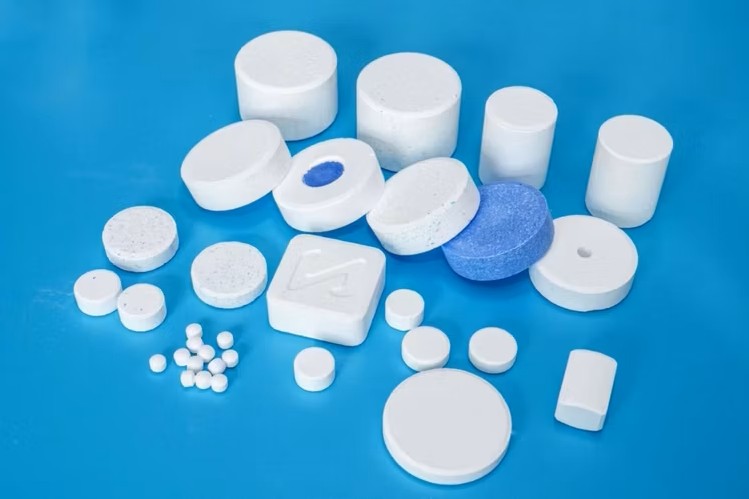
Tablet SDIC (200g, 500g, 1kg) provides controlled, slow-release chlorine perfect for swimming pools and residential water systems. The compressed tablet form ensures consistent chlorine levels over extended periods.
Powder SDIC serves specialized applications where ultra-fine particle distribution matters, such as certain food processing operations.
Your choice depends entirely on your target market. European importers often request specific mesh sizes to meet regional standards, while Middle Eastern buyers frequently prioritize tablet formats for their extensive swimming pool maintenance sectors.
Global SDIC Sourcing: Key Considerations for Importers
Quality Verification: Beyond the Certificate of Analysis
Here’s something many new importers discover too late: a Certificate of Analysis alone doesn’t guarantee product quality. After reviewing hundreds of SDIC shipments, I’ve developed a checklist that separates reliable suppliers from questionable ones:
- Available Chlorine Content Verification – Request independent third-party testing. The stated 56-60% range should be verified upon arrival, not just on paper.
- Moisture Content Control – SDIC absorbs moisture during transit. Quality manufacturers maintain moisture below 5% with proper packaging including moisture-proof inner liners.
- Particle Size Consistency – Inconsistent granule sizes indicate poor manufacturing control, affecting dissolution rates and end-user satisfaction.
- Heavy Metal Testing – Reputable suppliers test for lead, arsenic, and other contaminants, especially important for drinking water applications.
- Packaging Integrity – 25kg bags should feature UV-resistant outer layers with sealed inner polyethylene liners. Damaged packaging leads to product degradation.
Pricing Dynamics in the 2026 SDIC Market
The wholesale SDIC pricing landscape has shifted considerably. Current market rates hover around USD 2.00-3.50 per kilogram depending on specifications, order volume, and Incoterms. However, focusing solely on price creates dangerous blind spots.
I’ve seen importers save 15% on unit costs only to lose 40% of their margin through product rejection, customer complaints, and reputational damage. The true cost of SDIC includes:
- Quality consistency across batches
- On-time delivery performance
- Technical support availability
- Documentation accuracy
- After-sales problem resolution
When evaluating suppliers, calculate total landed cost including these factors, not just the FOB price.
Navigating International Compliance Requirements
Different regions enforce varying regulations on water treatment chemicals. European importers must comply with REACH registration requirements. North American buyers need EPA compliance documentation. Southeast Asian markets often require specific health ministry approvals.
A competent SDIC manufacturer maintains updated compliance documentation for major markets. Ask potential suppliers:
- Do you have REACH registration for European shipments?
- Can you provide EPA-compliant documentation?
- What certifications support your quality management system? (ISO 9001, ISO 14001)
- How do you handle customs documentation for hazardous materials?
SDIC classification as a hazardous material (Class 5.1 Oxidizer) requires proper shipping documentation. Experienced suppliers handle this seamlessly; inexperienced ones create customs delays that cost you dearly.
Building Long-Term Supplier Relationships
Due Diligence Before First Orders
Never place a substantial order without proper supplier verification. I recommend this approach:
Start with samples – Test product quality in your own laboratory or through independent third parties.
Request factory audits – Either visit personally or hire local inspection services to verify manufacturing capabilities.
Check references – Speak with existing customers in your region about their experiences.
Verify export licenses – Ensure the supplier holds proper credentials for international chemical exports.
Review production capacity – Confirm they can handle your volume requirements consistently, not just for initial orders.
Communication and Technical Support
The best SDIC suppliers offer more than products—they provide partnership. Technical questions arise constantly:
- What’s the optimal dosing rate for specific applications?
- How should SDIC be stored in tropical climates?
- What compatibility issues exist with other water treatment chemicals?
- How do we handle customer complaints about product performance?
Suppliers who respond promptly with accurate technical information demonstrate the expertise you need. Those who disappear after receiving payment reveal their true priorities.
Risk Mitigation Strategies for SDIC Importers
Managing Supply Chain Disruptions
The past few years taught us that supply chains remain vulnerable. Diversify your supplier base rather than relying on single sources. Maintain safety stock equivalent to 60-90 days of sales. Establish relationships with suppliers in different geographic regions to reduce regional disruption risks.
Payment Terms and Financial Protection
Standard payment terms in the SDIC industry range from 30% deposit with 70% before shipment to irrevocable letters of credit for larger orders. Avoid suppliers demanding 100% upfront payment unless you’ve established long-term trust.
Consider trade assurance programs offered by major B2B platforms. These provide payment protection while dispute resolution mechanisms protect against quality issues.
Quality Claims and Dispute Resolution
Even with careful supplier selection, problems occur. Establish clear procedures for:
- Documenting quality issues with photographs and test results
- Notification timelines for suppliers
- Replacement or refund policies
- Third-party arbitration processes
Include these terms in your purchase agreements before problems arise, not after.
The Future of SDIC Sourcing
The water treatment chemical industry continues evolving. Environmental regulations tighten globally, pushing manufacturers toward cleaner production methods. Digital platforms streamline sourcing processes, while blockchain technology emerges for supply chain transparency.
Smart importers stay ahead by:
- Monitoring regulatory changes in target markets
- Investing in supplier relationships rather than transactional purchasing
- Embracing technology for quality verification and tracking
- Building flexibility into supply chains for rapid adaptation
Conclusion: Your Path to Successful SDIC Importation
Wholesale SDIC sourcing demands more than finding the lowest price. Success requires understanding product specifications, verifying quality systematically, navigating compliance requirements, and building genuine supplier partnerships. The importers who thrive treat SDIC procurement as a strategic function, not a commodity purchase.
Take time to implement the verification processes I’ve outlined. Invest in relationships with suppliers who demonstrate technical expertise and reliability. Your customers—and your bottom line—will reward this approach with consistent product quality and sustainable business growth.
The global water treatment market continues expanding, creating opportunities for informed importers. Position yourself strategically, and SDIC becomes not just a product you sell, but a foundation for long-term business success.
Frequently Asked Questions (FAQ)
Q1: What is the typical shelf life of wholesale SDIC?
A: Properly stored SDIC maintains effectiveness for 24-36 months. Store in cool, dry conditions away from direct sunlight and moisture. Original packaging must remain sealed until use.
Q2: What minimum order quantities do SDIC suppliers typically require?
A: Most manufacturers accept 1-5 metric tons for trial orders. Regular wholesale buyers typically order 10-20 tons per shipment. Container loads (20-25 tons) offer optimal freight economics.
Q3: How long does SDIC shipping typically take?
A: Production time ranges from 7-15 days depending on order size. Ocean freight adds 20-45 days depending on destination. Air freight options exist for urgent needs but significantly increase costs.
Q4: Can SDIC be mixed with other water treatment chemicals?
A: Never mix SDIC with acids or ammonia-based products—dangerous chlorine gas can form. Consult technical documentation before combining with other treatments. Sequential application often works better than mixing.
Q5: What documentation accompanies SDIC shipments?
A: Standard documentation includes Commercial Invoice, Packing List, Bill of Lading, Certificate of Analysis, Material Safety Data Sheet (MSDS), and hazardous materials shipping declarations. Additional certificates depend on destination country requirements.
Q6: How do I verify SDIC quality upon arrival?
A: Conduct available chlorine testing using iodometric titration methods. Check moisture content, particle size distribution, and pH of solution. Compare results against supplier’s Certificate of Analysis and your purchase specifications.
Author: Marcus Richardson
Would you like to discuss your SDIC sourcing requirements? Visit our contact page to connect with our technical team. https://envochemical.com/contact-us/
