
Plan a trial for your application
Tire sidewall protection
Compare cracking and appearance at the agreed dynamic strain and ozone exposure.
Belts and dark rubber parts
After specified aging, compare retained properties and discoloration of adjacent materials.
Purchase specifications and incoming inspection
Include the intended grade or current specification in the enquiry. Use the table to compare selection criteria and inspection conditions. The specification agreed by both parties defines the contractual limits. ENVO · Rubber Antioxidant 6PPD (4020) catalogue and specifications ↗
| Property | Unit | Published or agreed specification | Test conditions and checks |
|---|---|---|---|
| Assay | % by mass | ENVO published standard grade GC ≥95.0 | Fix the chromatographic method and integration convention. Record appearance and sampling procedure. |
| Loss on heating | % by mass | ENVO standard grade ≤0.30 | Request the test temperature and duration. |
| Ash | % by mass | ENVO standard grade ≤0.20 | State ignition conditions and verify the sample lot number. |
When approving a sample, record the grade, methods, limits and specification revision. On receipt, match the packing lot number to the lot-specific COA and record the measured values and release decision.
Chemical identity
| Database entry | Molecular or composition formula | Molar mass |
|---|---|---|
| 1,4-Benzenediamine, N-(1,3-dimethylbutyl)-N’-phenyl- | C18H24N2 | 268.4 g/mol |
The values refer to the compound indicated. Confirm hydrate form, solution concentration and blend composition for the commercial grade.
From samples to commercial delivery
Packaging and receiving
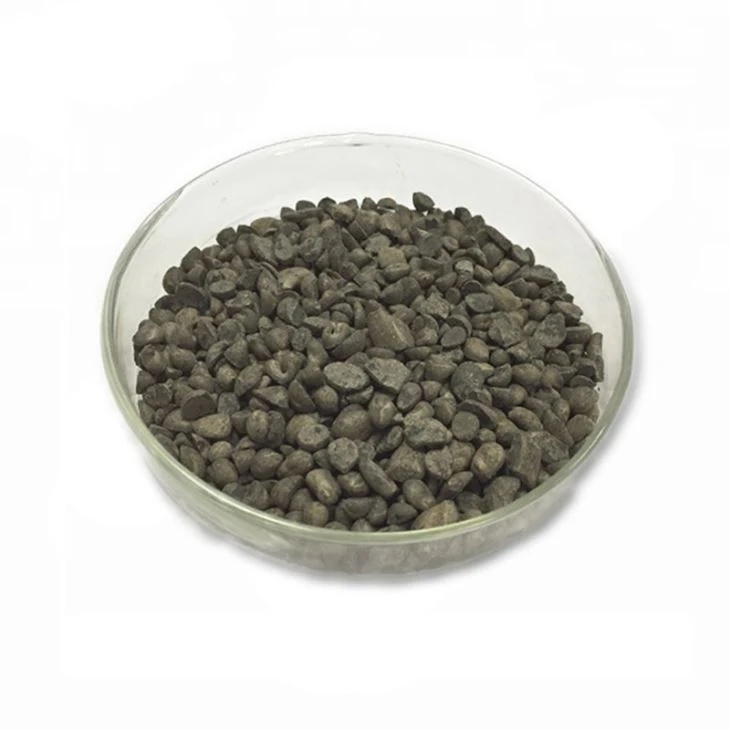
The published material is a dark granular grade in 25 kg bags. Check heat-related blocking, lot number and inner bag.
Storage and handling
Agree warehouse temperature and stacking requirements. Obtain environmental documentation and check suitability for the intended market.
Sample and order lead times
State the finished part, machine trial quantity and routine order size. Match trial and commercial grades and agree MOQ, load unit, lead-time start and arrival.
Questions from the plant
How can ozone resistance be reconciled with staining of light-coloured parts?
Run ozone and heat-ageing tests on the intended compound. Check downstream environmental requirements as well.
The dark part passes, but a light-coloured adjacent part changes colour. How should we compare samples?
Run contact migration and staining tests with the actual adjacent material beside an additive-free control.
Report a delivery or batch issue
Include the order number, lot number from the package, label photos and inspection records for the affected lot. When retesting, check Assay, solidification point, staining test conditions.
Request documents for your application
TDS · Technical data sheet
For grade selection and sample approval, specify the grade and revision required.
SDS · Safety data sheet
Specify the country or region of use and the required language.
COA · Certificate of analysis
Request a sample COA during supplier review. For incoming inspection, provide the actual lot number.