
Plan a trial for your application
Fixing reactive dyes on cotton
Use thoroughly washed dyed samples as controls. Compare wet rubbing, staining in washing and hue.
Finishing mixed shades and dark fabrics
Simulate subsequent softening and drying. Record color difference, handle and compatibility.
Purchase specifications and incoming inspection
Use these properties to compare grades within the product family. Example figures refer to the cited grade or source. Confirm the offered specification, packaging and lead time in the quotation. Sarex Katafix-BC · Formaldehyde-free cationic dye fixing agent ↗
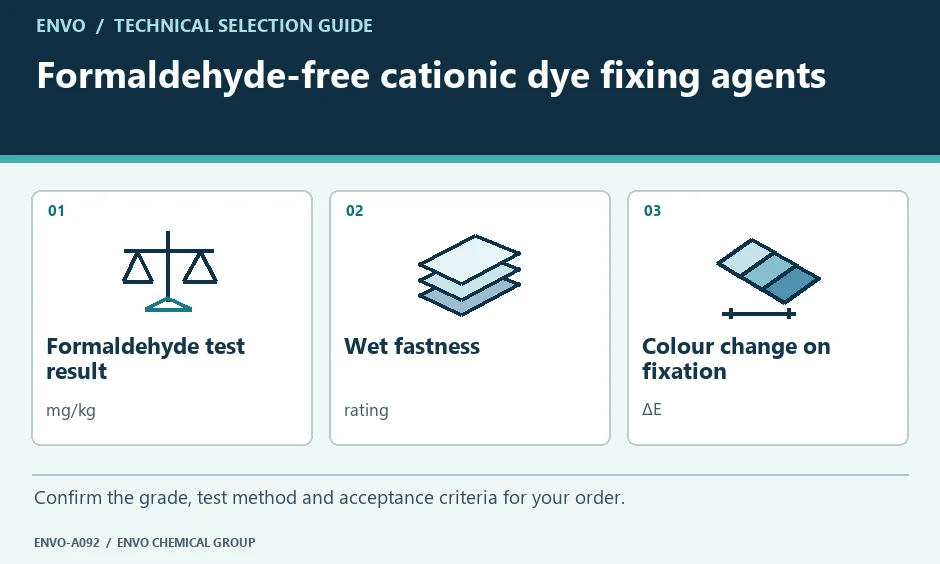
| Property | Unit | Published or agreed specification | Test conditions and checks |
|---|---|---|---|
| Formaldehyde test result | mg/kg | Agree for the grade and end use | Identify the analyte, method and limit of quantification. |
| Wet fastness | Grade | Agree for the grade and end use | Specify dye, depth of shade, adjacent fabric and afterwashing conditions. |
| Color difference before and after fixation | ΔE | Agree for the grade and end use | State the illuminant, formula and conditioning time after finishing. |
When approving a sample, record the grade, methods, limits and specification revision. On receipt, match the packing lot number to the lot-specific COA and record the measured values and release decision.
From samples to commercial delivery
Packaging and receiving
Mark cationic type, net weight and lot on liquid preparations. Store separately from anionic auxiliaries.
Storage and handling
Request the formaldehyde declaration and test report for the offered grade and verify performance on the actual fabric.
Sample and order lead times
Compare quotations by active matter, as-supplied net weight and packaging. State destination and receiving facilities and request MOQ, sample dispatch and commercial arrival dates.
Questions from the plant
Why can shade shift even when wet fastness improves?
Use a dosage series at fixed shade depth and liquor pick-up. Measure colour differences under different illuminants.
Does a “formaldehyde-free” designation dispense with testing the finished fabric?
Check the supplier declaration, quantification limit and results for the treated fabric separately.
Report a delivery or batch issue
Include the order number, lot number from the package, label photos and inspection records for the affected lot. When retesting, check Formaldehyde test result, Wet fastness, Color difference before and after fixation.
Request documents for your application
TDS · Technical data sheet
For grade selection and sample approval, specify the grade and revision required.
SDS · Safety data sheet
Specify the country or region of use and the required language.
COA · Certificate of analysis
Request a sample COA during supplier review. For incoming inspection, provide the actual lot number.