A standardised pectin preparation should be assessed as the defined product offered. Do not automatically rank it by an estimated “pure pectin” percentage while ignoring the functional standard and the rest of its composition.
Understand the purpose of standardisation
The USDA technical evaluation report on non-amidated pectin, manufacture and standardisation discussion describes commercial standardisation. It is historical technical context, not a current organic-use ruling or an ENVO specification.
Ask for the complete declared composition, pectin type, standardisation basis and intended functionality. Any carrier or additional component must fit the buyer’s formulation and applicable requirements. A standardised blend is not inherently inferior to an unstandardised material, nor does standardisation make every grade interchangeable.
| Commercial question | Evidence |
|---|---|
| What is being supplied? | Composition and grade identity |
| What function is standardised? | Named method, conditions and applicable range |
| How much accepted product does it make? | Buyer’s trial at the actual formulation and process |
Use functional yield for the economic decision
Suppose two qualified preparations require different additions to achieve the same agreed product endpoint. Compare their material spend per accepted batch, then include process changes and losses. A lower price per purchased kilogram can be offset by a higher qualified addition. Use observed addition rates; do not infer them from a carrier percentage alone.
Request the offered pectin documents and a representative sample from ENVO. Keep any required ingredient declaration and sourcing attributes in the RFQ. The commercial target is a repeatable accepted product with a known composition, not a spreadsheet purity ranking that cannot predict the intended application.
Related decisions
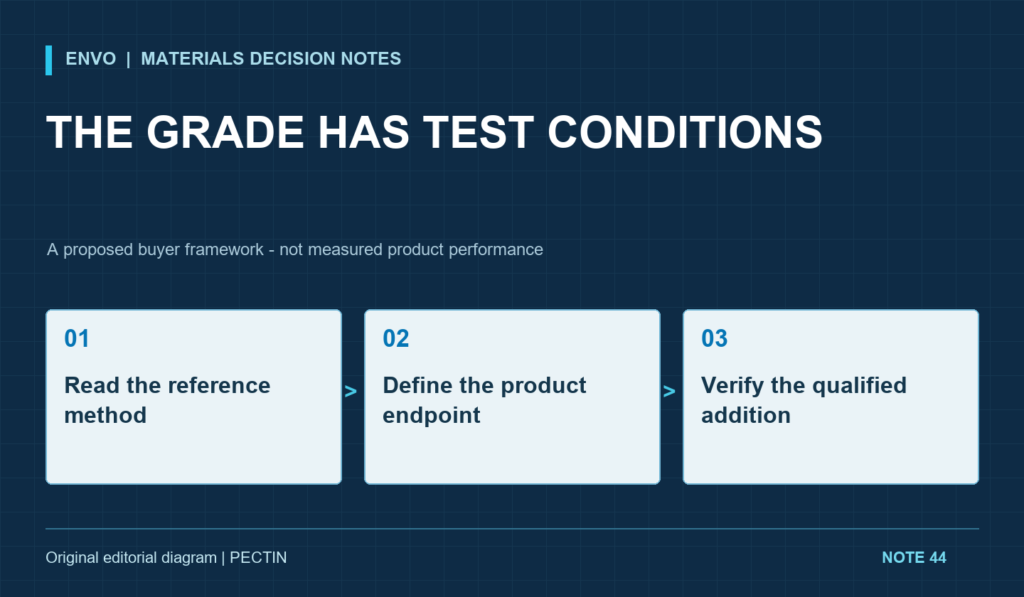
- A pectin SAG grade is not your jam’s texture: keep the reference method attached
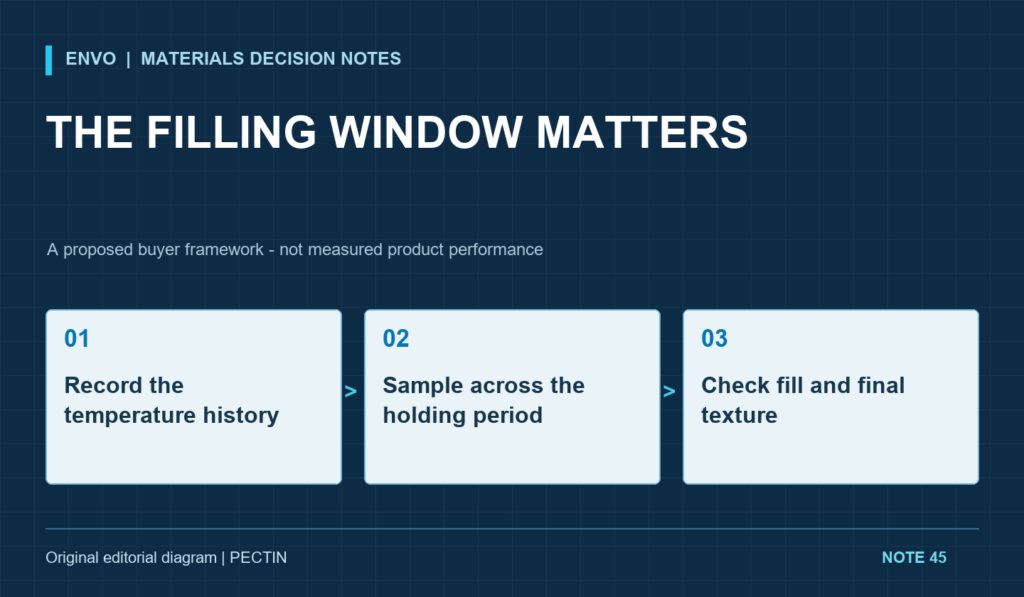
- Pectin filling and depositing: qualify the time window after cooking
Review Pectin product identity and purchasing requirements. For the decision above, send ENVO your application, acceptance criteria, quantity and destination. Confirm the offered grade and available documents before ordering.
Technical references support the stated material or test method. Confirm the offered grade and current acceptance criteria for your application. Quality and document guidance
Share your application, target properties and test conditions to discuss the next step.
Send a technical or purchasing enquiry ↗