
Plan a trial for your application
Rigid PVC profiles
With the current resin and lubricant package, measure fusion torque, initial profile color and buildup during continuous extrusion.
Flexible PVC cable compounds
Use the existing plasticized formulation. Compare thermal aging, electrical properties and extruded surface.
Purchase specifications and incoming inspection
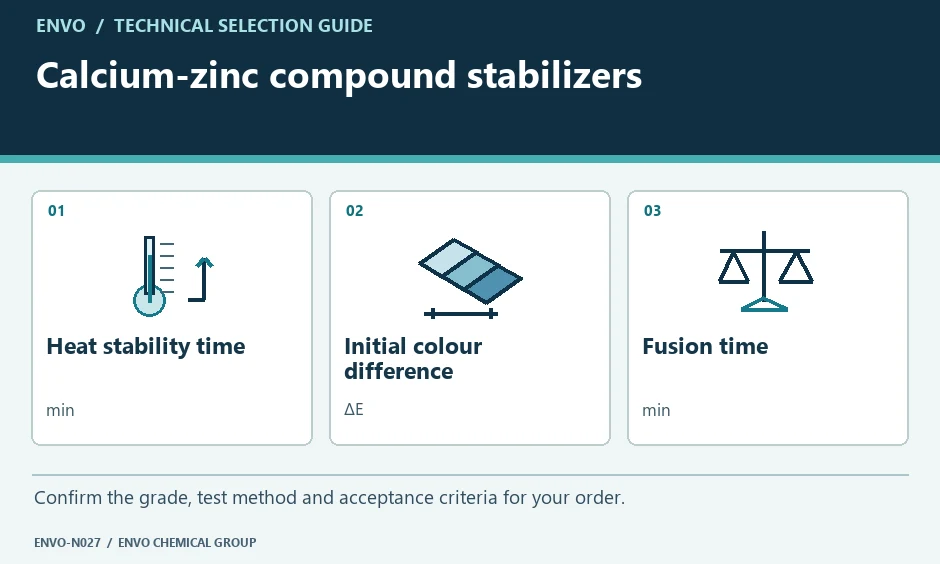
Include the intended grade or current specification in the enquiry. Use the table to compare selection criteria and inspection conditions. The specification agreed by both parties defines the contractual limits. Baerlocher · Calcium-based stabilizer systems and application windows ↗
| Property | Unit | Published or agreed specification | Test conditions and checks |
|---|---|---|---|
| Thermal stability time | min | Agree for the target PVC formulation. | Fix test temperature, resin, specimen preparation and discolouration endpoint. A single time value cannot release the finished product. |
| Initial color difference | ΔE | Compare with the finished-part reference panel. | Use the same resin, thermal history and illumination for colour measurement. |
| Fusion time | min | Agree within the operating window of the installed equipment. | Record charge mass, speed, temperature and torque criterion. |
When approving a sample, record the grade, methods, limits and specification revision. On receipt, match the packing lot number to the lot-specific COA and record the measured values and release decision.
From samples to commercial delivery
Packaging and receiving
Identify one-pack or single-component material, powder or liquid, and any lubricant package. Do not substitute simply by total weight.
Storage and handling
Keep the formulation code and equipment application fixed. Repeat trials after changes in grade or companion lubricant.
Sample and order lead times
State the finished part, machine trial quantity and routine order size. Match trial and commercial grades and agree MOQ, load unit, lead-time start and arrival.
Questions from the plant
Why can initially white material show colour drift or plate-out during a long run?
Provide the rigid or flexible formulation. Compare dynamic heat stability, initial colour and equipment deposits.
Why did another calcium-zinc system cause die build-up?
Compare internal and external lubricants, metal soaps and dose. Follow deposit formation on the same line during continuous operation.
Report a delivery or batch issue
Include the order number, lot number from the package, label photos and inspection records for the affected lot. When retesting, check powder or liquid form, lubricant package, thermal stability test conditions.
Request documents for your application
TDS · Technical data sheet
For grade selection and sample approval, specify the grade and revision required.
SDS · Safety data sheet
Specify the country or region of use and the required language.
COA · Certificate of analysis
Request a sample COA during supplier review. For incoming inspection, provide the actual lot number.