Why do dye specks appear on the machine after a passing grind test?
Room-temperature fineness describes the existing dispersion. Heat, hard water or dilution can cause re-agglomeration.
Compare filter residues before dilution and after heat exposure
Split a single dye grind into neat slurry, slurry diluted with process water and diluted slurry exposed to the actual thermal history. Filter identically and compare residue and dyed fabric to locate the onset.
Is a dispersing-power value of 100 equivalent across suppliers?
Align the reference sample, reference dye and method before comparing. Disperse dye pastes: Fix dye solids and grinding conditions. Compare fineness, filtration and particle growth during storage. Dye bath dispersion stability: At target water quality and heating profile, compare specks, precipitation and filter residue.
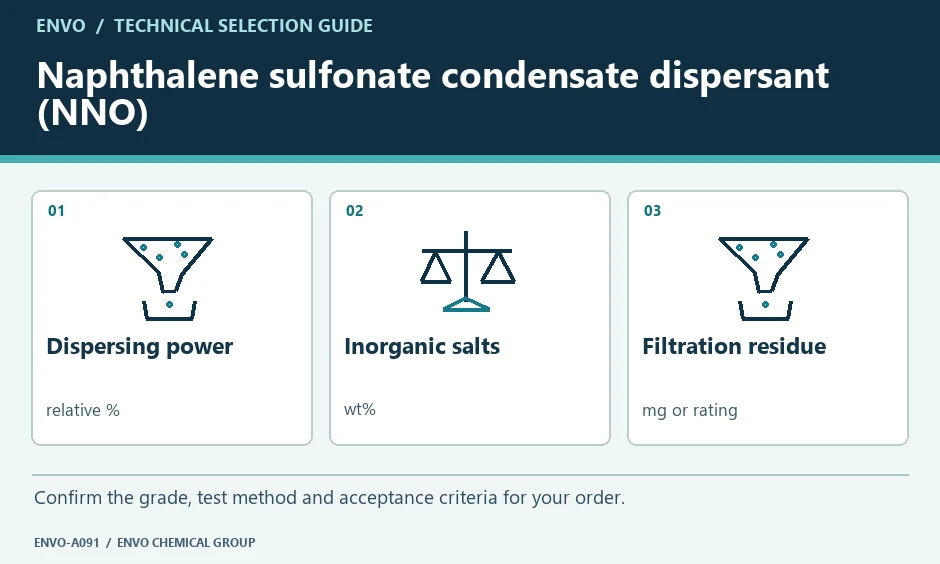
Checking Dispersing power and Inorganic salts
Dispersing power (Relative %): Test using the same dye and reference samples agreed by buyer and supplier. Inorganic salts (% by mass): Distinguish sodium sulphate, other salts and total ash. Filter residue (mg or grade): Agree heat treatment, filter material and sample quantity.
What to record
- Water hardness
- Dilution ratio
- Thermal history
- Filter medium
- Residue and dye specks
Technical references
Products and processes
Share your application, target properties and test conditions to discuss the next step.
Send a technical or purchasing enquiry ↗