Why can fast printing skip even at low equilibrium surface tension?
A newly formed interface may not reach equilibrium before printing. A static reading can conceal poor short-time wetting.
Relate surface age to line speed
Use the same substrate and ink to compare dynamic surface tension at a relevant surface age with actual prints. Include a clean substrate control and record foam so overdosing is not mistaken for improved wetting.
Why does higher dosage create more foam?
Compare spreading and foam across a dose series and check the existing defoamer system. Spreading of waterborne coatings: On the least wettable substrate, inspect edge pullback and craters. Waterborne ink printing: Fix line speed and substrate treatment. Test printed edge definition and intercoat adhesion.
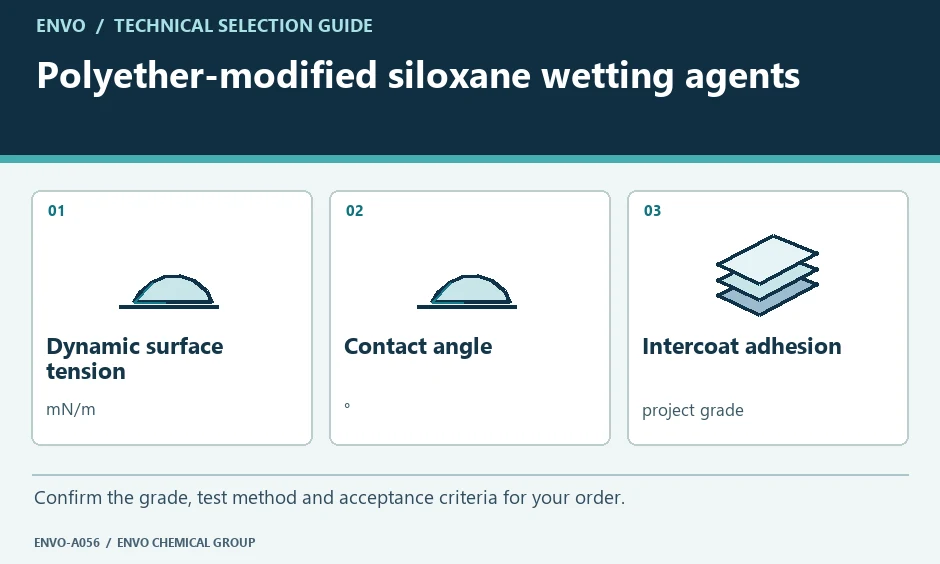
Checking Dynamic surface tension and Contact angle
Dynamic surface tension (mN/m): Agree surface age, concentration and water quality. Contact angle (°): Specify the substrate, droplet volume and reading time. Intercoat adhesion (Project grade): Keep dry film thickness, drying interval and test method constant.
What to record
- Line speed
- Substrate preparation
- Surface age
- Dynamic surface tension
- Print skips and foam
Technical references
Products and processes
Share your application, target properties and test conditions to discuss the next step.
Send a technical or purchasing enquiry ↗