Can pure acrylic and styrene-acrylic emulsions be exchanged at equal solids?
A normal-looking emulsion still needs testing under actual film formation conditions. Matching solids does not establish equal minimum film formation temperature or freeze-thaw behavior.
Compare grit and film continuity at the same temperature
Equilibrate the suspect lot and a normal retain to the same temperature and prepare matched panels. Check coarse particles, film continuity and end-use performance, then review shipment temperature records.
Does normal appearance on receipt rule out freeze–thaw damage?
Compare filter residue, viscosity and low-temperature film formation against the retained sample. Waterborne exterior coatings: After the specified cure, compare adhesion, water whitening and weathering resistance. Wood and industrial coatings: On the actual substrate at the intended film-formation temperature, compare hardness, adhesion and blocking resistance.
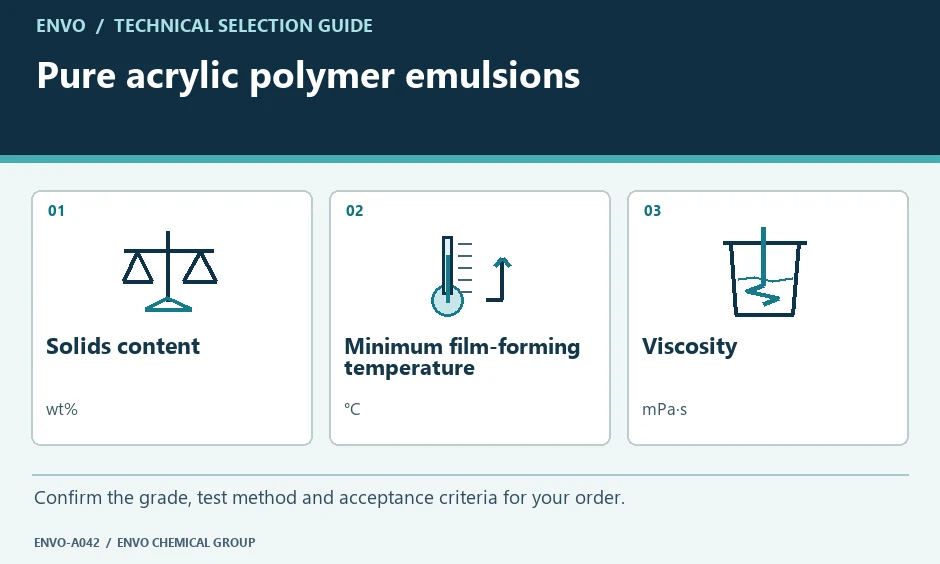
Checking Solids content and Minimum film-forming temperature
Solids content (% by mass): 105 °C, ISO 3251. Minimum film-forming temperature (°C): ISO 2115. Distinguish typical properties from the contractual upper limit. Viscosity (mPa·s): 23 °C, Brookfield RVT, 20 rpm.
What to record
- Transport temperature
- Equilibration conditions
- Grit
- Panel preparation temperature
- Film continuity
Technical references
Products and processes
Share your application, target properties and test conditions to discuss the next step.
Send a technical or purchasing enquiry ↗