

Technical data and supply specifications
Check grade, key properties and methods. Distinguish typical values from guaranteed limits.
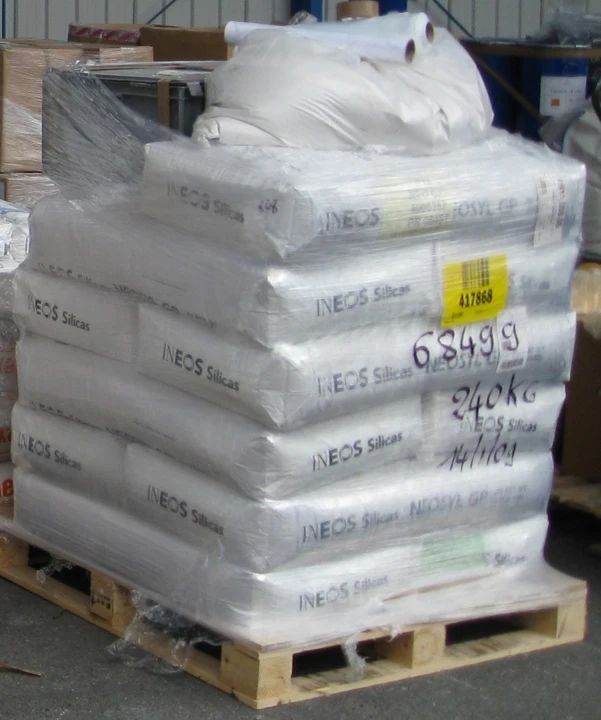
Functional inorganic materials · Industrial selection
For rubber reinforcement, powder flow or coating matting,
select material properties for the intended application.
Confirm the offered grade, specification and delivery conditions for your project. Verify CAS number and identity against the SDS for that grade.
Compare precipitated silica, fumed silica, silica gel and silica sol ↗
01 Selecting grades
Different applications require different properties.
These selection directions are starting points. Confirm the ENVO grade for your application.
The application notes draw on public material references and purchasing checks. Confirm suitability with the specific grade and sample evaluation.
02 Applications and troubleshooting
Describe the conditions
so the next trial answers the right question.
Include your current specification, target values and evaluation conditions.
Particle size, surface area, surface treatment and physical form can differ under the same generic name. Identify the function before comparing grades.
Check first
Record the material properties together with formulation, equipment and process conditions so that changes can be traced.
Check first
Published absorption values relate to a defined test. Evaluate the intended liquid, particle size and storage environment together.
Check first
Evaluate matting with the binder, particle size and surface treatment. Keep film formation and measurement conditions the same.
Check first
03 Technical specifications and selection criteria
| Property to check | Why it matters | Information to request |
|---|---|---|
| Identity and surface treatment | Identify the silica type, treatment and corresponding grade | Product name, grade, SDS and surface treatment description |
| Specific surface area / m²·g⁻¹ | Compare material surface characteristics as one selection factor | Method, conditions and applicability |
| Absorption / mL per 100 g | Assess absorption under a defined test | Test liquid, method and sample condition |
| Particle-size distribution / µm | Compare dispersion, surface finish and flow requirements | Reported percentiles such as d50, instrument and method |
| Loss on drying / % | Review moisture-related sample information | Temperature, time and sampling conditions |
| pH | Compare acidity or alkalinity under defined dispersion conditions | Dispersion ratio, medium and method |
| Bulk or tapped density / g·L⁻¹ | Assess dosing, packaging and powder handling | Distinguish loose bulk density from tapped density and confirm the method |
| Appearance and form | Check powder or granules and consistency across supplies | Photos, samples and agreed appearance criteria |
Typical values from the Evonik SIPERNAT® 22 S technical data sheet dated 2025-12-12 illustrate how to read the data. ENVO specifications and equivalency require separate confirmation.
| Property | Published typical value | Conditions / method |
|---|---|---|
| Specific surface area | 180 m²/g | Multipoint method, ISO 9277 |
| DOA absorption | 235 mL/100 g | ISO 19246, based on the original material |
| Particle size d50 | 13 μm / 11 μm | Coulter LS and Horiba (or Bettersizer), respectively, according to ISO 13320 |
| pH | 6.5 | 5% aqueous dispersion, according to ISO 787-9 |
Even within the same data sheet, particle size can vary with the instrument used. Use agreed acceptance limits for an order, rather than treating typical values as guarantees.
Include the property, unit and method to make the target unambiguous.
04 Quality and documentation
Match each document to the product, grade and revision.
Check sample documents separately from records for the delivered lot.
Check grade, key properties and methods. Distinguish typical values from guaranteed limits.
Verify the identity, language and applicable handling, storage and transport information.
Request an example during supplier assessment. At delivery, match the lot number, test items and actual results.
Use these forms to describe requirements alongside the product’s technical and safety documents.
05 Packaging and delivery
Packaging, minimum order, pricing and lead time
depend on the offered grade, quantity and destination.
Specify pack type, net weight, pallet and protection requirements. Confirm feasibility for the offered grade.
Use the offered product’s documents and SDS to confirm storage conditions, pack integrity and the applicable storage period.
Specify the destination country or port, quantity and required date. Agree on transport and shipping documents.
Six details for your inquiry
06 Frequently asked questions
Their production routes and material properties differ. Assess the specific grade against the application and target performance using a sample trial.
A CAS number identifies a substance. Grade selection also depends on particle size, surface area, treatment, processing and application requirements.
Published values are attributed to the original grade and source. Confirm the offered ENVO grade and acceptance requirements in the order documents.
Send the application, target properties, quantity and destination. We will check grades, packing options, minimum order, price and lead time for your enquiry.
Describe the formulation, intended function, key properties, test methods, estimated purchasing volume and delivery destination. Sample size, shipping and costs are agreed separately.
Record the grade, specification revision, trial conditions and packaging requirements. At delivery, compare lot numbers and the actual batch COA with the order.
These uses require the appropriate grade, origin and supporting documents for the intended market. A generic name or CAS number alone cannot establish suitability.
Include pack type, net weight, label languages and other requirements in your enquiry. Feasibility, quantities and delivery arrangements depend on the order.
The following public sources support the application notes and example values. Accessed 2026-10-27. Brand names identify the sources. Confirm actual availability, authorization claims, grade equivalence and specifications separately with ENVO for the proposed order.
Precipitated silica · Product inquiry
Send your target, specification and purchase plan so the team can identify the next information needed.