
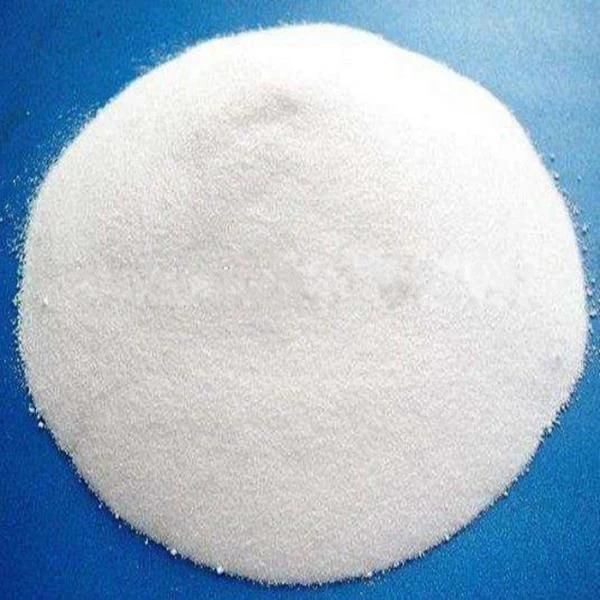
Plan a trial for your application
Rubber reinforcement
Specify the rubber, mixing and cure processes. Evaluate dispersion, tensile properties and abrasion.
Coating matting or anti-settling
Prepare panels at actual resin solids and film thickness. Record gloss, viscosity and settling after storage.
How do the four industrial silica routes compare?
Industrial synthetic amorphous silica includes thermal and wet-process products. “White carbon black” commonly refers to precipitated or fumed silica. Gels and sols are included here to distinguish porous adsorbents from liquid dispersions.
| Route and typical form | How the material forms | Applications | Purchasing and trial considerations |
|---|---|---|---|
| Wet precipitation: powder or granules | Acidification of an aqueous silicate forms particles and aggregates, followed by separation, washing and drying. | Depending on the grade, uses include rubber reinforcement, liquid carriers, powder flow and coating matting. | For rubber, test dispersion and cured properties; for carriers, assess flow after liquid uptake; for matting, check thickness, gloss and clarity. |
| Thermal or fumed process: low-bulk-density powder | A volatile silicon precursor reacts in a flame, producing aggregates of connected primary particles. | Coatings, anti-settling systems, adhesive thixotropy and elastomer reinforcement. | Equal BET can give different thickening. Control resin, shear history and surface treatment in comparison trials. |
| Wet-process gel: granules or milled powder | The wet process forms a continuous gel network. Aging, washing and drying develop its pore structure. | Depending on pore structure and particle size, uses include desiccation, separation media, carriers and matting. | Check pore volume, pore size and adsorption conditions for the target adsorbate. In coatings, also verify particle size and surface roughness. |
| Wet colloidal process: silica sol | Nucleation, particle growth and stability are controlled in liquid; the product remains a colloidal dispersion when supplied. | Aqueous bonding, surface treatment and precision polishing are examples of liquid-phase applications. | Compare solids, particle size, pH, stabilizing ions and formulation compatibility. Calculate freight and use costs on active solids. |
Hydrophilicity and hydrophobicity describe the surface. Silane and other treatments can be applied to different silica substrates. Rice husk identifies a feedstock; verify particle formation and purification separately. Sol-gel is a family of processes that can yield dispersions, gels or dry powders. Review silica fume, quartz flour and diatomaceous earth separately by source and structure.
Purchase specifications and incoming inspection
Include the intended grade or current specification in the enquiry. Use the table to compare selection criteria and inspection conditions. The specification agreed by both parties defines the contractual limits. ENVO · Silica Grades and Production Routes catalogue and specifications ↗
| Property | Unit | Published or agreed specification | Test conditions and checks |
|---|---|---|---|
| BET specific surface area | m²/g | Published reference for one sample: 200 ± 15. | Applies to the cited sample only. Request the production route, adsorption method and pretreatment; do not generalise across routes. |
| Loss on drying | % by mass | ENVO published individual sample <1.5 | Two hours at 105 °C. This is not a moisture limit for all production routes. |
| Dispersion pH | Dimensionless | ENVO published individual sample 3.7–4.5 | Use a 4% dispersion and compare water quality and sample form. |
When approving a sample, record the grade, methods, limits and specification revision. On receipt, match the packing lot number to the lot-specific COA and record the measured values and release decision.
From samples to commercial delivery
Packaging and receiving
Distinguish dry powder, granules and silica sol. The published bagging details refer only to powder.
Storage and handling
Identify precipitated, fumed, gel or sol material. Request a route-specific TDS and bag or drum label before supply.
Sample and order lead times
Specify colour code, surface treatment or filler grade and whether a single lot is required. Confirm trial quantity, MOQ, retention across lots and arrival.
Questions from the plant
Why do materials labelled SiO₂ differ in reinforcement, thixotropy and absorption?
Select a production route suited to the application, then compare dispersion, rheology or absorption as appropriate.
Are silica grades interchangeable at equal surface area?
Compare aggregate morphology, surface treatment and oil absorption. Verify in the actual compound or coating.
Report a delivery or batch issue
Include the order number, lot number from the package, label photos and inspection records for the affected lot. When retesting, check production route, specific surface area and method, pore volume or oil absorption.
Request documents for your application
TDS · Technical data sheet
For grade selection and sample approval, specify the grade and revision required.
SDS · Safety data sheet
Specify the country or region of use and the required language.
COA · Certificate of analysis
Request a sample COA during supplier review. For incoming inspection, provide the actual lot number.