Can D₂, D₃ and hydroxylated derivatives share one report?
Identify D₃, D₂ and derivatives separately. A combined A/D₃ label can declare both potencies; adding them would overstate D₃.
Separate D₃ potency, carrier and processing stage
Record D₃ activity, units per gram of preparation or kilogram of product, and carrier. Retain samples through the planned process. Enter the vitamin A contribution separately.
How should the two potency figures on an A/D₃ premix be used?
Calculate A and D₃ separately. Adding the two values does not give D₃ potency. Single-vitamin premixes: Calculate the active dose from lot-specific vitamin D₃ potency in IU/g. Check uniformity at low inclusion. Heat processing of pelleted feed: Use an identical conditioning cycle. Measure D₃ before and after pelleting and monitor changes in retained storage samples.
Checking Vitamin D₃ potency and Carrier composition
Vitamin D₃ potency (IU/g): Declare potency per gram or per kilogram of the as-supplied preparation. Agree the method and the point at which potency is guaranteed. Carrier composition (Ingredient declaration / % by mass): Specify carrier and active-ingredient basis. Assess powder, liquid and protected forms separately. Retention after processing (%): Measure activity before and after processing by the same method and correct for moisture. Record temperature, residence time and cooling conditions.
What to record
- Active identity
- D₃ potency units
- Carrier
- Potency before processing
- Potency after processing
Technical references
- dsm-firmenich ROVIMIX D3-500: feed-grade vitamin D₃ potency example ↗
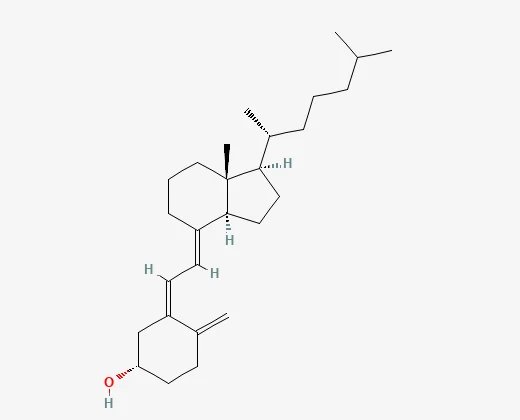
- PubChem: cholecalciferol (vitamin D₃) structure reference ↗
Products and processes
Share your application, target properties and test conditions to discuss the next step.
Send a technical or purchasing enquiry ↗