Trial design and interpretation
Mark the sheet direction and test the actual composite through its thickness. Record filler volume fraction, orientation and compaction. Powder or crystal conductivity cannot be substituted directly into a calculation of pad thermal resistance.
Recording Particle size D50
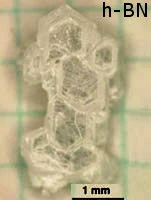
Particle size D50: use the agreed method. State dry or wet method, dispersion energy and particle morphology, and record the heat-flow direction in the finished part. Powder morphology: use the agreed method. Check source and batch micrographs together with particle size at acceptance.
Why is a pad’s measured conductivity lower than the supplier’s value?
Determine whether the value is for powder or a composite. Check test direction, porosity and actual filler volume fraction. Thermal interface sheets: Hold thickness and compression constant. Evaluate in-plane and through-plane thermal conductivity separately.
What to record
- Specimen orientation
- Thickness
- Filler volume fraction
- Measured conductivity or thermal resistance
Technical references
Products and processes
Share your application, target properties and test conditions to discuss the next step.
Send a technical or purchasing enquiry ↗