Why does sulfur bloom differ when total sulfur is equal?
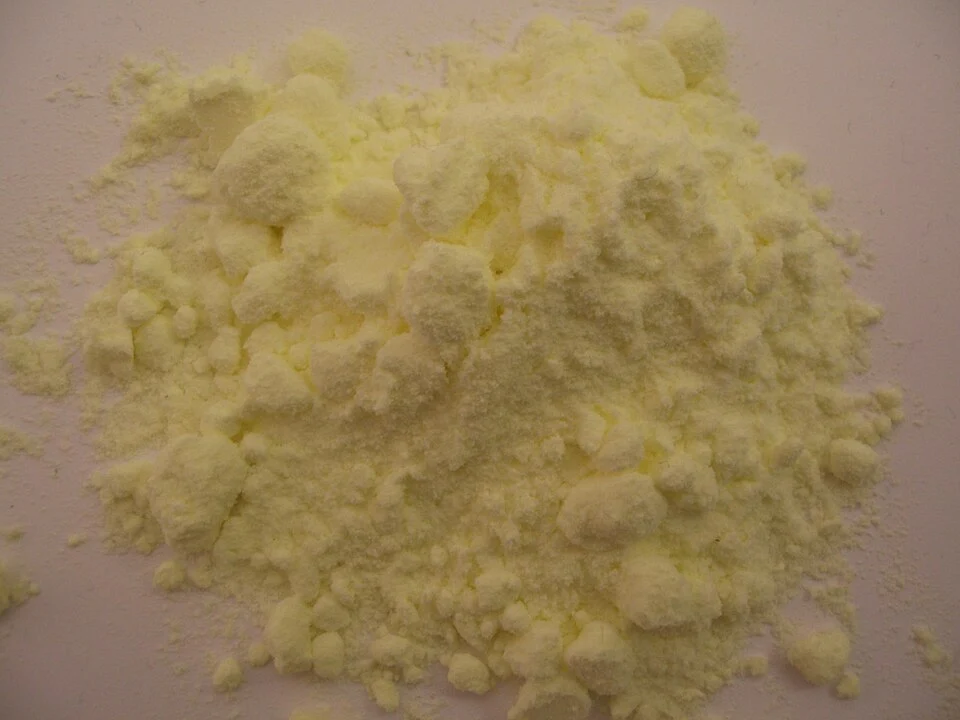
The insoluble sulfur fraction, carrier and dispersion can differ, and thermal history and storage conditions affect bloom.
Retain specimens from mixing through storage
Use the same base rubber, retain samples after mixing and storage, and match observation times. Verify actual sulfur content in the masterbatch and check for cure-curve shifts.
Checking the active sulfur contribution from masterbatch
For a comparison at 0.8 kg of active sulfur, an 80% sulfur masterbatch supplies 0.8 kg sulfur and 0.2 kg carrier in 1.0 kg of product. This illustrates the calculation. Suitability still requires testing in the target compound and cure system.
Can predispersed masterbatch be dosed at the same weight as sulphur powder?
Convert to effective sulphur first and assess the carrier’s contribution to the recipe. Conventional vulcanization: Use one formulation to compare scorch, cure curves and crosslinking in the finished article. Bloom prevention: After specified holding and thermal history, inspect the uncured compound and finished-part surface.
Checking Total sulfur and Insoluble sulfur fraction
Total sulfur (% by mass): Use the as-received product basis and distinguish oil from carrier. Insoluble sulfur fraction (% by mass): State whether the denominator is commercial product or total sulphur, and specify the test method. Particle size or carrier form (µm or morphology): Match the dispersion process and dust-control conditions.
What to record
- Sulfur form
- Actual total sulfur added
- Dump conditions
- Storage or rest time
- Surface condition
Technical references
Products and processes
Share your application, target properties and test conditions to discuss the next step.
Send a technical or purchasing enquiry ↗