
Plan a trial for your application
Changing salt forms
When switching from sulfate or liquid lysine, recalculate the order on an active L-lysine basis. Ask the nutritionist to review the change in chloride.
Automatic metering for compound feed
Feed candidate material on the current micro-dosing scale. Record flow, weighing repeatability and mixing uniformity.
Purchase specifications and incoming inspection
Include the intended grade or current specification in the enquiry. Use the table to compare selection criteria and inspection conditions. The specification agreed by both parties defines the contractual limits. European Commission JRC · FAD-2021-0075 lysine salt assessment ↗
| Property | Unit | Published or agreed specification | Test conditions and checks |
|---|---|---|---|
| Hydrochloride salt purity | Dry-basis mass fraction | EU JRC example ≥99% | The application dossier is an example. Verify the actual grade at the time of supply. |
| L-Lysine | Mass fraction | Minimum in the same example: 78%. | Report separately from hydrochloride purity and confirm the conversion basis. |
| Moisture | % | Agree for the individual lot. | Use alongside the dry-basis result when comparing as-received quotations. |
When approving a sample, record the grade, methods, limits and specification revision. On receipt, match the packing lot number to the lot-specific COA and record the measured values and release decision.
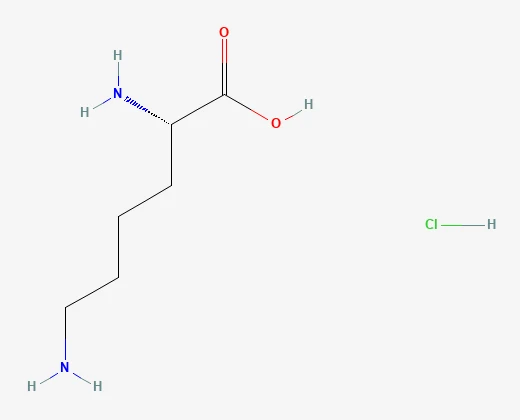
Chemical identity
| Database entry | Molecular or composition formula | Molar mass |
|---|---|---|
| L-Lysine monohydrochloride | C6H15ClN2O2 | 182.65 g/mol |
The values refer to the compound indicated. Confirm hydrate form, solution concentration and blend composition for the commercial grade.
From samples to commercial delivery
Packaging and receiving
Mark hydrochloride, lysine price basis and net weight on sample and pack documents. Store separately from other salt forms.
Storage and handling
Request water and assay reports for samples and commercial lots. Cost on the same basis and check production source and lot.
Sample and order lead times
State premix or pelleting trial size, replenishment quantity and receiving warehouse. Confirm MOQ, preparation time and plant arrival separately for samples, pallets and split orders.
Questions from the plant
Why can replacing on total product weight unbalance amino acids?
Convert to active L-lysine, check chloride contribution and test premix uniformity.
How should figures near 99% and 78% on a report be used?
Distinguish hydrochloride purity from L-lysine as free base. Check dry or as-received basis and use the appropriate figure for pricing and formulation.
Report a delivery or batch issue
Include the order number, lot number from the package, label photos and inspection records for the affected lot. When retesting, check lysine equivalent basis, salt form, moisture and particle size.
Request documents for your application
TDS · Technical data sheet
For grade selection and sample approval, specify the grade and revision required.
SDS · Safety data sheet
Specify the country or region of use and the required language.
COA · Certificate of analysis
Request a sample COA during supplier review. For incoming inspection, provide the actual lot number.