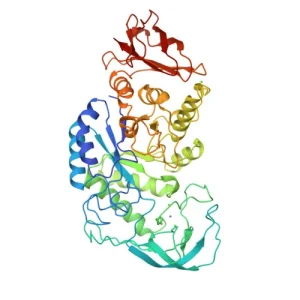
Glyceryl stearate
Glyceryl stearate products can contain different monoester and diester proportions. Conventional and self-emulsifying grades have different functions and co-emulsifier requirements.
View product ↗
Glyceryl stearate products can contain different monoester and diester proportions. Conventional and self-emulsifying grades have different functions and co-emulsifier requirements.
View product ↗

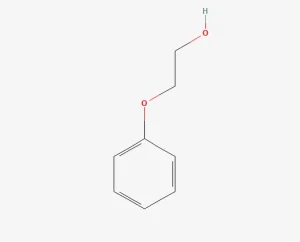
When evaluating phenoxyethanol, verify raw material purity separately from preservative efficacy in the finished formula.
View product ↗
For ethanol, specify denaturation status and whether concentration is given by mass or volume. Those percentages are not interchangeable.
View product ↗
Select modified warp-sizing starch by fiber type, sizing temperature and subsequent desizing. Viscosity alone cannot determine the grade.
View product ↗
For acrylic warp sizes, specify solution or dispersion form and compatibility with starch and other sizes.
View product ↗
Desizing alpha-amylase targets starch size. Identify other sizes in blends before assessing removal efficiency.
View product ↗
Specify sodium silicate by modulus, solids and form. Distinguish metasilicate and water-glass grades of different moduli.
View product ↗
Select reactive dyes by shade, reactive system and process. Products with the same color name can differ in strength and fixation.
View product ↗
For polyester disperse dyes, specify shade, energy class and subsequent heat setting. Dispersion affects specks and filterability.
View product ↗
Wool and nylon differ in dye uptake and leveling. State fiber, shade and fastness requirements at the start of an acid dye inquiry.
View product ↗
Distinguish anhydrous sodium sulfate from hydrated forms such as Glauber's salt. For dyeing, also check iron and water-insoluble matter.
View product ↗
For textile salt, compare sodium chloride content and calcium and magnesium impurities. Evaluate general industrial salt separately from refined textile grades.
View product ↗
For sodium alginate as a printing thickener, assess stock-paste viscosity, sensitivity to water quality and wash-off after printing.
View product ↗
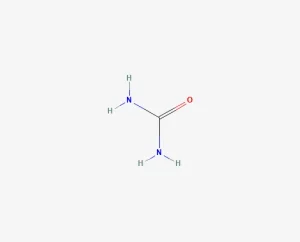
Urea can retain moisture and aid solubilization in some reactive printing pastes. Record steaming conditions and the site's wastewater load during trials.
View product ↗
In pigment printing, a binder forms a film on the fiber. Assess dry and wet crock fastness together with fabric handle.
View product ↗
Amino silicone oils and emulsions vary in active silicone content and emulsification system. Compare softness, yellowing and rewetting.
View product ↗
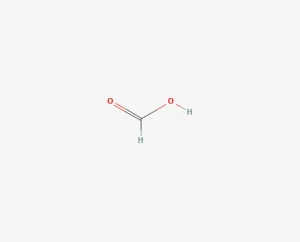
For formic acid in leather wet processing, assess acid concentration, bath acidification rate and the leather's response separately.
View product ↗
Leather fatliquors use different oils and emulsion systems. Select samples by leather type, active content and finished-leather use.
View product ↗
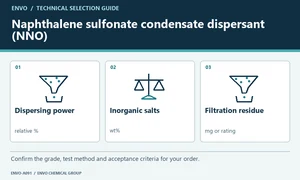
For NNO dispersants, compare dispersing strength, salts and stability in the actual dye system.
View product ↗
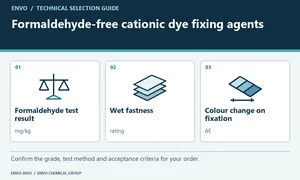
Use a cationic fixing agent suited to the dye and fiber. Check wet fastness, shade change and the product's formaldehyde test documentation.
View product ↗Contact ENVO
Send a product name, current grade or purchasing list. We can help identify options for your application.