
Solvents, wetting and defoaming
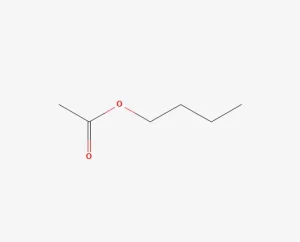
n-Butyl acetate
Distinguish n-butyl acetate from other butyl acetate isomers before comparing resin solubility and evaporation behavior.
View product ↗
ENVO CHEMICAL GROUP / PRODUCTS
Find basic chemicals and functional ingredients by product name, category or use.
Distinguish n-butyl acetate from other butyl acetate isomers before comparing resin solubility and evaporation behavior.
View product ↗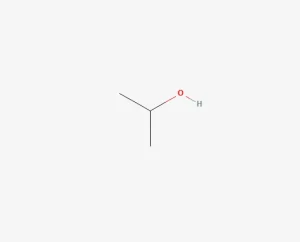
Isopropyl alcohol can serve as a volatile co-solvent. Specify nonvolatile residue separately for electronics or high-finish surface cleaning.
View product ↗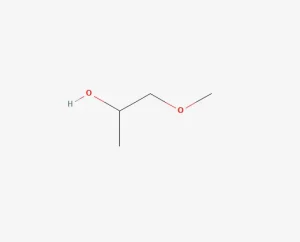
PM is a glycol ether co-solvent. Distinguish it from its acetate ester and specify isomer composition and moisture.
View product ↗
Evaluate substrate wetting on the actual surface at production coating speed. Check foam and intercoat adhesion at the same time.
View product ↗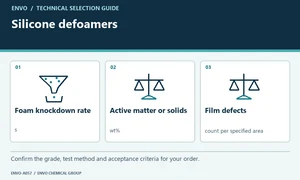
Balance foam control with compatibility. Excessive incompatibility can cause craters or oil spots.
View product ↗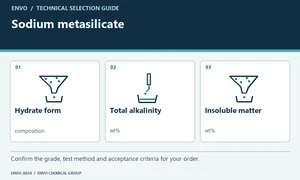
Anhydrous and pentahydrate metasilicate grades have different effective alkalinity. Calculate cleaning-bath additions for the form purchased.
View product ↗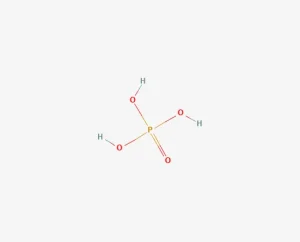
For metal treatment, specify both acid concentration and impurities that affect the conversion coating. Qualify the industrial grade separately from high-purity acid.
View product ↗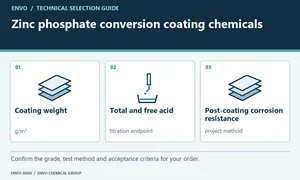
Zinc phosphating is generally quoted as a system. Specify bath make-up, replenisher and surface conditioning before agreeing film and corrosion tests.
View product ↗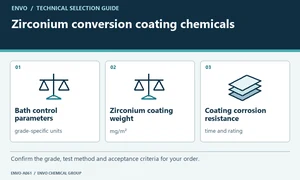
Zirconium conversion films are thin. Evaluate the substrate, film formation and complete coating system rather than relying on visible color.
View product ↗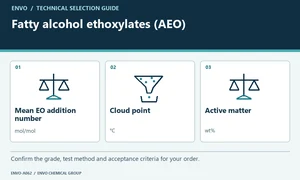
Fatty chain length and average EO number affect wetting, cloud point and cold appearance. Request AEO-7 and AEO-9 as separate grades.
View product ↗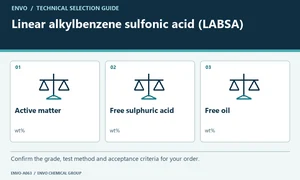
LABSA is an acid intermediate. Distinguish it from neutralized sodium LAS when checking identity, active content and processing requirements.
View product ↗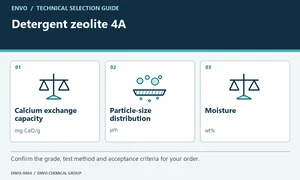
Detergent zeolite 4A removes hardness through ion exchange. Also assess powder dispersion and rinse residue.
View product ↗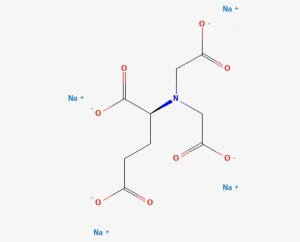
Tetrasodium GLDA is often evaluated in solution. Align the active basis for pricing and specify pH and hardness for performance comparisons.
View product ↗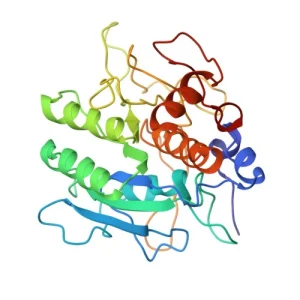
Compare detergent proteases by a common activity method and a defined protein stain. Check activity retention after storage.
View product ↗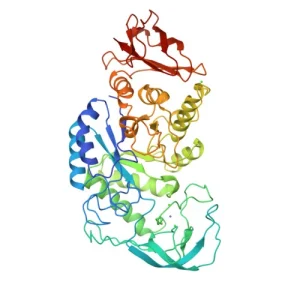
Evaluate detergent amylases on starch-based food stains under the actual wash time, temperature and formulation.
View product ↗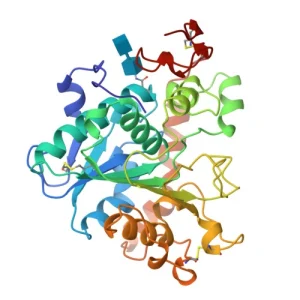
For lipases on fatty stains, define the grease, wash cycle and formulation compatibility conditions.
View product ↗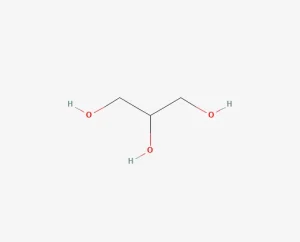
Glycerol absorbs moisture. Calculations based on neat glycerol or commercial solution affect the water balance and finished skin feel.
View product ↗
Propylene glycol serves as a humectant and co-solvent. Grade, water content and impurity requirements depend on end use.
View product ↗
Carbomer grade, dispersion and post-neutralization viscosity govern gel behavior. A single viscosity value cannot establish grade equivalence.
View product ↗
Cetearyl alcohol is a fatty alcohol mixture. The C16/C18 ratio can change cream consistency and texture on crystallization.
View product ↗Contact ENVO
Send a product name, current grade or purchasing list. We can help identify options for your application.