Feed-grade calcium carbonate
Calculate calcium supplied per kilogram of feed calcium carbonate. At equal calcium input, coarse and fine grades may still differ in blending uniformity and screening behavior.
View product ↗
Calculate calcium supplied per kilogram of feed calcium carbonate. At equal calcium input, coarse and fine grades may still differ in blending uniformity and screening behavior.
View product ↗
Sodium bicarbonate adds sodium and affects acid-base balance. Define its role in the target diet and account for other sodium sources.
View product ↗
For feed salt, calculate sodium and chloride separately. Check iodine, anticaking agents and how particle grade affects distribution after mixing.
View product ↗
Compare elemental magnesium, particle size and reactivity for feed magnesium oxide. Convert oxide and elemental magnesium figures to a common basis.
View product ↗
For L-tryptophan, specify stereochemistry and as-received assay. Check purity and low-inclusion premix uniformity separately.
View product ↗
Valine is a branched-chain amino acid. Set its target alongside other branched-chain amino acids and the basal diet. Crude protein does not establish product potency.
View product ↗
Manage L-isoleucine separately from leucine and valine. Specify stereochemistry and an assay that distinguishes the amino acids.
View product ↗
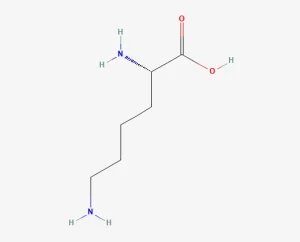
Compare lysine sulfate on the measurable L-lysine in the commercial product. Salt form, fermentation coproducts and moisture all affect the value per tonne.
View product ↗
Vitamin A acetate for feed is commonly supplied in stabilized preparations. Compare vitamin A potency per gram and retention after pelleting and storage.
View product ↗
For vitamin D₃ preparations, verify cholecalciferol potency, carrier and dispersion. Manage blends containing vitamin A separately.
View product ↗
Choline chloride may be a carrier-based powder or an aqueous solution. Specify whether content is expressed as choline chloride or choline and distinguish conventional from protected forms.
View product ↗
Zinc sulfate may have different hydration states. Compare zinc per kilogram as received and specify hydration, impurity and feed-use documentation.
View product ↗
For ferrous sulfate, separate ferrous iron, total iron and hydration state. Color can flag unusual material but does not establish available iron content.
View product ↗
For manganese sulfate, check elemental manganese, crystal form and fines. At low inclusion, within-batch distribution can reveal segregation missed by a bag-average assay.
View product ↗
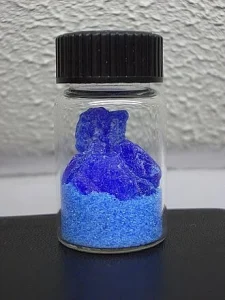
Calculate copper sulfate on elemental copper and actual hydration state. Check species- and market-specific feed requirements before feeding trials.
View product ↗
Purchase phytase in activity units measured by an agreed method. Compare initial activity, pelleting retention and the phytate substrate in the intended diet.
View product ↗
Match feed xylanase trials to the cereal substrate and pelleting process. Manufacturer-specific activity units may not be directly comparable.
View product ↗
Formic acid, formates and buffered acidifiers differ in free acid content. Specify intended use, such as silage, the control objective and receiving equipment.
View product ↗
When evaluating propionic acid for preservation, check feed moisture, mixing and storage. Raw material COA results cannot establish mold control in the actual feed.
View product ↗
Solid calcium propionate suits dry blending. Compare propionic acid equivalents, calcium contribution and preservation in feed at different moisture levels.
View product ↗Contact ENVO
Send a product name, current grade or purchasing list. We can help identify options for your application.